
For those still looking for a 2020 reading resolution,

Chaos Dynamics in Modern Literature.
In both contemporary literature and science, chaos has been conceptualized as extremely complex information rather than an absence of order. As a result, textuality is conceived in new ways within critical theory and literature, and new kinds of phenomena are coming to the fore within an emerging field known as the science of chaos. The … Continue reading Chaos Dynamics in Modern Literature.

Serial Series Yes. Serialized Novels NO.
Lately I’ve out of frustration canceled my Kindle Unlimited account about this issue. Too many authors don’t seem to grasp what’s the difference between a serialized novel and a serial series. Put simply: a series is a collection of books that all belong to the same “franchise” but can be read in any order (because they’re … Continue reading Serial Series Yes. Serialized Novels NO.

Islands and Literature.
I’ve relocated recently from Barcelona to Utila, a little rock in the Caribbean with 6,000 habitants. It’s a writer’s paradise since islands have always occupied a powerful place and have been a source of fascination in the literary imagination. From the discovery of the Americas to the period of decolonization, European writers and artists translating … Continue reading Islands and Literature.

The Egg in Dali’s Work and in Literature.
The egg is ubiquitous in Dalí: he draws and sculpts it in all the possible shapes and sizes, and I came spontaneously to wonder; why can the eggs be found everywhere in Dali’s works?
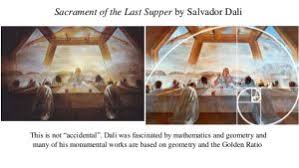
The Golden Section in Dali’s Work and in Literature.
Mathematics can be, in addition to a good technical support for artists, also an exceptional creative stimulus.
The Lovecraftian Universe as a Cornerstone of The Maharajagar.
Howard Philips Lovecraft created an alternate universe populated by malevolent sea-creatures and gods whereupon multiple artists have been expanding. Although he died in poverty, Lovecraft is now heralded as one of the greatest horror and fantasy writers of his time. In modern fiction and art, his work is frequently referred to as “The Cthulhu Mythos,” … Continue reading The Lovecraftian Universe as a Cornerstone of The Maharajagar.

Climbing and Jumping The Dark Tower.
I was looking for a theme that could bind an African, Caucasian, Indian, Chinese and Inuit man in a coherent group. A such I was playing with the word quintet till I remembered the Black Tower Saga by Stephen King.
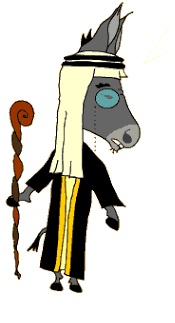
An Author’s Thoughts about Literary Criticism.
I just take sometimes offence at some critics who base their weighting of a novel on a very narrowly defined scale and sometimes these scales are provided by academics whose job it is to provide an informed opinion about them and not some biased fodder.

Struggling with The Stream of Consciousness.
In our contemporary culture is an active resistance to difficulty in all its aesthetic manifestations, accompanied by a sense of grievance that conflates it with political elitism.

The Novel as a Source of Knowledge.
Novels, while not in the business of stating truths about the world, tell a human story very often universal in scope and present them back to us as concrete forms of human engagement. A novel has the capacity to give shape, form, and structure, to the range of values, concerns, and experiences that define human reality.

The Novel as an Infinite Literary Jest.
“Fiction’s about what it is to be a fucking human being.” One who gets lost in life and takes all those tales literally, can forget that novelist very often lie in order to explain some truth.

When Order vs. Chaos doesn’t equal Good vs. Bad.
The main purpose of this novel is to entertain the reader with a historical fantasy: a spellbinding epic tale of ambition, anarchy and absolute power, set against the canvas of North America, Europe and Asia during World War 1 and the ensuing great depression.
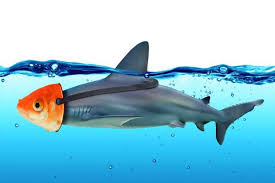
Literary Hoaxes: when fun turns into irritation.
So what sets the literary hoax separate from the rest of fiction?

The Decline of Reading
Those who read own the world, and those who watch television lose it.
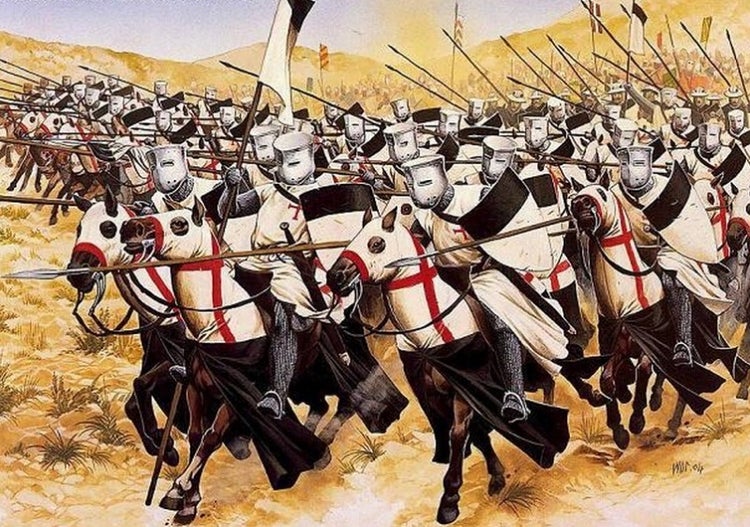
The Moral Crusaders and Literary Criticism.
Once an artist releases a product, it stands on its own and must be judged as such. The only views and opinions that count, are those ventilated or provoked by the artistic creation itself.

The Reader as a Protagonist in Modern Literature.
A post about books that allow readers to become protagonists.

Pseudo-intellectualism in Modern Literature.
People who presume, not-entirely-unreasonable, that "literary fiction" represents a value judgment, fail to understand that "literary fiction" is just a marketing category (coined in the 1970's by publishing and book retailers) characterized by slower pacing, stylized prose, introspection and a focus on interior life over exterior action, a focus on character over plot. What they are not, though, are inherent markers of quality.

The Anatomy of a Best-Selling Book.
The average length of a best seller is 375 pages, set inside the USA and the protagonist is a female lawyer or detective. Romance is an upcoming segment: from 5 % of the sales in 1994 to 40 % on Amazon today and it has been demonstrated that men have a slight preference for a male main protagonist.

Poetry, Code and Literature.
In today’s literary criticism arises the concept that no general method for the solution of questions can be established which does not explicitly recognize, not only the special numerical bases of the science, but also those universal laws of thought which are the basis of all reasoning, and which, whatever they may be as to their essence, are at least mathematical as to their form.
 The Maharajagar