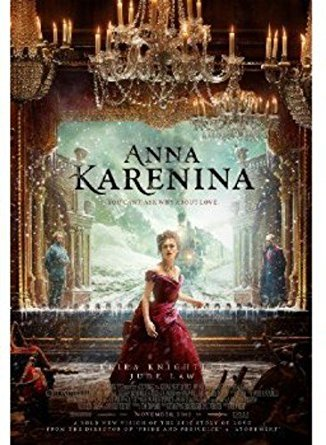
Anna is a charged particle placed into an unstable potential well—society—whose boundaries are invisible yet rigid. Her love for Vronsky creates symmetry-breaking fields that ripple through aristocratic space, destabilizing every orbit around her. Tolstoy frames passion as a high-energy excitation: exhilarating at first, then catastrophically unsustainable once the system’s dissipation begins. Levin, by contrast, is … Continue reading 70. Anna Karenina — Leo Tolstoy
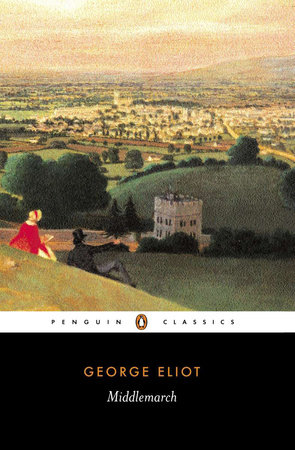
69. Middlemarch — George Eliot
Eliot constructs a sociological Standard Model, mapping how individual desires propagate through the intertwined fields of marriage, politics, and vocation. Dorothea is a high-energy idealist, her moral charge so intense it distorts local spacetime, drawing others into her orbit and unsettling stale institutions. Lydgate is another promising excitation whose trajectory decays under the friction of … Continue reading 69. Middlemarch — George Eliot
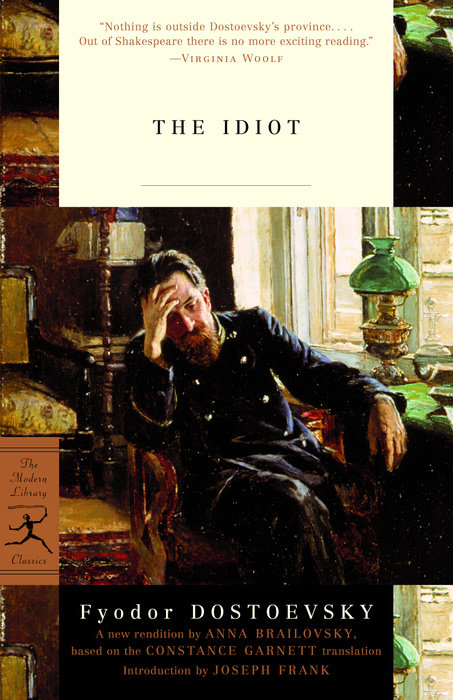
68. The Idiot — Fyodor Dostoevsky
Prince Myshkin is an anomaly—a positively charged moral particle introduced into a volatile environment dominated by suspicion, vanity, and wounded pride. His innocence operates like an unshielded field: instead of harmonizing others, it destabilizes them, revealing their bitterness, longing, and cruelty. Rogozhin is the counter-charge, drawn irresistibly to Myshkin but determined to pull him into … Continue reading 68. The Idiot — Fyodor Dostoevsky

The Chimeric Protocols of Transmutation and the Book of Split Ink (1)
Everyone who follows me, knows that I can become quiete eratic in my blogging when I get absorbed into the final phase of an ongoing project. So was it this time and finaly: the mouse birthed a mountain. The Chimeric Glyph System was brewing and coming to fruition over years on a subconscient level till, … Continue reading The Chimeric Protocols of Transmutation and the Book of Split Ink (1)
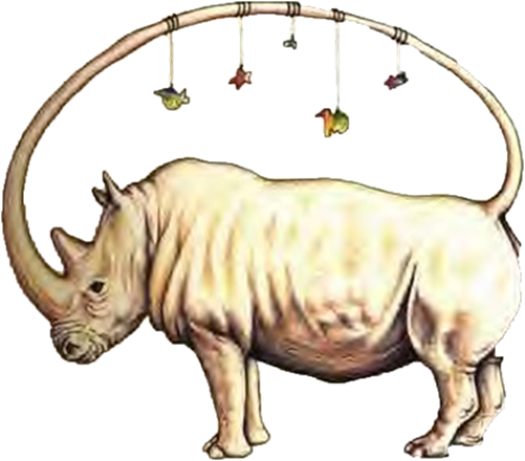
The Armored Beasts: 1. The Cradle-Horn Rhinoceros
A lumbering cradle of stone-flesh,its horn curved into an archfrom which tiny stars and paper fish dangle—a nursery mobile for the sky.It walks slowly,because it carries the dreams of newborn constellations,and if it ever sleeps,the ornaments begin to spinand whisper lullabies to the moon.

Toward a Standard Literary Model
This post proposes a speculative yet disciplined framework for reimagining world literature: the Standard Literary Model (SLM). Inspired by the elegance of the Standard Model of particle physics, the SLM treats stories not as static cultural objects but as fields, forces, and interacting particles within a vast narrative cosmos.The goal is not to collapse literature … Continue reading Toward a Standard Literary Model
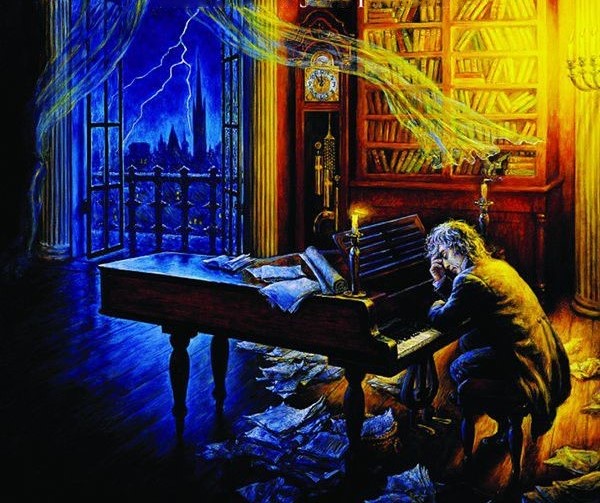
The Becoming of a Symphonic Rock Opera.
About the composition of a symphonic rock opera on the synclavier.

The Anatomy of a Best-Selling Book.
The average length of a best seller is 375 pages, set inside the USA and the protagonist is a female lawyer or detective. Romance is an upcoming segment: from 5 % of the sales in 1994 to 40 % on Amazon today and it has been demonstrated that men have a slight preference for a male main protagonist.

Literary Crypto-mathematics
About an algorithm demonstrating that the course of North American Novels between 1863 and 1963 as a whole, can be described by an algebraic equation.
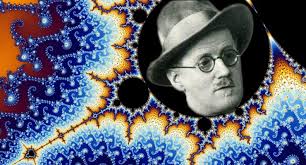
World Literature and Fractals
As far as many bookworms are concerned, advanced equations and graphs are the last things which would hold their interest, but there's no escape from the math. Physicists from the Institute of Nuclear Physics of the Polish Academy of Sciences in Cracow, Poland, performed a detailed statistical analysis of more than one hundred famous works … Continue reading World Literature and Fractals