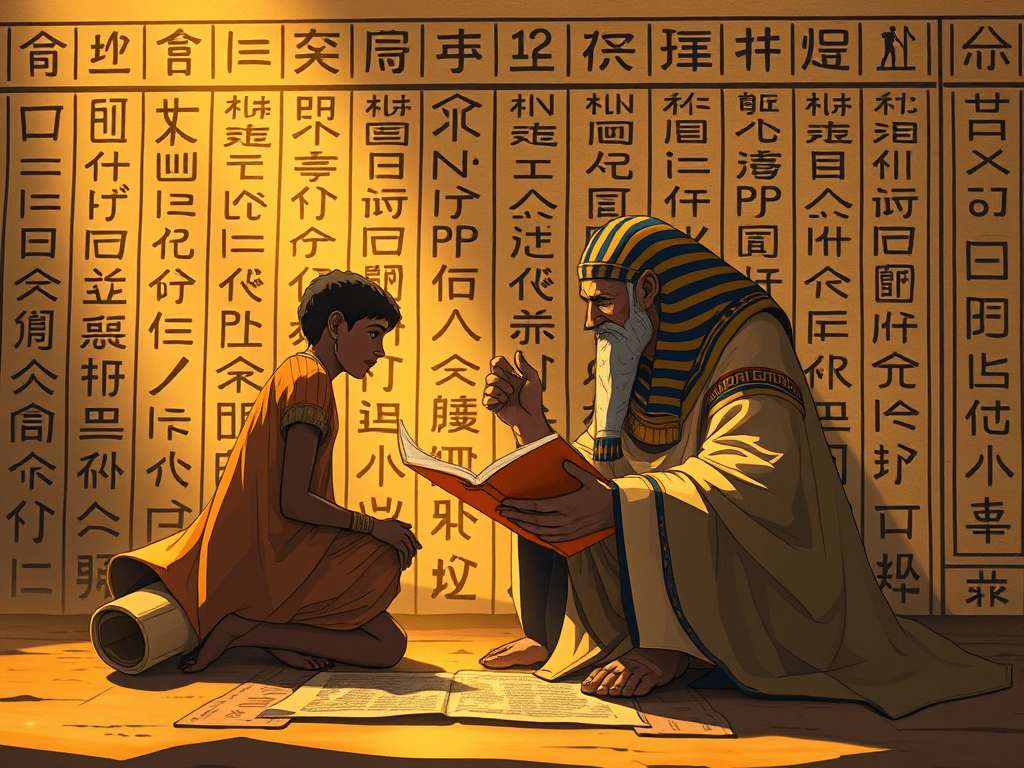
The Instruction of Ptahhotep is a low-energy effective theory: a compact Lagrangian of social rules that regulate interaction in an Egyptian legal-gauge. Its aphorisms act like conserved currents—protocols that minimize conflict and stabilize the civic vacuum. Each proverb functions as a mediated interaction (gauge boson) transmitting authority from elder to younger generations. The "mass" these … Continue reading 3. The Instruction of Ptahhotep (Ancient Egypt)

Toward a Standard Literary Model
This post proposes a speculative yet disciplined framework for reimagining world literature: the Standard Literary Model (SLM). Inspired by the elegance of the Standard Model of particle physics, the SLM treats stories not as static cultural objects but as fields, forces, and interacting particles within a vast narrative cosmos.The goal is not to collapse literature … Continue reading Toward a Standard Literary Model
An impending book launch: The Maharajagar
I know that I'm a poor internaut. When inspiration strikes me, I just disappear in my studio and the blogosphere will have to keep running without me. It probably saddled me up with a a couple of D's in its subroutine. To blog is to be on the internet. Now what happened that I risked … Continue reading An impending book launch: The Maharajagar
Reading the canon of World Literature
Chapter 20; Father Goriot by Honore de Balzac.July 2nd, 2015Summary Most of the action is centered around a boarding house called Maison Vauquer, ran by a widow, Mme. Vauquer. The story relates mostly to the interactions between Jean-Joachim Goriot, a retired vermicelli maker who bankrupted himself to give his daughters a better future; a secretive … Continue reading Reading the canon of World Literature

Reading the Canon of the World Literature Feb 22 till Feb 23
February 22ndI’ve finished only two titles of my list. This book is listed number fifteen and I started to consider if, for the time being, when picking a book, I shouldn’t stay below number twenty. After all, on number three figures Ana Karina by Tolstoy, and that’s also a giant of 864 pages of difficult … Continue reading Reading the Canon of the World Literature Feb 22 till Feb 23
Reading the Canon of the World Literature Jan 15 till Feb 22.
2. In Search of Lost Time by Marcel Proust.The original title of this series of books was “A la Recherche du Temps Perdu” and contains the following volumes;1 Volume One: Swann's Way, 2 Volume Two: In the Shadow of Young Girls in Flower3 Volume Three: The Guermantes Way4 Volume Four: Sodom and Gomorrah5 Volume Five: … Continue reading Reading the Canon of the World Literature Jan 15 till Feb 22.
Reading the Canon of the World Literature – day 1 to 15.
I made nine years ago a new year's resolution to read the Top 100 Works in World Literature by the Norwegian Book Clubs with the Norwegian Nobel Institute. The club polled a panel of 100 authors from 54 countries on what they considered the “best and most central works in world literature.”I was setting out … Continue reading Reading the Canon of the World Literature – day 1 to 15.

The Connection between Writing and Painting
The featuring image of this post carries the images of Borges and Dali. While Borges was a key figure in Spanish-language and international literature, Dali was was a Spanish surrealist artist renowned for his technical skill, precise draftsmanship, and the striking and bizarre images in his work . I almost forgot it, but I started this page a couple of … Continue reading The Connection between Writing and Painting

Reading in the Dark
Reading in the Dark is a novel by Seamus Deane in 1996. The title of the novel is taken from a section in which the boy is alone and struggling to read in the dark set against the violence of Northern Ireland in the 1940s and 1950s. The boy narrator grows up haunted by a … Continue reading Reading in the Dark
The reality of being a writer.
In 2020, there were over 44.2 thousand writers and authors working in the United States, down very slightly from the previous year but still markedly higher than the figure recorded back in 2011. Many changes have occurred for employees in this sector over the last few years, and it is a truth universally acknowledged that … Continue reading The reality of being a writer.
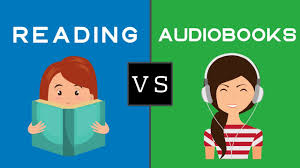
Audio Books: Listening vs Reading.
My main motivation to turn to audio books was that I’m spending so much time of the day staring at a screen, that in the evening my eyes are too tired to read any further.

The Mindset of the Average Aspirant Writer on Facebook.
Under this paragraph you find a synopsis of the most recurring questions that were posted on a Facebook page about creative writing.

A Collage of First Lines from Novels.
I write this sitting in the kitchen sink.[1] If you are interested in stories with happy endings, you would be better off reading some other book.[2] I’m pretty much f*cked. [3] No one would have believed, in the last years of the nineteenth century, that this world was being watched keenly and closely by intelligences … Continue reading A Collage of First Lines from Novels.

Fun TBR list
For those still looking for a 2020 reading resolution,

Chaos Dynamics in Modern Literature.
In both contemporary literature and science, chaos has been conceptualized as extremely complex information rather than an absence of order. As a result, textuality is conceived in new ways within critical theory and literature, and new kinds of phenomena are coming to the fore within an emerging field known as the science of chaos. The … Continue reading Chaos Dynamics in Modern Literature.

Serial Series Yes. Serialized Novels NO.
Lately I’ve out of frustration canceled my Kindle Unlimited account about this issue. Too many authors don’t seem to grasp what’s the difference between a serialized novel and a serial series. Put simply: a series is a collection of books that all belong to the same “franchise” but can be read in any order (because they’re … Continue reading Serial Series Yes. Serialized Novels NO.

Climbing and Jumping The Dark Tower.
I was looking for a theme that could bind an African, Caucasian, Indian, Chinese and Inuit man in a coherent group. A such I was playing with the word quintet till I remembered the Black Tower Saga by Stephen King.
An Author’s Thoughts about Literary Criticism.
I just take sometimes offence at some critics who base their weighting of a novel on a very narrowly defined scale and sometimes these scales are provided by academics whose job it is to provide an informed opinion about them and not some biased fodder.

Struggling with The Stream of Consciousness.
In our contemporary culture is an active resistance to difficulty in all its aesthetic manifestations, accompanied by a sense of grievance that conflates it with political elitism.

The Novel as a Source of Knowledge.
Novels, while not in the business of stating truths about the world, tell a human story very often universal in scope and present them back to us as concrete forms of human engagement. A novel has the capacity to give shape, form, and structure, to the range of values, concerns, and experiences that define human reality.
 The Maharajagar