In this post I want you to bring part 8 of my latest project (for those who missed out on part 1, more info at the bottom of this post). If you want to hear the audio, just click on the image (duration 110 sec). Saturn. Mixed technics on canvas 45 x 45 cm by … Continue reading Civilization and Cosmos. Part 8: Saturn

Civilization and Cosmos. Part 5: Mars
In this post I want you to bring part 5 of my latest project (for those who missed out on part 1, more info at the bottom of this post). If you want to hear the audio, just click on the image (duration 115 sec). Mars. Mixed technics on canvas 45 x 45 cm by … Continue reading Civilization and Cosmos. Part 5: Mars
Civilization and Cosmos. Part 4: Terra
In this post I want you to bring part 4 of my latest project (for those who missed out on part 1, more info at the bottom of this post). If you want to hear the audio, just click on the image (duration 115 sec). Terra. Mixed technics on canvas 45 x 45 cm by … Continue reading Civilization and Cosmos. Part 4: Terra
Civilization and Cosmos. Part 3: Venus
In this post I want you to bring part 3 of my latest project (for those who missed out on part 1, more info at the bottom of this post). If you want to hear the audio, just click on the image (duration 141 sec). Venus. Mixed technics on canvas 45 x 45 cm by … Continue reading Civilization and Cosmos. Part 3: Venus
Civilization and Cosmos. Part 2: Mercury
In this post I want you to bring part 2 of my latest project (for those who missed out on part 1, more info at the bottom of this post). If you want to hear the audio, just click on the image (duration 130 sec). Mercury. Mixed technics on canvas 45 x 45 cm by … Continue reading Civilization and Cosmos. Part 2: Mercury

The Binary Perspective
The featured image is an installation of two canvasses that explores the binary nature of the reality by contrasting male to female, water to fire, vertical to horizontal, oval to rectangle, natural to artificial, and much more ...

Cyberhive
Cyberhive (canvas 60' x 60') tries to visualize the manifestation of a multi-dimensional cybernetic system in the time-space continuum and is the capstone on the eight-part series "Cybernetic Musings". As a system where different minds come together to create or destroy information, the existence of a cyberhive mind is as real as that of the … Continue reading Cyberhive
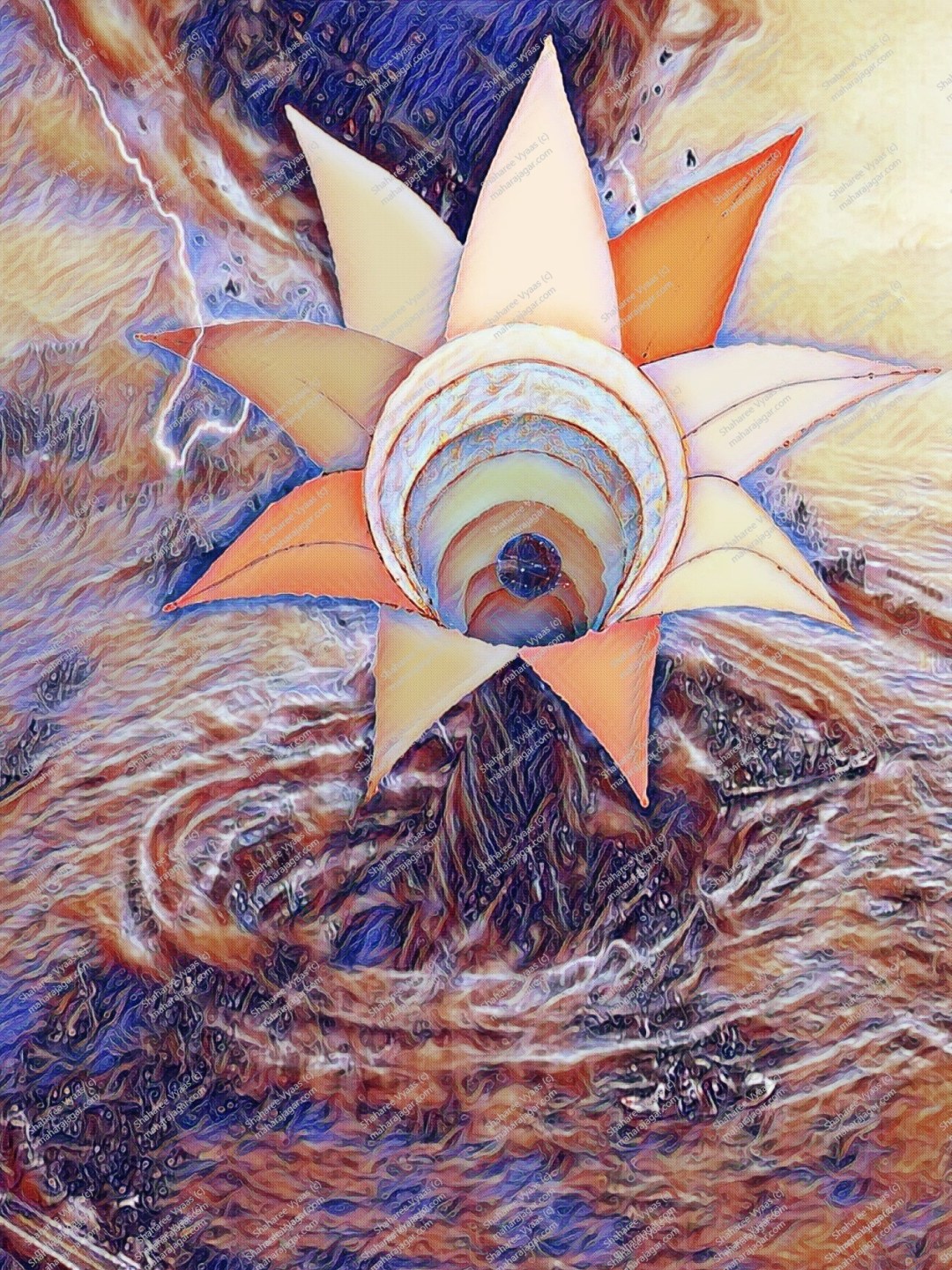
The Birth of the Cyberspace
The term cyberspace was first used by the American-Canadian author William Gibson in 1982 in a story published in Omni magazine and then in his book Neuromancer. In this science-fiction novel, Gibson described cyberspace as the creation of a computer network in a world filled with artificially intelligent beings. The real cyberspace is a global … Continue reading The Birth of the Cyberspace

Big Santa.
Santa is a legendary character, originating in Western culture, who is said to bring children gifts on Christmas Eve of toys and candy or coal or nothing, depending on whether they are "naughty or nice". He supposedly accomplishes this with the aid of Christmas elves, who make the toys in his workshop, often said to … Continue reading Big Santa.

The Complexity of Simplicity
“Being simple is the most complicated thing nowadays.” -Ramana Pemmaraju The principle of simplicity or parsimony—broadly, is the idea that simpler explanations of observations should be preferred to more complex ones—is conventionally attributed to William of Occam, after whom it is traditionally referred to as Occam's razor. This does not mean that there will be … Continue reading The Complexity of Simplicity

Conspiracy Theories, Social Entropy and Literature.
We live in a time where conspiracy theories are rampant and slowly start to realize how this disinformation is contributing to a logarithmic growing degree of social entropy. There is a whole section of literature dedicated to it and I like to call it confabulated history books presented as nonfiction.

Writing in Times of Pestilence
Now that society is struggling to deal with a devastating flu pandemic, I found the time ripe to give this subject some thoughts in a literary context. The first plague writings emerged around 1665 and resulted in innovative dialogues on a long endured illness. While the collective memory of the plague as an affliction was … Continue reading Writing in Times of Pestilence
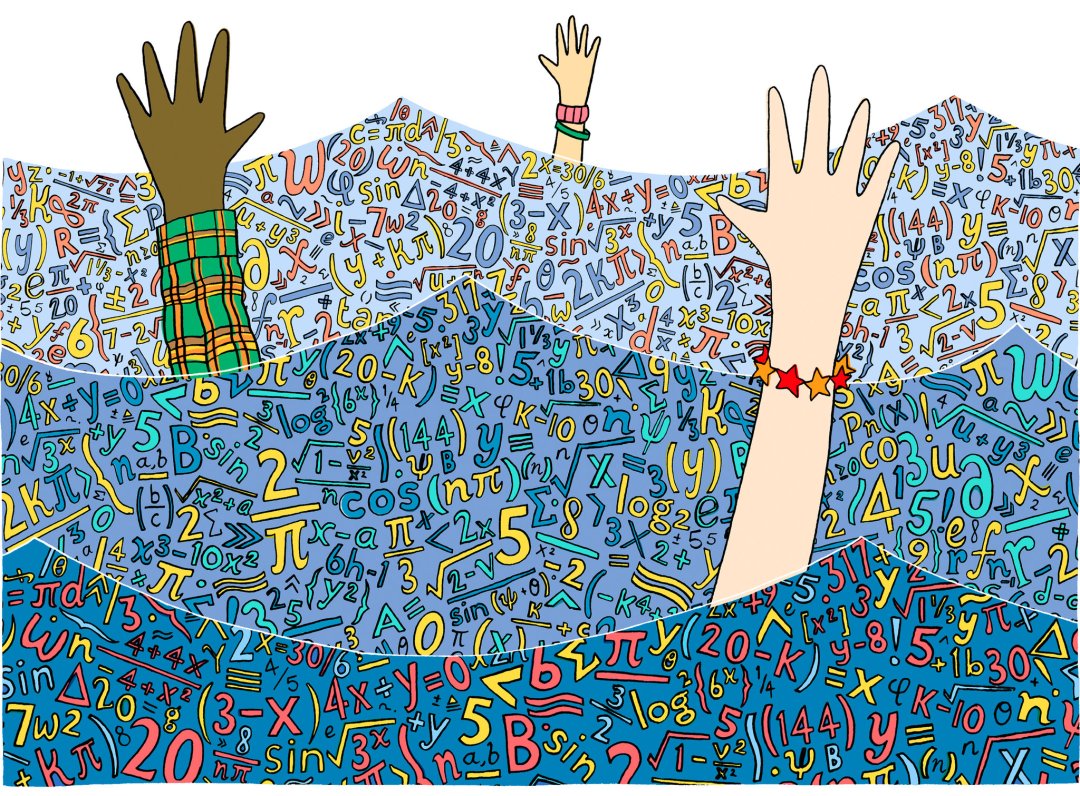
Literary Crypto-mathematics
About an algorithm demonstrating that the course of North American Novels between 1863 and 1963 as a whole, can be described by an algebraic equation.
Knowledge and Power
Since Plato dreamed of a republic ruled by philosophers, the idea rooted in human conscience that knowledge should equal power. One should disagree with this stance, because in this worldview, Einstein would not have been just some bystander at the Alamo-project that developed the first nuclear bombs. We are trained and educated to comprehend the … Continue reading Knowledge and Power
Social entropy in the USA
Degree of entropy inside the USA following the system theory. 1. Introduction According to the Second Law of Thermodynamics, the entropy of a naturally occurring system always increases. In social systems, the degree of disorder is a manifestation of the social dissatisfaction within the limits of the system 2. Formulating the Relationship to Calculate Social … Continue reading Social entropy in the USA
 The Maharajagar