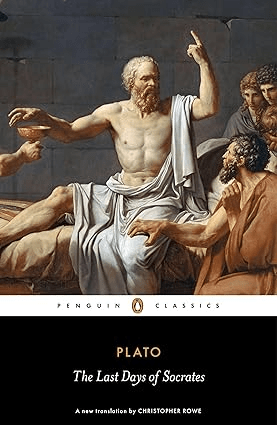
Socrates appears as a stable particle within a decaying moral field, a disruptive force whose questions unsettle the Athenian vacuum. His method—elenchus—is a controlled collision: ideas smashed together until hidden structures emerge. The trial reveals a society terrified of intellectual ionization—fearful that too much inquiry will shatter its fragile civic bonds. Socrates refuses to adjust … Continue reading 13. The Trial of Socrates (or Apology) — Plato
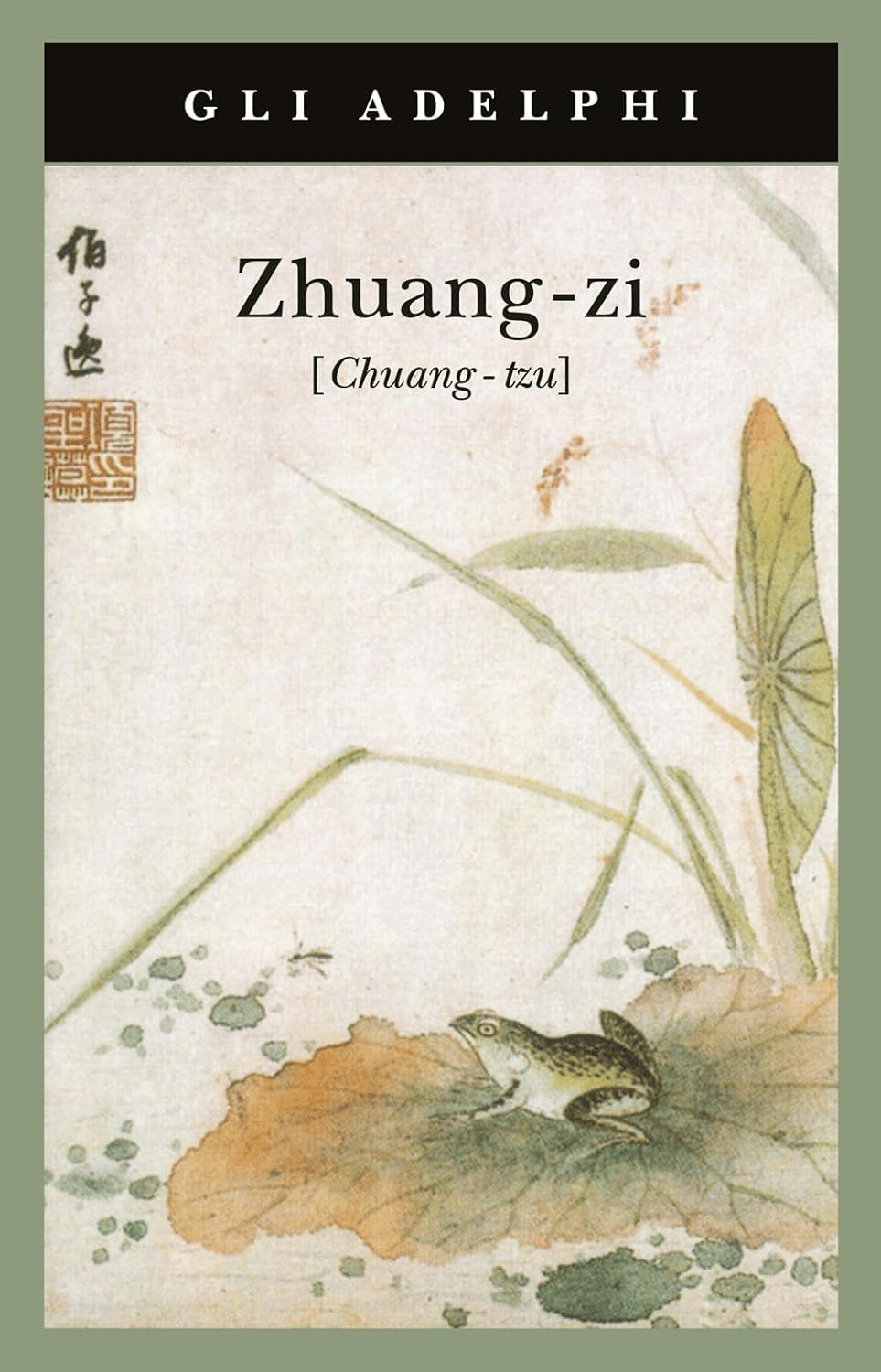
11. Zhuangzi — Zhuang Zhou (China)
Zhuangzi destabilizes fixed identity-mass by questioning categories and promoting adaptive superpositions. His parables encourage flexible couplings, suggesting that rigid potentials lead to suffering; in SLM, he prescribes dynamic renormalization—allowing states to be context-dependent rather than fixed invariants. The Zhuangzi operates as a philosophical Mythoplasma, intertwining N + Mγ + T to create drifting parables whose … Continue reading 11. Zhuangzi — Zhuang Zhou (China)
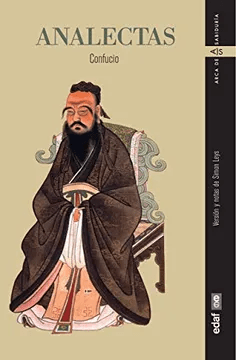
9. Analects — Confucius (China)
The Analects present a prescriptive dynamics for social stability. Rituals and hierarchical roles are selection rules: perform them correctly and social coherence emerges. The Analects thus provide precise Lagrangian terms that penalize deviance and reward conformity, producing low-entropy social arrangements.A lean Realiton (N + D±) stabilized through ethical clarity. Dissonatons (D±) emerge in the friction … Continue reading 9. Analects — Confucius (China)

8. The Odyssey — Homer
In the Standard Literary Model, The Odyssey behaves like a baryon: a bound state of wanderer, memory, and fate locked into an oscillatory pattern by the strong force of home. Odysseus is a quark of identity that refuses confinement yet can never fully escape it; every island he encounters is another local minimum in the … Continue reading 8. The Odyssey — Homer

5. The Vedas (India)
The Vedas operate like foundational field equations: hymns that set cosmological symmetries, ritual operators, and priestly mediators that maintain the sacrificial vacuum. Their liturgies are bosonic actions transmitting sacred charge between human and cosmic realms. The sacrificial system establishes selection rules that regulate social stratification and perform energy transfers (offerings), preserving cosmic order (ṛta). In … Continue reading 5. The Vedas (India)
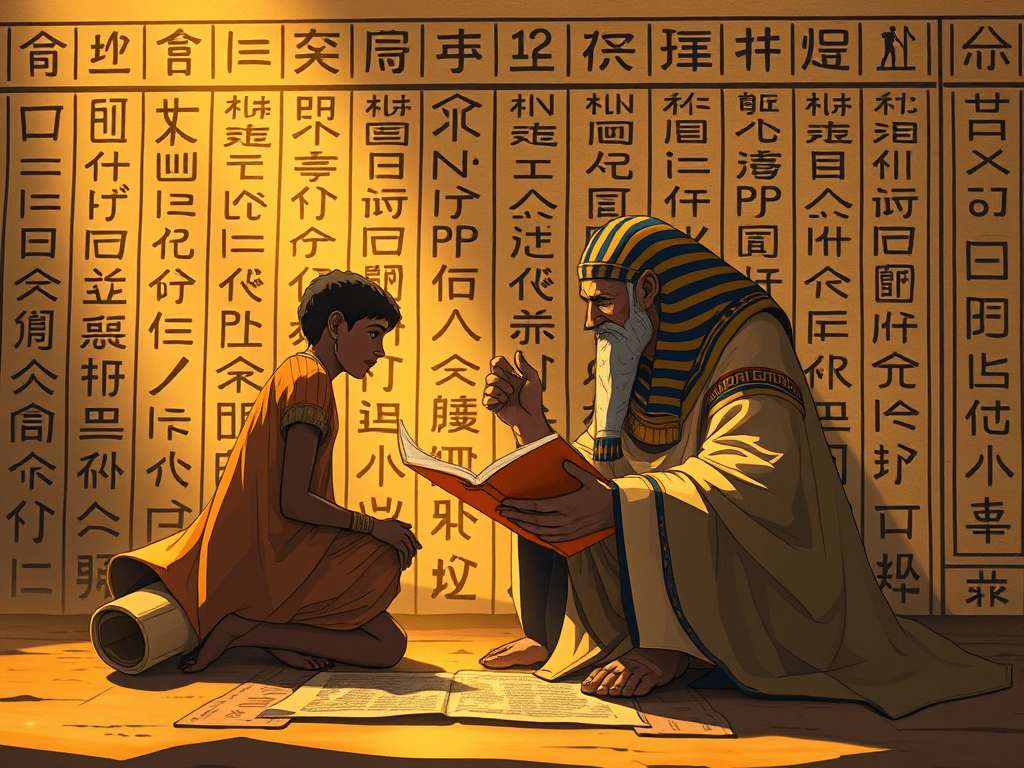
3. The Instruction of Ptahhotep (Ancient Egypt)
The Instruction of Ptahhotep is a low-energy effective theory: a compact Lagrangian of social rules that regulate interaction in an Egyptian legal-gauge. Its aphorisms act like conserved currents—protocols that minimize conflict and stabilize the civic vacuum. Each proverb functions as a mediated interaction (gauge boson) transmitting authority from elder to younger generations. The "mass" these … Continue reading 3. The Instruction of Ptahhotep (Ancient Egypt)

1. The Epic of Gilgamesh (Mesopotamia)
Gilgamesh is a prototypical heavy excitation resisting mortality. Enkidu’s entrance turns the two into a bound pair, like a baryonic composite stabilized by intense mutual coupling. Enkidu’s death is a perturbation that shifts Gilgamesh’s vacuum: the hero gains existential mass—grief, wisdom—forcing a search for permanence (immortality) that results in a renormalized appreciation of the communal … Continue reading 1. The Epic of Gilgamesh (Mesopotamia)

Toward a Standard Literary Model
This post proposes a speculative yet disciplined framework for reimagining world literature: the Standard Literary Model (SLM). Inspired by the elegance of the Standard Model of particle physics, the SLM treats stories not as static cultural objects but as fields, forces, and interacting particles within a vast narrative cosmos.The goal is not to collapse literature … Continue reading Toward a Standard Literary Model
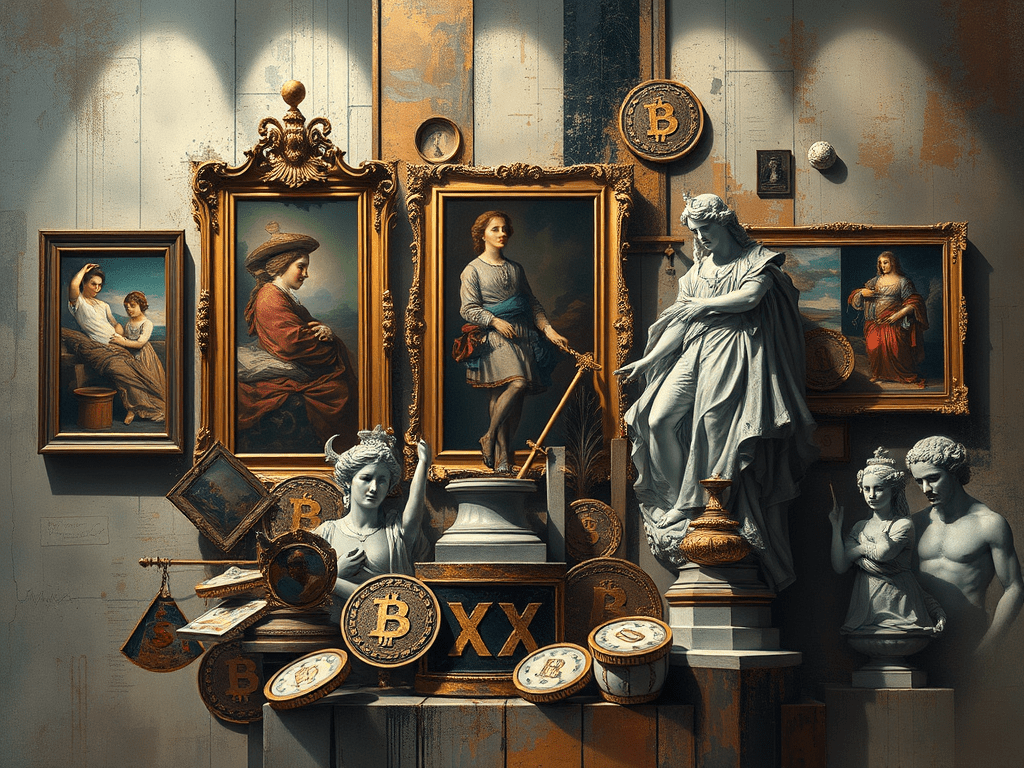
The contemporary critical art theory
A common critique of the art world is the emphasis on financial gain over critical engagement with art theory. Many artists feel that the focus on monetization, particularly through NFTs and other speculative markets, overshadows the potential for deeper artistic and social commentary. This can lead to a situation where artistic merit is secondary to … Continue reading The contemporary critical art theory
Reading the canon of World Literature
Chapter 20; Father Goriot by Honore de Balzac.July 2nd, 2015Summary Most of the action is centered around a boarding house called Maison Vauquer, ran by a widow, Mme. Vauquer. The story relates mostly to the interactions between Jean-Joachim Goriot, a retired vermicelli maker who bankrupted himself to give his daughters a better future; a secretive … Continue reading Reading the canon of World Literature

Wokean Nation. Acrylic on canvas W 30 cm x H 20 cm by Shaharee Vyaas.
#Woke and #anti-woke #crusaders are the two prominent movements that give shape at the current #political landscape. Both #movements #cancel the works from artists and writers that don't wholeheartedly support their rhetoric. It is accompanied with violent street clashes between two parties with opposite views about fundamental values. One wants to curb the rising gun-violence … Continue reading Wokean Nation. Acrylic on canvas W 30 cm x H 20 cm by Shaharee Vyaas.

Amazing Parasites
Amazing Parasites. Acrylic on canvas 45 x 45 cm by Shaharee Vyaas (2021). More info on https://maharajagar.com/2021/10/01/amazing-parasites/
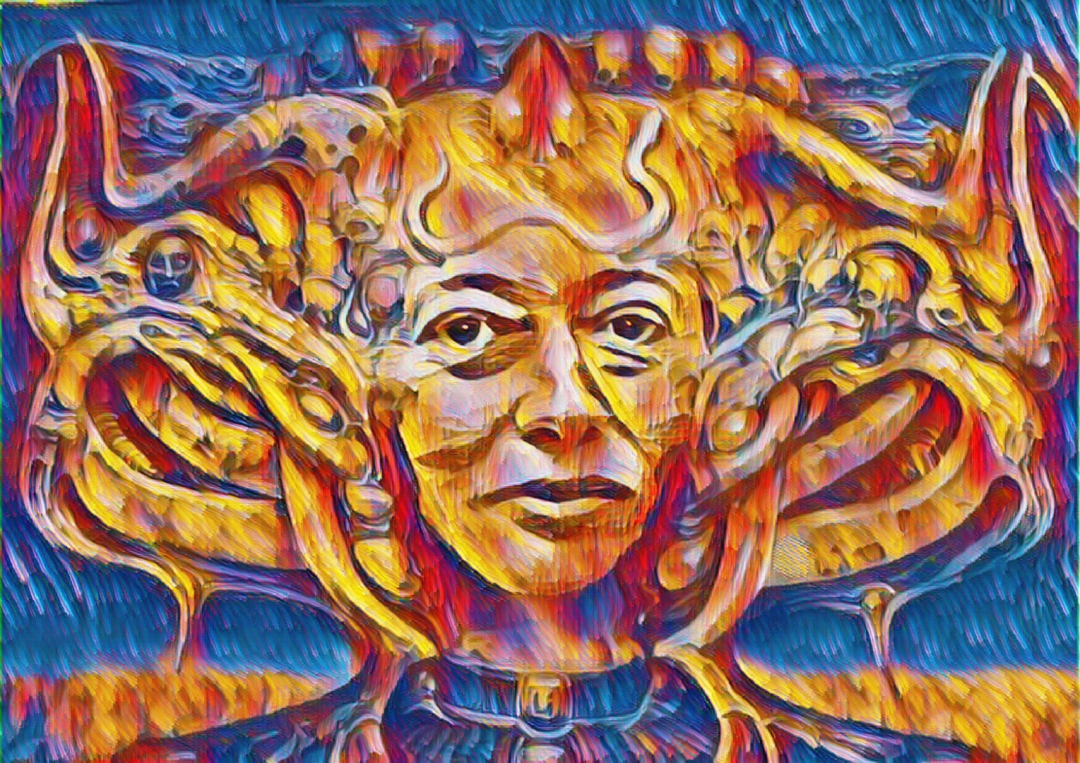
The Valkyrie in Modern Art.
Valkyrie. Acrylic on canvas 40 x 30 cm by Shaharee Vyaas.
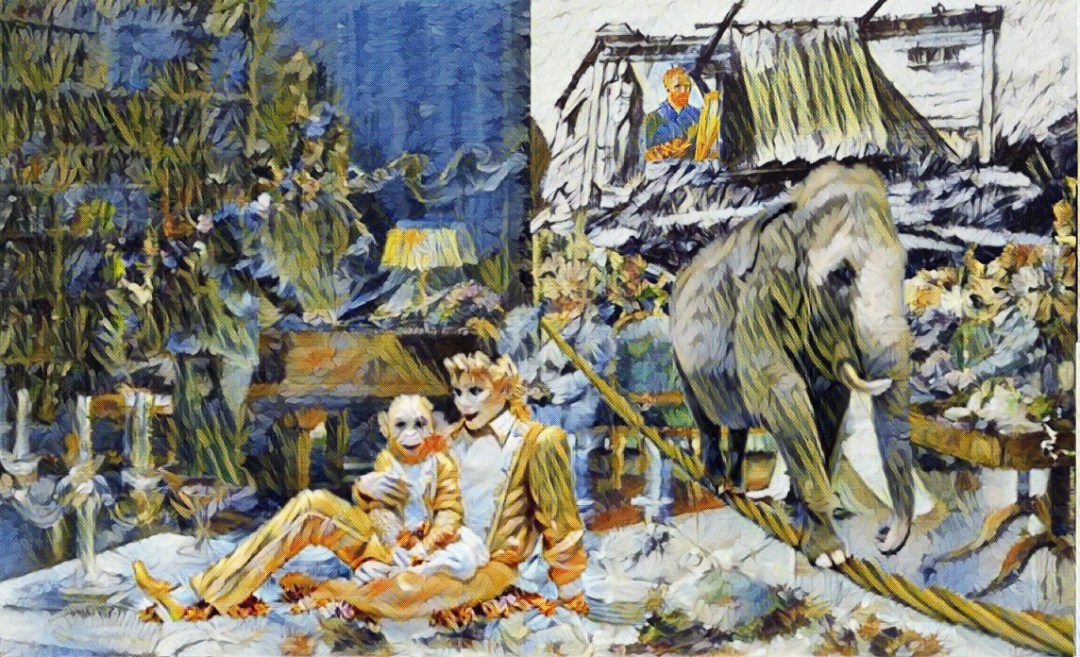
Artists and the Middle Way.
Why do you have so many contemporary painters who pose with brush and pallet in their hands while most of their work consists of digitally created canvas prints? Previous generations were proud to pose with the latest tools of their craft that offered them more possibilities to increase the quality and quantity of their output. … Continue reading Artists and the Middle Way.
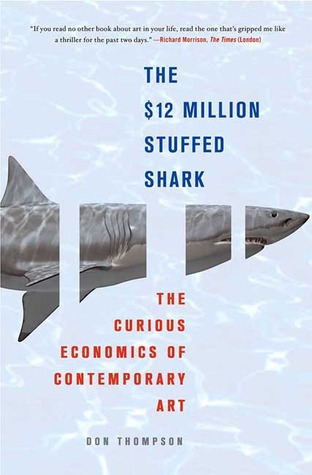
The $12 Million Stuffed Shark
Why would a smart New York investment banker pay $12 million for the decaying, stuffed carcass of a shark? By what alchemy does Jackson Pollock’s drip painting No. 5, 1948 sell for $140 million? Economist Don Thompson explores it in his book, tracing the money, lust, and self-aggrandizement of the art world in an attempt … Continue reading The $12 Million Stuffed Shark
Literature, Information Technology, and the Internet.
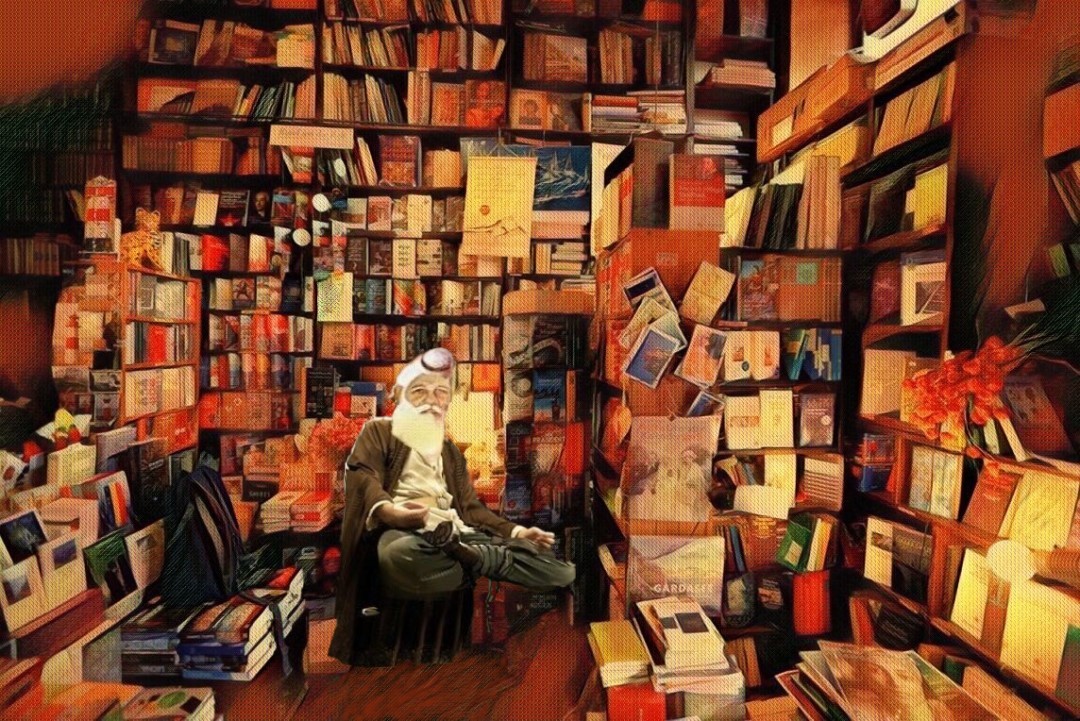
Information technology refers to the ways most literature comes nowadays into existence while the internet refers to its most popular distribution channel. The book industry has come to the realization that they have lost their monopoly of being the sole gate keepers of the literary world, while it can still be a career boost for … Continue reading Literature, Information Technology, and the Internet.

The Ripping Blogoclowns.
This article whines about the ripping and attention seeking blogo-clowns.

The US Literary Universe.
Since US literature, as represented by the US Library of Congress, has the whole universe as a subject, one could assume that this system is also governed by the same mechanisms that it describes. In the following two paragraphs I would like to outline some analogies between what most people consider as two disciplines who … Continue reading The US Literary Universe.

The Mindset of the Average Aspirant Writer on Facebook.
Under this paragraph you find a synopsis of the most recurring questions that were posted on a Facebook page about creative writing.
Resurrection as a Literary Device.
Resurrection isn’t anymore the monopoly of theologians, priests and other religious leaders, but has become also a recurring subject of intense research and speculation among artists and scientists.
 The Maharajagar