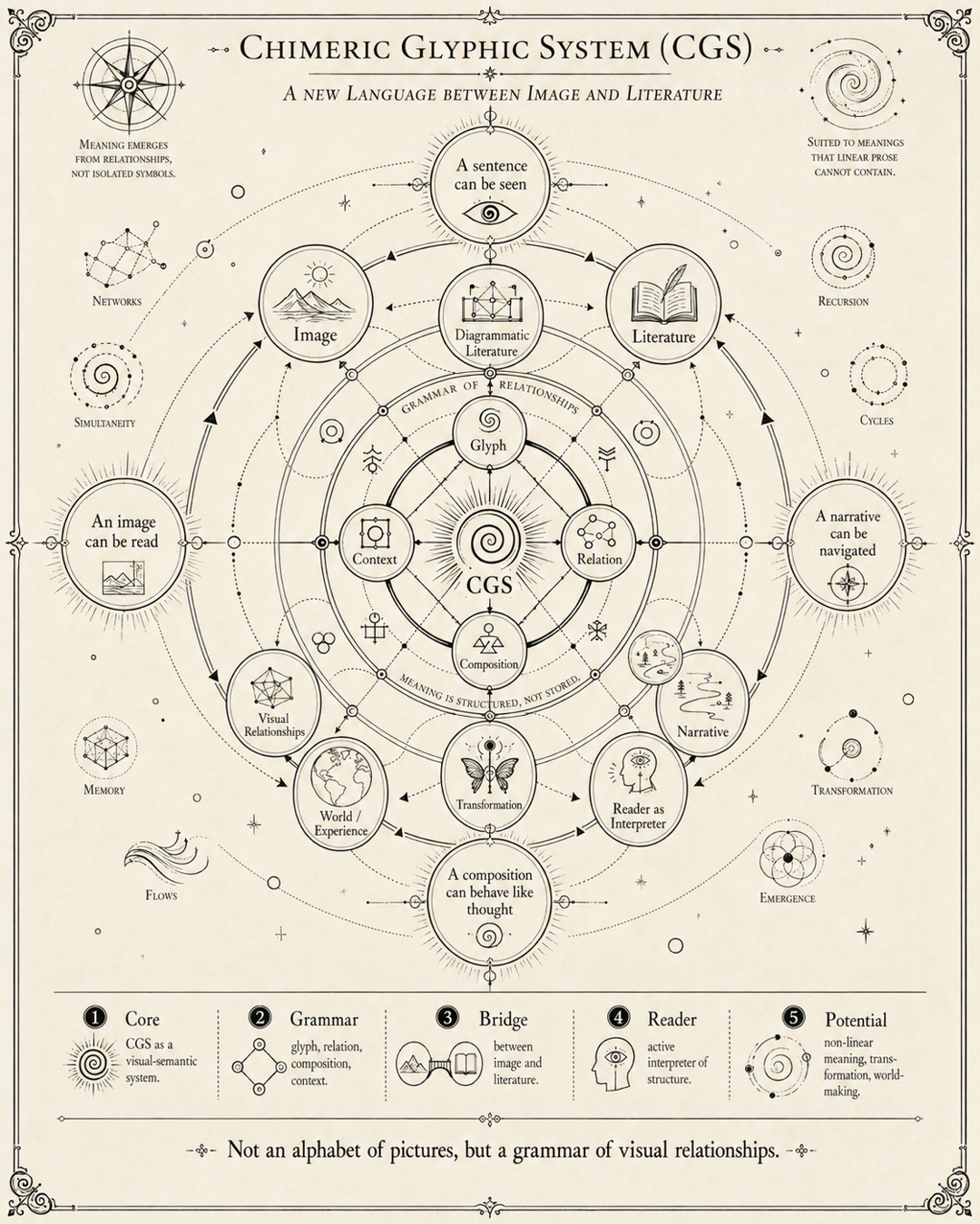
A circle is not automatically a word. A pathway is not automatically a sentence. But their relationships can be organised into a grammar.The Chimeric Glyphic System (CGS) is my attempt to investigate this possibility. It uses canonical glyphs, spatial position, orientation, repetition, enclosure, connection and movement to construct meaning through relationships rather than isolated signs.Traditional … Continue reading Can an Image Become a Language?
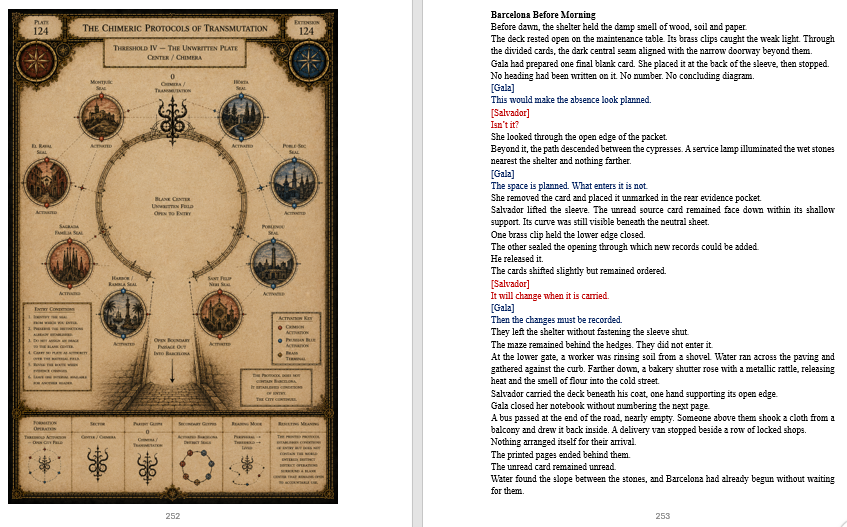
Barcelona: The Unwritten Final Plate
At first, Barcelona seems to be waiting outside the book.The Chimeric Protocols begin as symbolic structures, and The Book of Split Ink follows their gradual awakening into consciousness. But as the work develops, the city enters the experiment.Barcelona's Roman foundations, markets, cloisters, courtyards, shelters, forgotten hospitals and streets form an environment of intersecting times and … Continue reading Barcelona: The Unwritten Final Plate

What Makes a Book an Artwork?
As ArtsLibris brings artist books and independent publishing into focus in Barcelona, I have been thinking about a deceptively simple question: when does a book become an artwork in its own right?For The Chimeric Protocols of Transmutation / The Book of Split Ink, the answer lies partly in the relation between its pages. The publication … Continue reading What Makes a Book an Artwork?
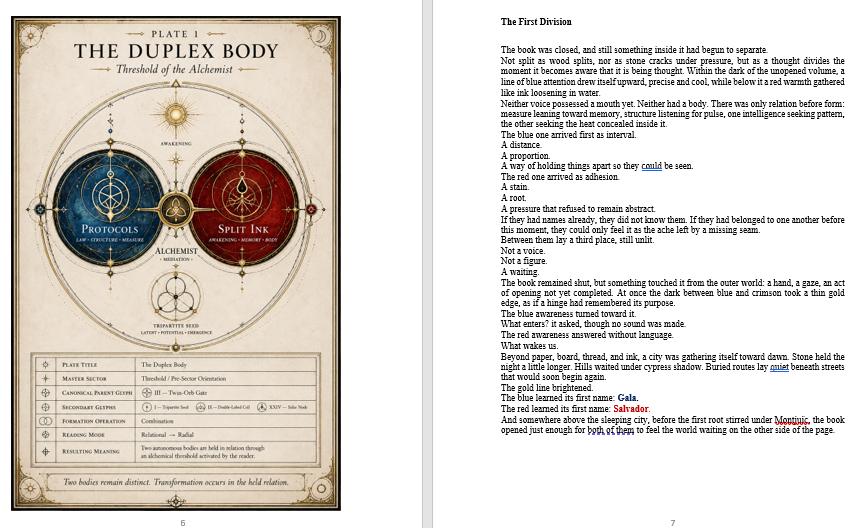
Two Pages, One Experiment
Open the book at any of its paired compositions and you encounter two forms of writing.On the left, a plate from The Chimeric Protocols of Transmutation: a visual construction shaped by glyphs, pathways, boundaries and relations. On the right, a passage from The Book of Split Ink: the corresponding narrative world experienced through Gala and … Continue reading Two Pages, One Experiment
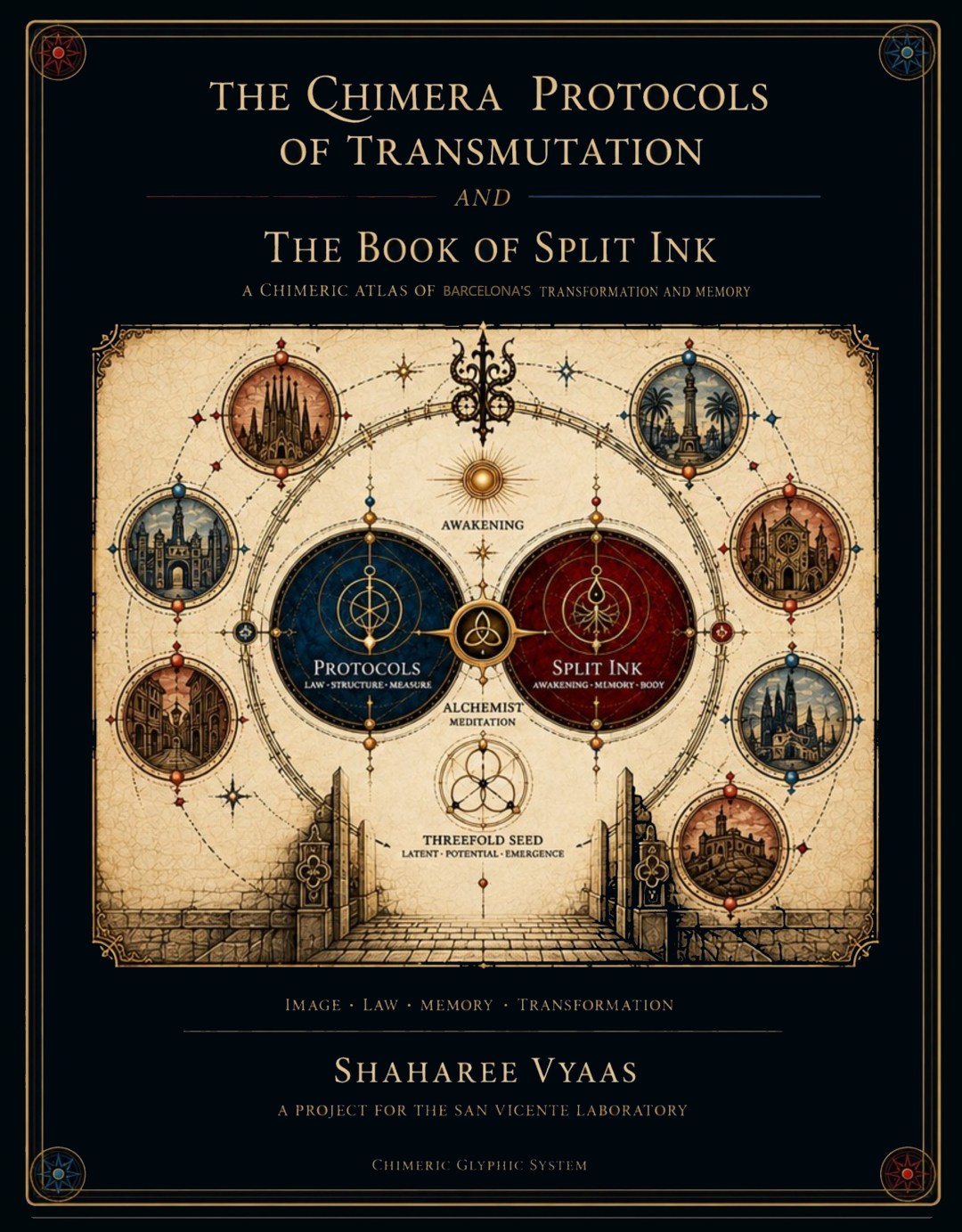
A Book Written in Two Languages
What if a book could be read in two languages at once—one made of images, the other of words?The Chimeric Protocols of Transmutation / The Book of Split Ink is an experiment in the space between visual art and literature. One part of the book is composed of symbolic plates made with the Chimeric Glyphic … Continue reading A Book Written in Two Languages

The Unwritten Plate
The final page is not an ending.Every system has a temptation. Closure. The completed diagram. The final answer. The last piece placed into the correct position. The Chimera resists this.Toward the end of the book, Gala and Salvador begin to work with cards. On one side, observations are recorded: position, orientation, sequence, conditions. On the … Continue reading The Unwritten Plate
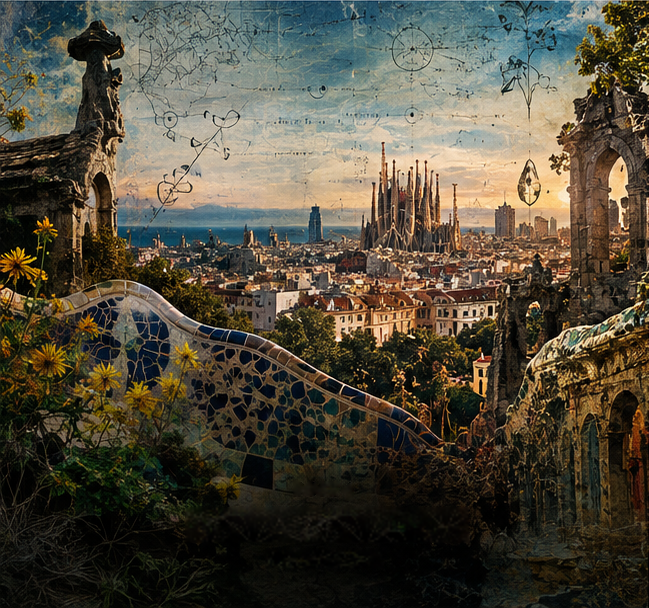
Barcelona Is the Glyph
A city can be a system of memory, structure and transformation.At first, Barcelona appears to be where the story happens. Then the city begins to answer back.The Protocols move through cemeteries, gardens, hidden rooms, markets, streets, old structures and forgotten thresholds. Roots enter the city. Trees begin to walk. Traffic systems become botanical. Former cages … Continue reading Barcelona Is the Glyph
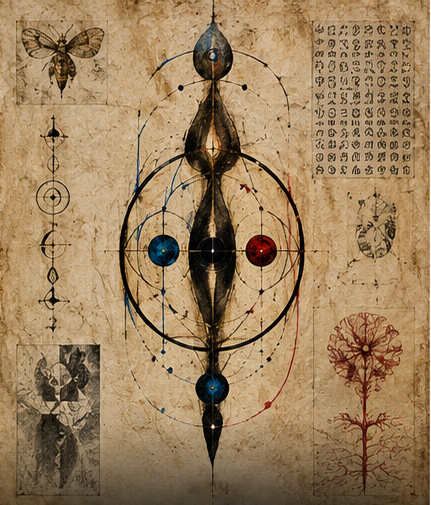
The Glyph That Does Something
An image can describe. A glyph can act.We are accustomed to asking an image what it represents. What does it depict? What does it symbolize? What does it remind us of? The Chimeric Glyph Script asks a different question: What does the image do?The plates in The Chimeric Protocols are not illustrations waiting for a … Continue reading The Glyph That Does Something
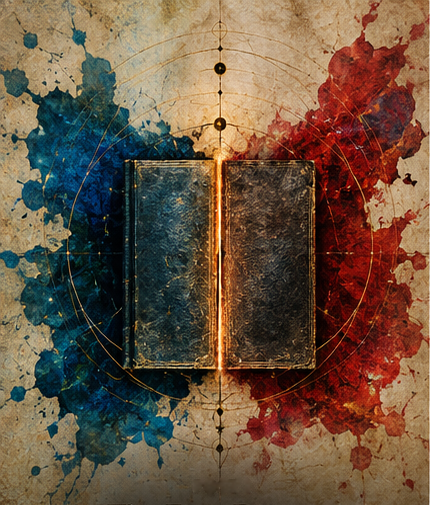
The First Division
What happens when a book begins to change before it is opened? A book can remain closed and still begin to change. Before there is a story, there is a separation. Somewhere inside the unopened volume, a line of blue attention begins to draw itself upward. It is precise. Cool. Almost architectural. It knows the … Continue reading The First Division
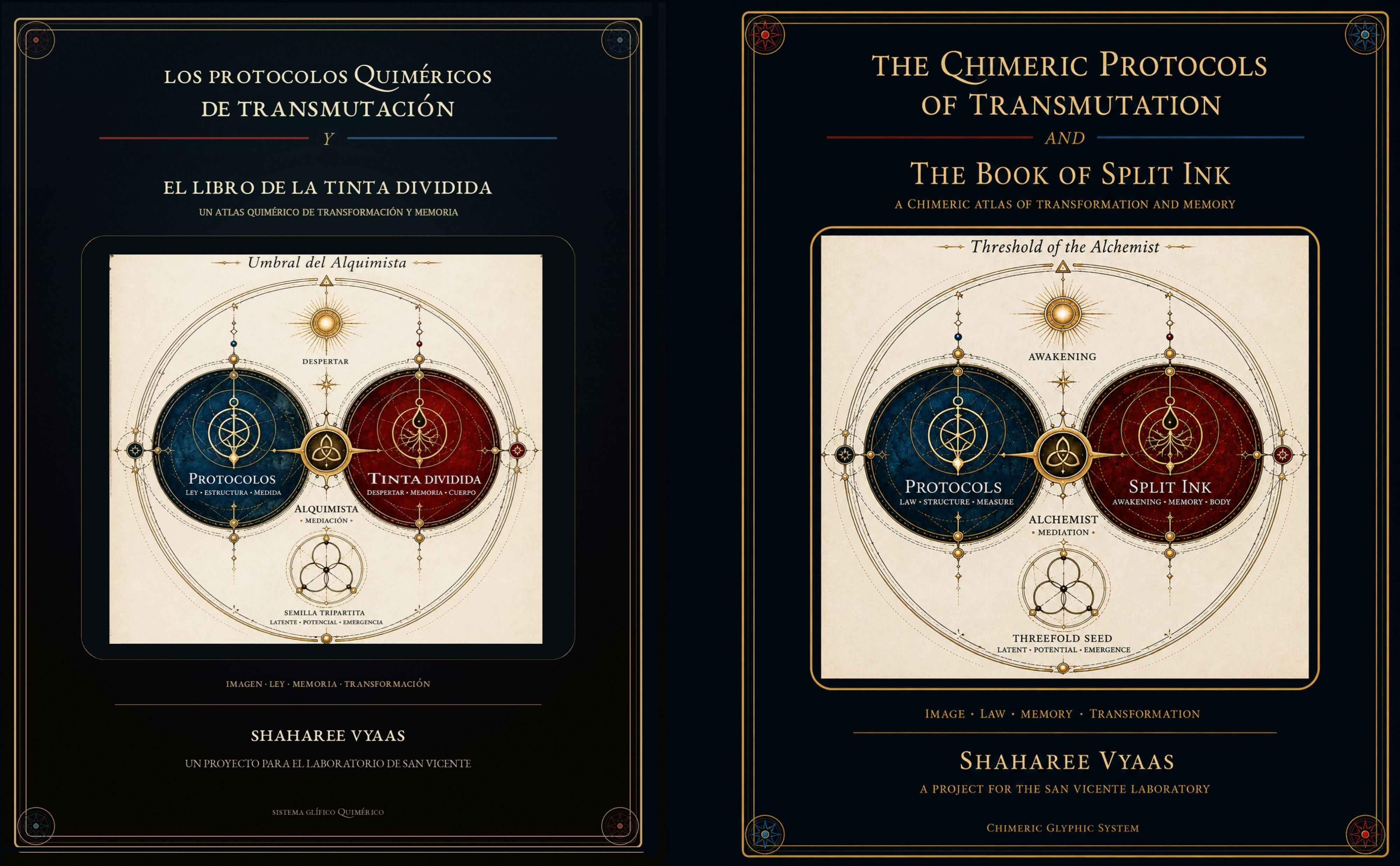
Why Release the Book Simultaneously in Spanish and English?
The simultaneous Spanish and English release of The Chimeric Protocols of Transmutation / The Book of Split Ink reflects the book’s own logic of duality and relation. Rooted in Barcelona yet conceived for an international readership, the two editions act as parallel linguistic bodies around the same visual-symbolic architecture—one work, two languages, and a shared field of meaning.
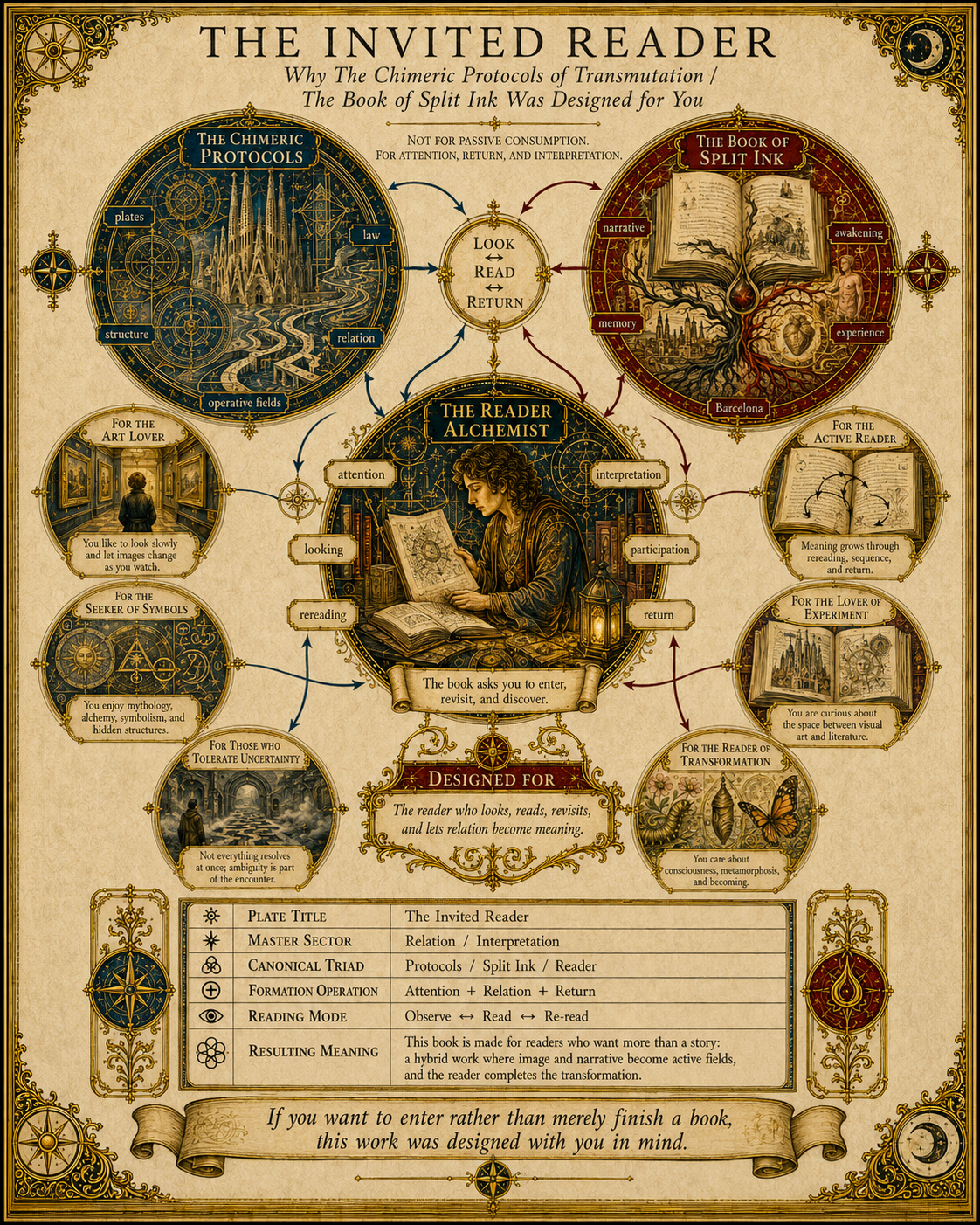
This Book Is for You If You Want More Than a Story
If you are an art lover who enjoys looking as deeply as reading, or a reader drawn to symbolism, experimentation, transformation, and hidden structures, this book was designed with you in mind. The Chimeric Protocols of Transmutation / The Book of Split Ink invites you to move between image and narrative, interpretation and intuition, reading and rereading—becoming not just an observer, but an active participant in the work.
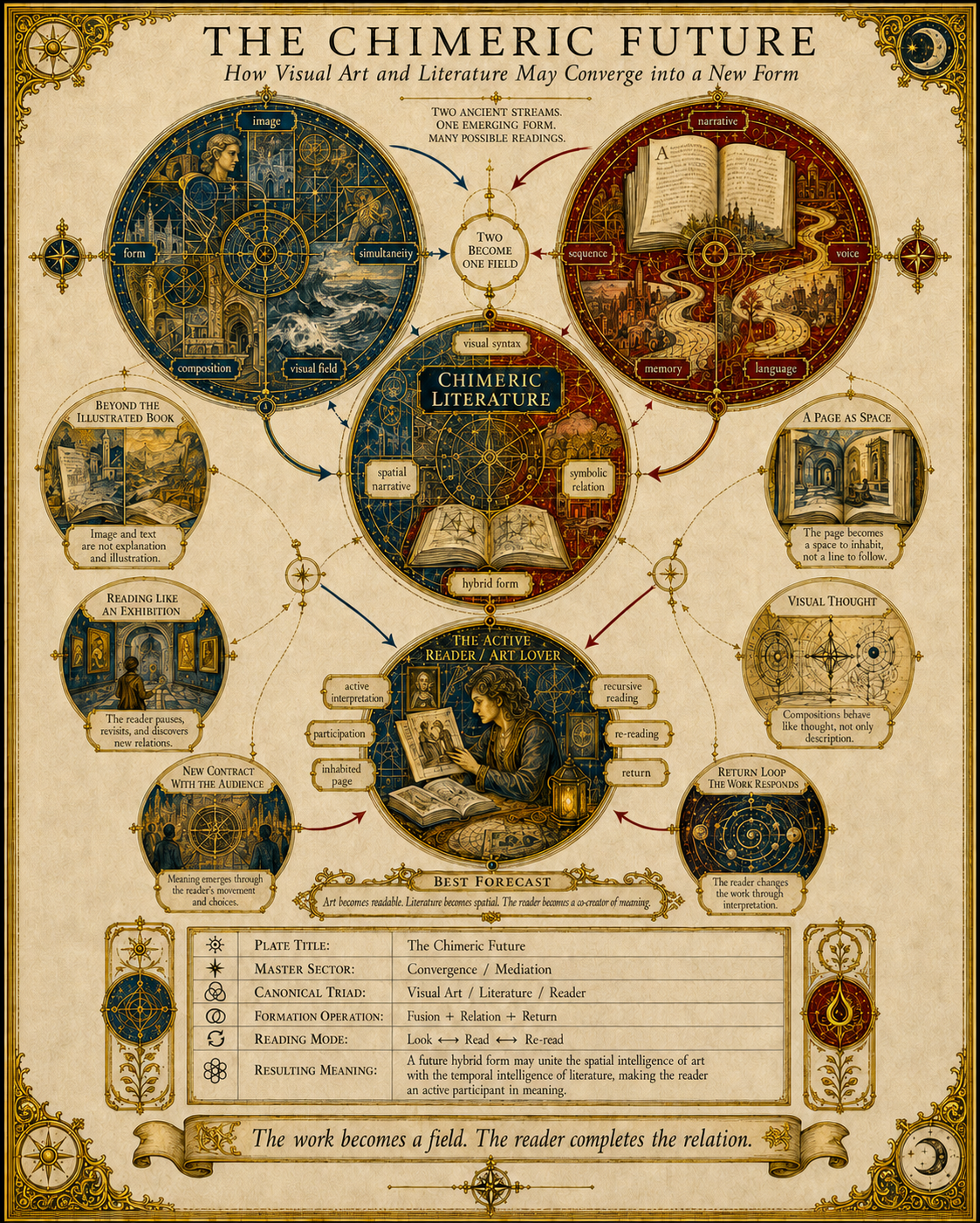
Beyond the Illustrated Book: Could Chimeric Literature Become a New Art Form?
A possible future for literature may lie not in adding images to books, but in creating works where image and language become equally active forms of thought. In this chimeric model, visual art gains syntax, literature becomes spatial, and the reader moves between looking, reading, and rereading as an active participant. The result could be a new hybrid form in which meaning is not simply delivered—it emerges through relation, attention, and return.

The Companion Manual: A Key to Reading the Chimeric Glyphic System
The free companion manual, accessible through the QR code on the book’s final page, offers readers a practical way into the Chimeric Glyphic System. It explains the system’s canonical glyphs, master sectors, formation rules, grammar, pathways, and reading methods, but it is best used as a compass rather than an answer key. Read the plate first, consult the manual to clarify its structure and relations, then return to the book and allow the meaning to deepen through rereading.
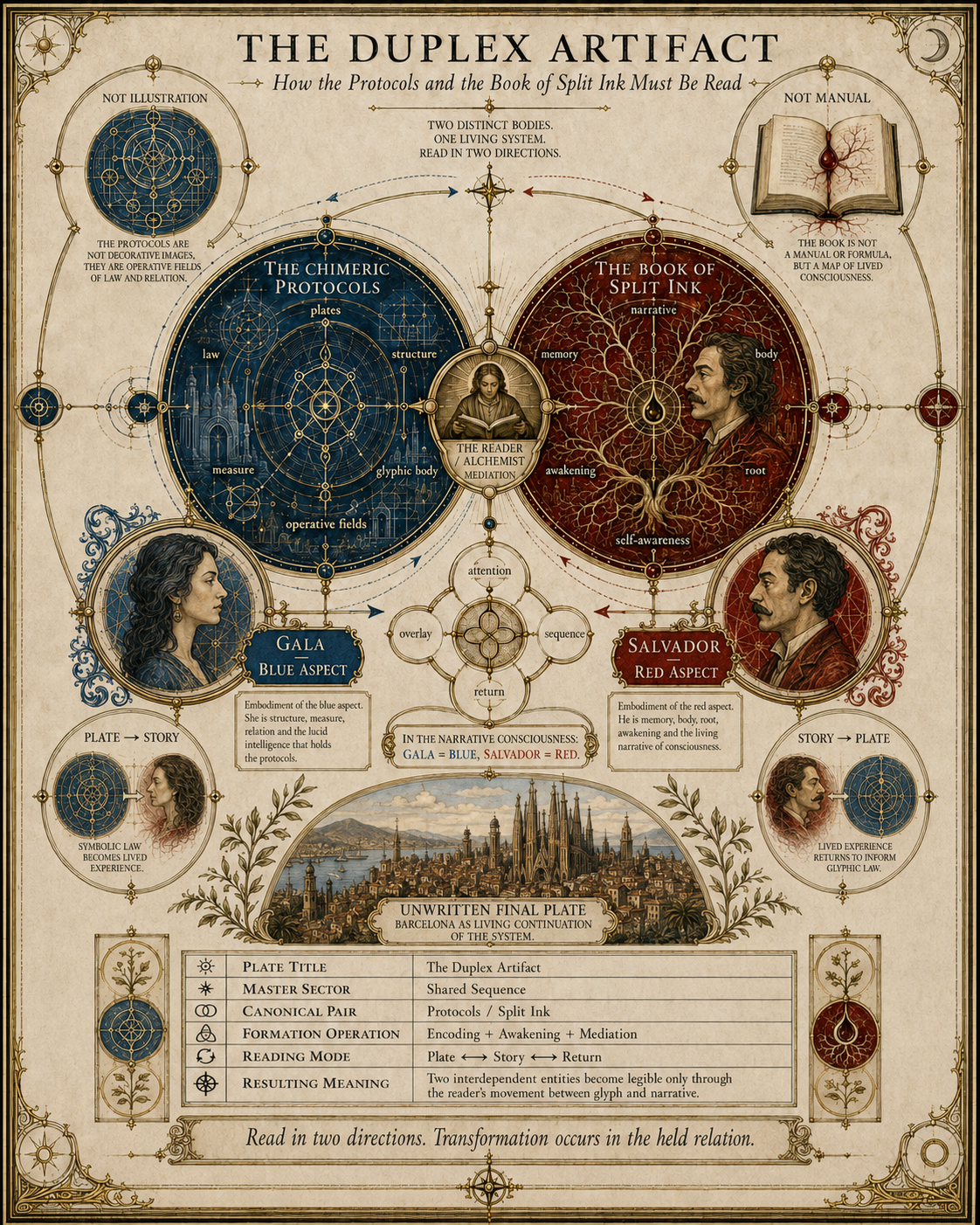
Two Bodies, One Work: How to Read The Chimeric Protocols of Transmutation and The Book of Split Ink
The Chimeric Protocols of Transmutation and The Book of Split Ink are designed as two interdependent bodies: one encodes the laws of transformation through glyphs, while the other gives those laws memory, experience, and consciousness. The reader moves between them as an Alchemist, reading plate into story and story back into plate, until meaning emerges from the relation itself.

Gala and Salvador: The Resurrected Couple Inside the Chimeric System
Gala and Salvador awaken not as historical ghosts, but as resurrected alter egos generated by the Chimeric system itself. Sharing one body while remaining two distinct consciousnesses, they embody a living tension between structure and memory, measure and instinct, control and transformation. Their journey through The Chimeric Protocols of Transmutation and The Book of Split Ink becomes an experiment in relation: not how two identities can merge, but how they can remain separate, evolve, and bear the weight of becoming together.
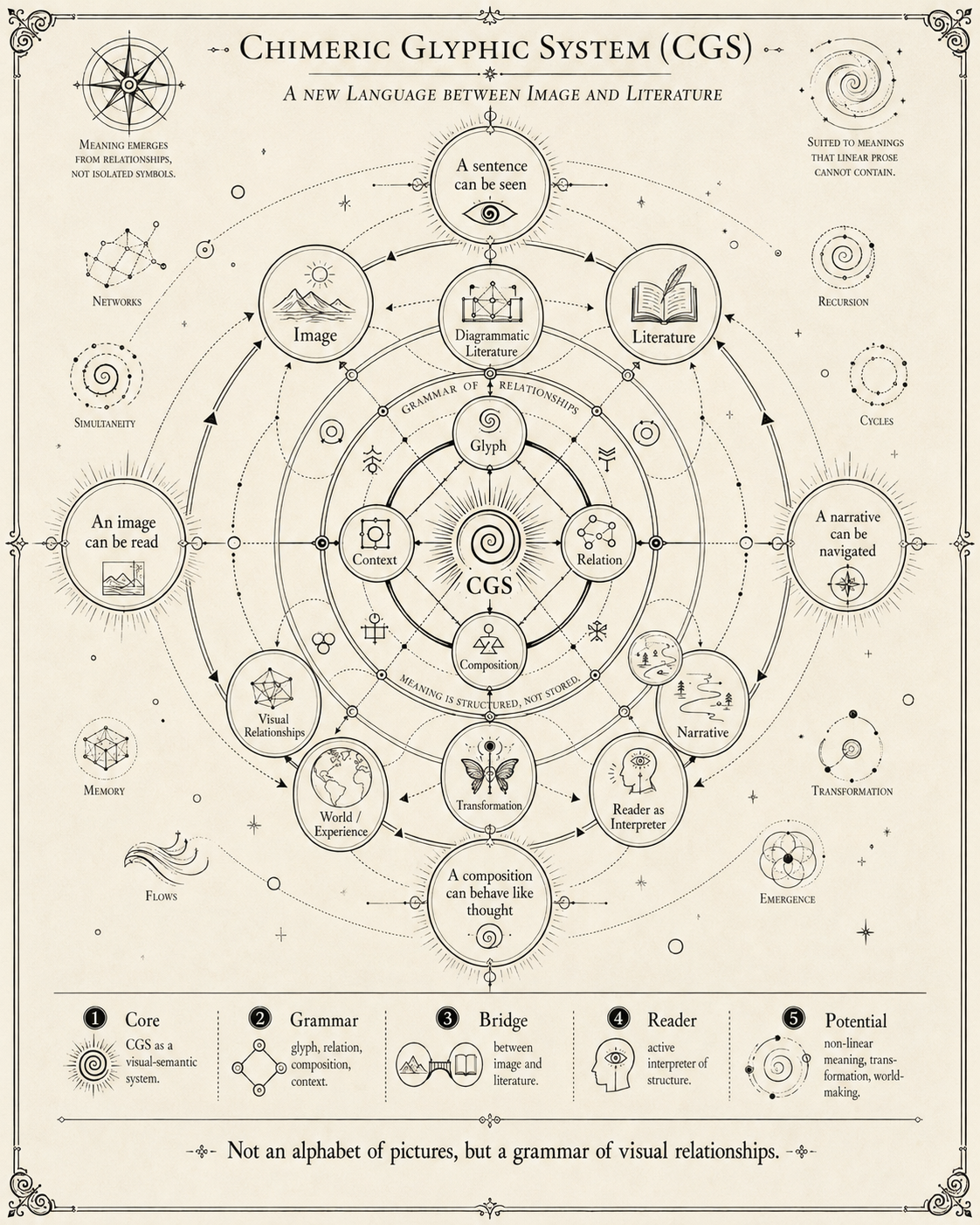
CGS: Toward a New Language Between Image and Literature
I see the Chimeric Glyphic System (CGS) not simply as a collection of symbols, nor as an invented alphabet, but as an attempt to create a new space between visual art and literature. My ambition is to develop it into a language in which an image can be read, a sentence can be seen, a … Continue reading CGS: Toward a New Language Between Image and Literature
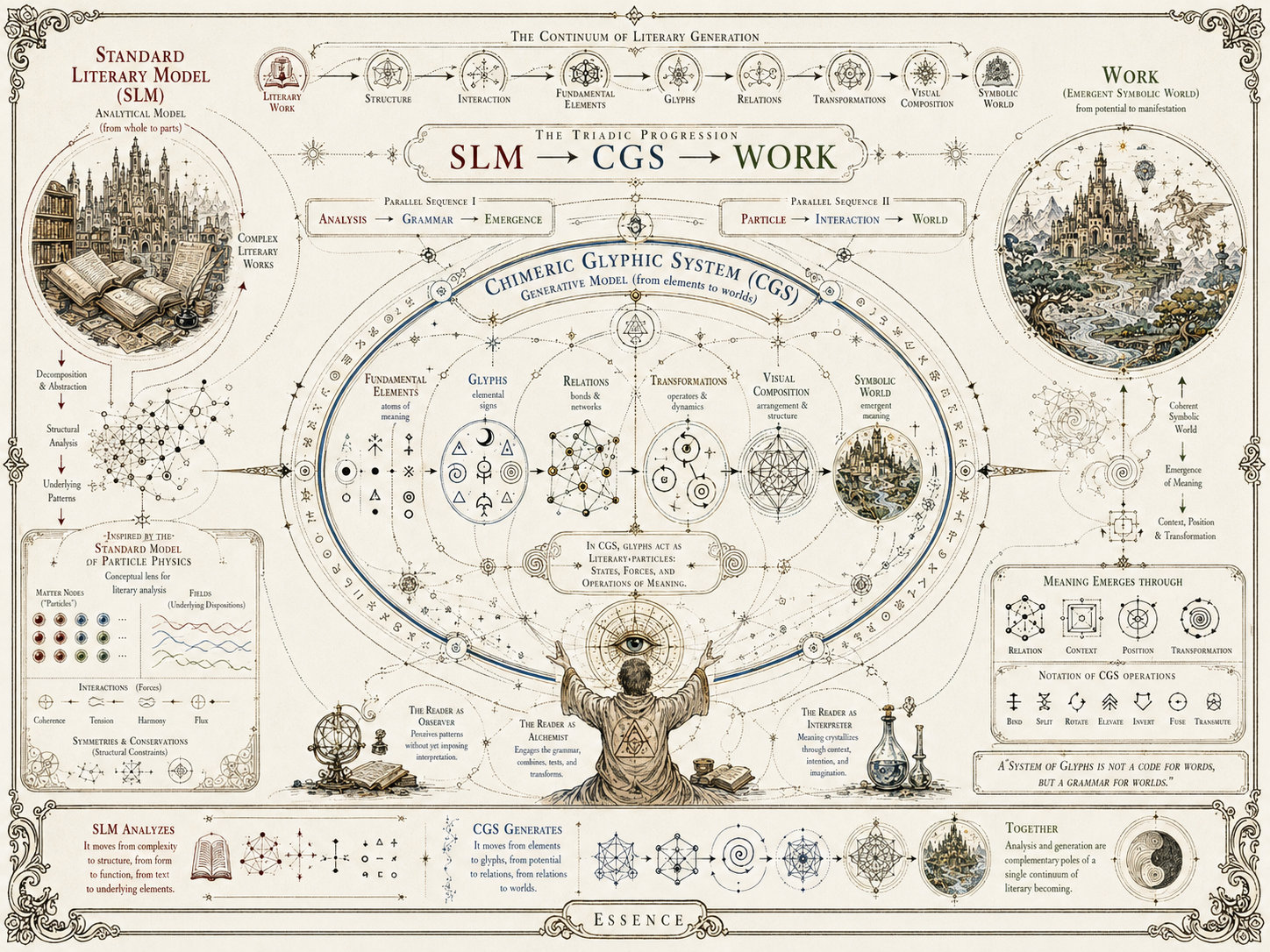
From Literary Particles to Visual Worlds: SLM and CGS
I have come to see the Standard Literary Model (SLM) and the Chimeric Glyphic System (CGS) as two stages of the same larger investigation into how meaning is constructed. The SLM began with a simple but ambitious question: what happens if I look at literary analysis through the conceptual lens of the Standard Model of … Continue reading From Literary Particles to Visual Worlds: SLM and CGS
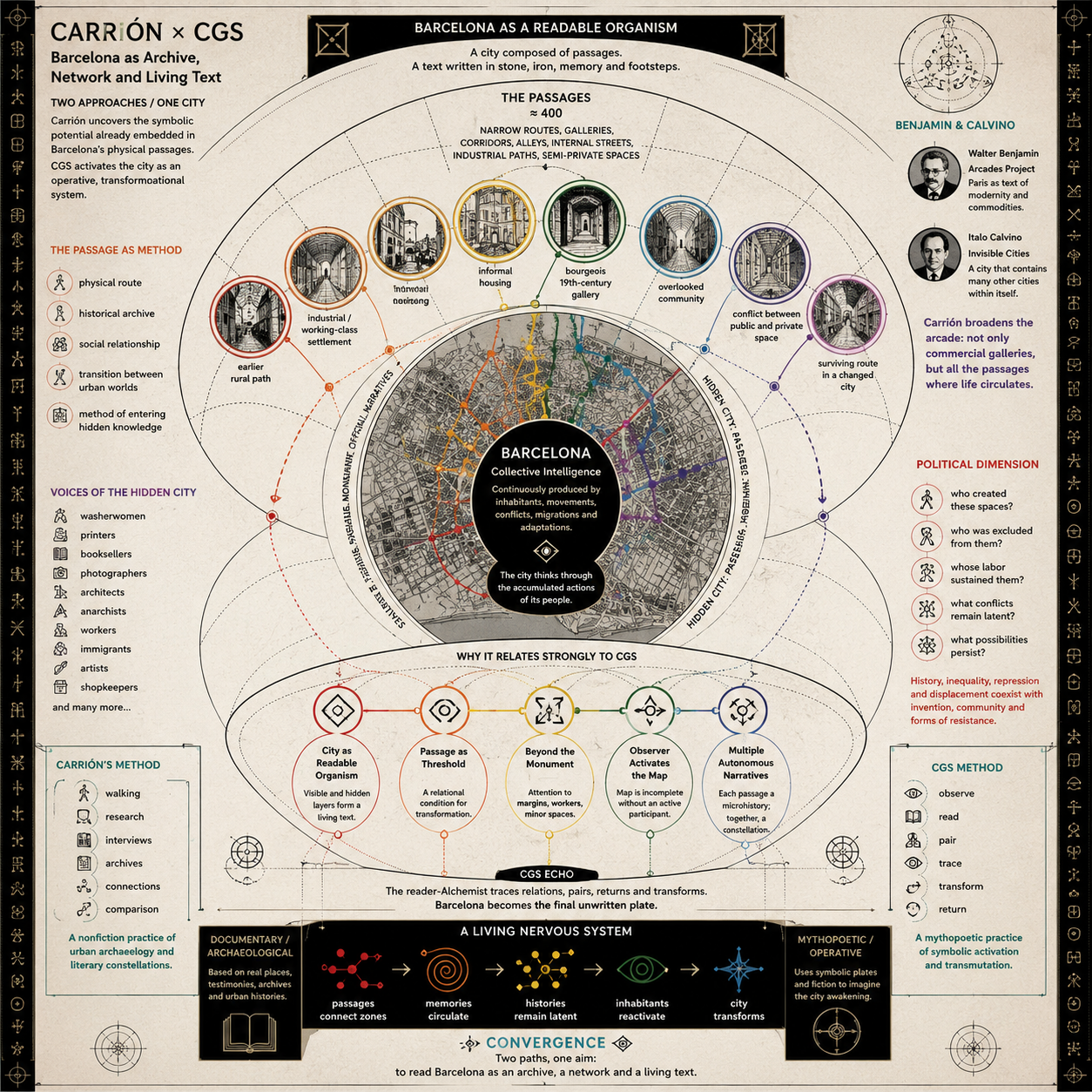
Barcelona. Book of the passages by Jorge Carrión.
Carrión would be the strongest additional figure for the specific idea of Barcelona as an archive, network and living text . Jorge Carrión's Barcelona. Book of the passages is a hybrid work of urban essay, travel chronicle, autobiography, journalism and archival investigation. Rather than describing Barcelona through its famous monuments or official neighborhoods , Carrión … Continue reading Barcelona. Book of the passages by Jorge Carrión.
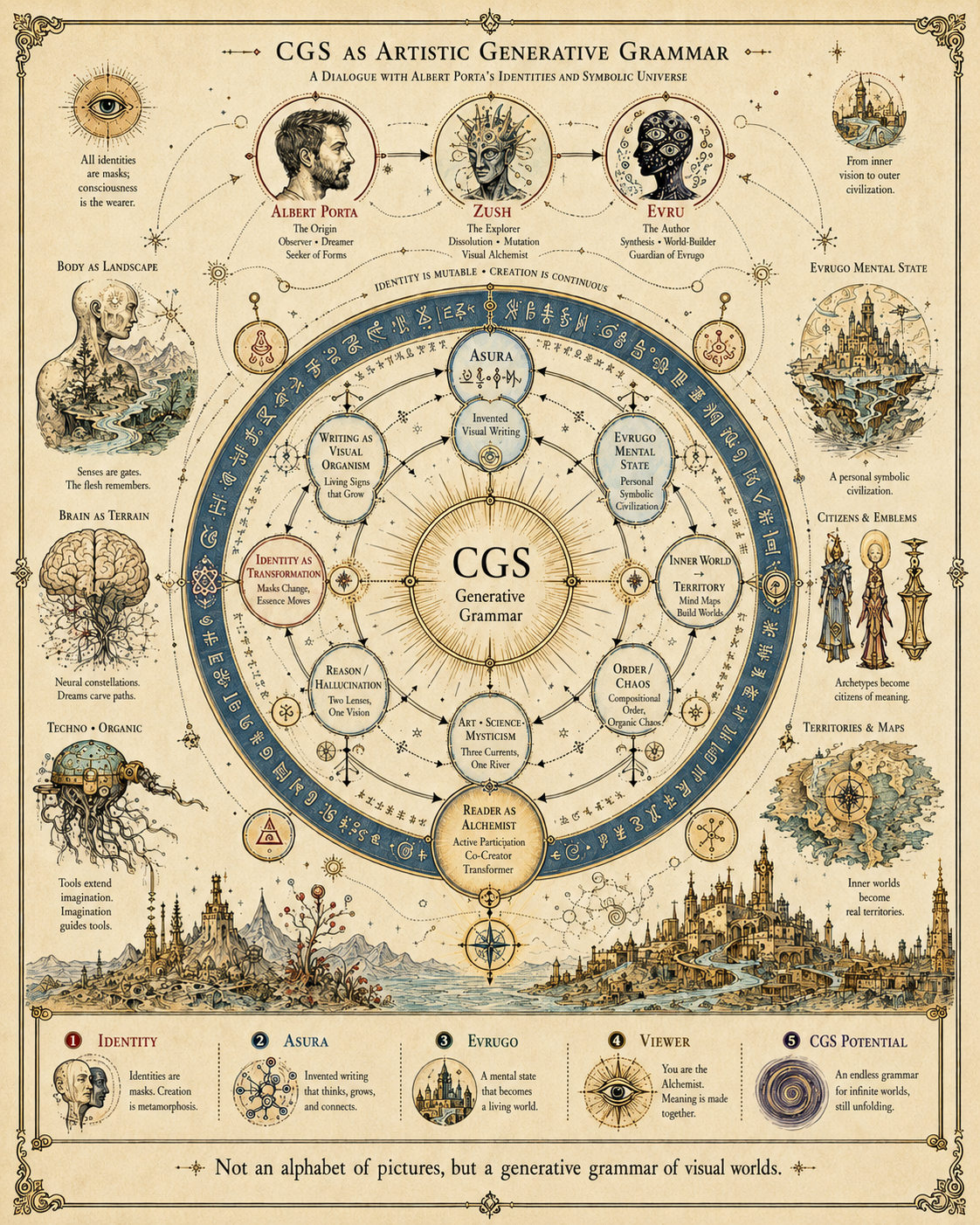
The Chimeric Glyph System and Evru / Zush in brief
Albert Porta adopted the identity Zush in 1968 and replaced it with Evru in 2001. “ Evru ” expressed his self-conception as an artist, scientist and mystic . Rather than treating these names as ordinary pseudonyms, he used them as successive creative identities, each capable of producing a different world and mode of perception. He … Continue reading The Chimeric Glyph System and Evru / Zush in brief
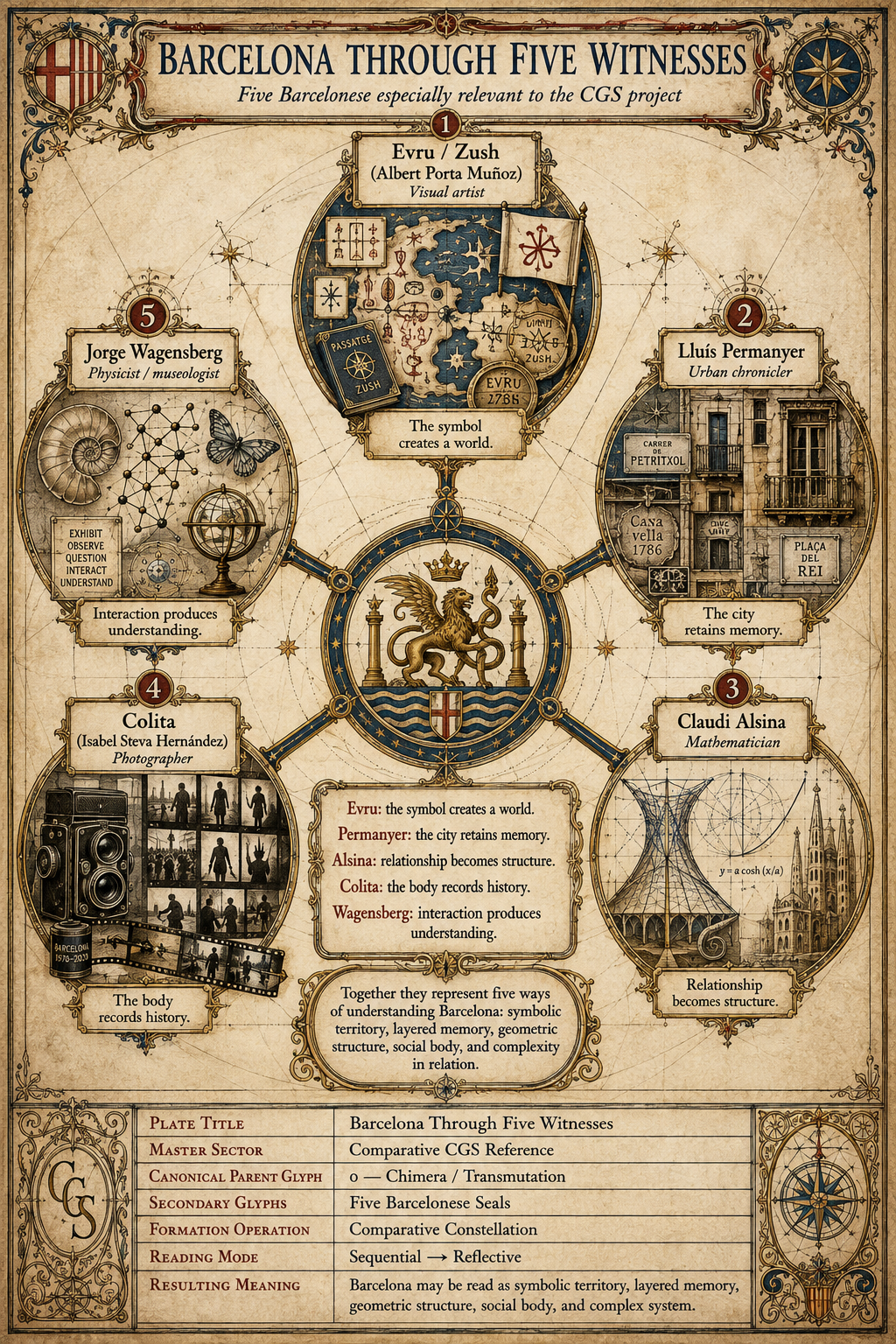
The origins of the Chimeric Glyph System: the Barcelona Five.
This post is dedicated to the five Barcelonese that were especially relevant to the CGS project : Evru / Zush , Lluís Permanyer , Claudi Alsina, Colita, and Jorge Wagensberg . Together, they represent five different ways of understanding Barcelona: as an invented symbolic territory, a historical memory, a geometric structure, a photographed social body, … Continue reading The origins of the Chimeric Glyph System: the Barcelona Five.