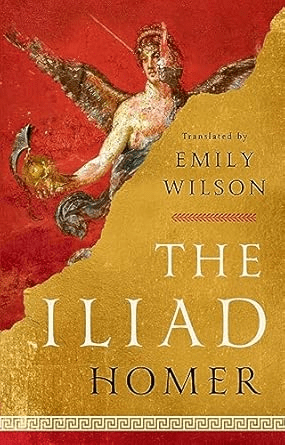
The Iliad is a collision event—two massive bodies (Achilles’ rage and Troy’s stubborn dignity) smashing together in a storm of hadronic debris. The poem behaves like a high-energy scattering experiment in which honor, mortality, and divine interference are particles exchanging momentum with catastrophic results. Achilles is effectively a top quark: heavier than the narrative can … Continue reading 7. The Iliad — Homer
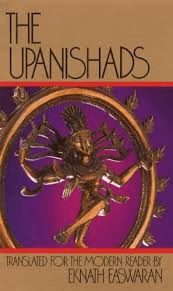
6. The Upanishads (India)
The Upanishads function as renormalization techniques for inner life. They propose methods for subtracting superficial divergences—ego, desire—to reveal a more fundamental field of Brahman. Practices they recommend (meditation, ethical discipline) are operators reducing self-interaction terms and allowing consciousness to experience unified modes. In SLM, the Upanishads describe a path to lower-energy coherence: when the individual … Continue reading 6. The Upanishads (India)

1. The Epic of Gilgamesh (Mesopotamia)
Gilgamesh is a prototypical heavy excitation resisting mortality. Enkidu’s entrance turns the two into a bound pair, like a baryonic composite stabilized by intense mutual coupling. Enkidu’s death is a perturbation that shifts Gilgamesh’s vacuum: the hero gains existential mass—grief, wisdom—forcing a search for permanence (immortality) that results in a renormalized appreciation of the communal … Continue reading 1. The Epic of Gilgamesh (Mesopotamia)

How do the 3 metathemes relate to the content of the Maharajagar?
Let’s now explore how those three meta-themes (as described in the foreword) integrate with the content, structure, and symbolism of The Maharajagar across the whole saga: "The All is a projection of informational modulated energy waves by a cosmically horizon on the time-space continuum."Interpretation in the series:This is a deeply metaphysical idea—drawing from quantum field … Continue reading How do the 3 metathemes relate to the content of the Maharajagar?

The Infinite Universe of Pi.
Although I have at this instance a very busy schedule, it seems that I can't keep going without distracting myself every now and then with some artistic project. The idea for this work occurred to me during the night and I couldn't focus on anything else till I had it worked out. It's a digital … Continue reading The Infinite Universe of Pi.
A Society in Transit. Expanded catalog, 166 p., isbn 9798865037835, by Shaharee Vyaas ( Kindle version $ 4,99)
Click on this image to be directed to the amazon page. Arundhati Roy //The system will collapse if we refuse to buy what they are selling…their ideas, their version of history, their wars…their notion of inevitability. Remember this: We may be many, and they be few… Another world is not only possible, she is on … Continue reading A Society in Transit. Expanded catalog, 166 p., isbn 9798865037835, by Shaharee Vyaas ( Kindle version $ 4,99)

Civilization and Cosmos. Part 4: Terra
In this post I want you to bring part 4 of my latest project (for those who missed out on part 1, more info at the bottom of this post). If you want to hear the audio, just click on the image (duration 115 sec). Terra. Mixed technics on canvas 45 x 45 cm by … Continue reading Civilization and Cosmos. Part 4: Terra
Civilization and Cosmos. Part 3: Venus
In this post I want you to bring part 3 of my latest project (for those who missed out on part 1, more info at the bottom of this post). If you want to hear the audio, just click on the image (duration 141 sec). Venus. Mixed technics on canvas 45 x 45 cm by … Continue reading Civilization and Cosmos. Part 3: Venus
Civilization and Cosmos. Part 2: Mercury
In this post I want you to bring part 2 of my latest project (for those who missed out on part 1, more info at the bottom of this post). If you want to hear the audio, just click on the image (duration 130 sec). Mercury. Mixed technics on canvas 45 x 45 cm by … Continue reading Civilization and Cosmos. Part 2: Mercury

The Complexity of Simplicity
“Being simple is the most complicated thing nowadays.” -Ramana Pemmaraju The principle of simplicity or parsimony—broadly, is the idea that simpler explanations of observations should be preferred to more complex ones—is conventionally attributed to William of Occam, after whom it is traditionally referred to as Occam's razor. This does not mean that there will be … Continue reading The Complexity of Simplicity

Galactic Pilgrims
The title of this post is a lore that I’ve encountered first in the Star Wars series where Jedha, a small desert moon frosted by a permanent winter, was home to one of the first civilizations to explore the nature of the Force. At one time a world important to the Jedi Order, Jedha served … Continue reading Galactic Pilgrims
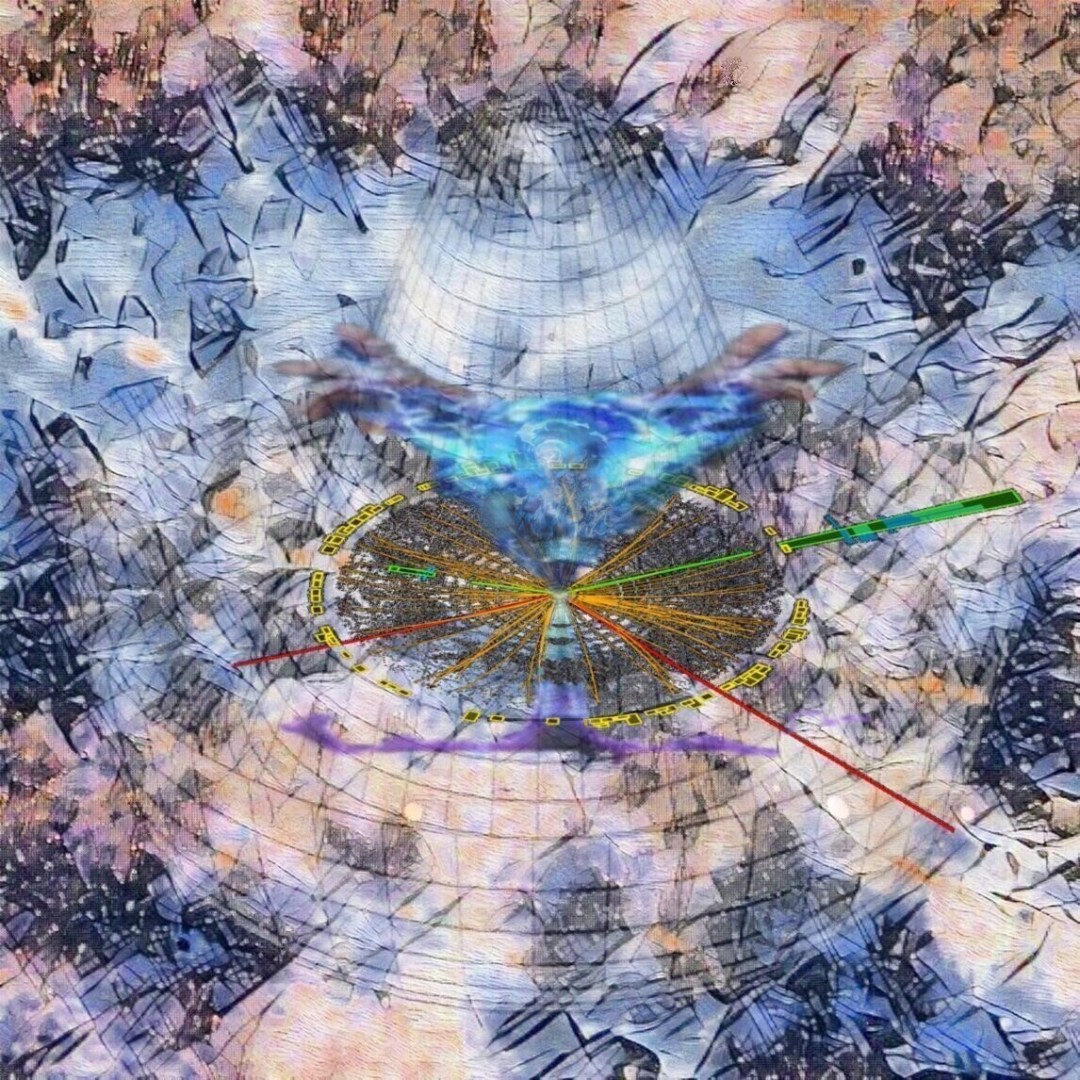
The Ethereal Sombrero of Civilization.
Although I’m reluctant to give much explanation to my art, some people complained that it was sometimes difficult to access my art. Those remarks came from people who’re familiar with my manifest and the remainder of my works. They pointed out: “And what with people who just stumble upon one of your works, didn’t read … Continue reading The Ethereal Sombrero of Civilization.

About Cryptomathematics.
The Newtonian space and time collapsed in 1905 when Albert Einstein, at the age of twenty-six, published four groundbreaking papers: On the Photoelectric Effect; Brownian Motion; The Special Relativity, and The Equivalence of Mass and Energy. The new concept is that all objects are moving vibrations in the space-time continuum. The quantum physician Heisenberg introduced … Continue reading About Cryptomathematics.

The US Literary Universe.
Since US literature, as represented by the US Library of Congress, has the whole universe as a subject, one could assume that this system is also governed by the same mechanisms that it describes. In the following two paragraphs I would like to outline some analogies between what most people consider as two disciplines who … Continue reading The US Literary Universe.
The Lovecraftian Universe as a Cornerstone of The Maharajagar.
Howard Philips Lovecraft created an alternate universe populated by malevolent sea-creatures and gods whereupon multiple artists have been expanding. Although he died in poverty, Lovecraft is now heralded as one of the greatest horror and fantasy writers of his time. In modern fiction and art, his work is frequently referred to as “The Cthulhu Mythos,” … Continue reading The Lovecraftian Universe as a Cornerstone of The Maharajagar.

Traveling and the Search for the Elusive Self.
If traveling does fundamentally change you, it’s only because you’ve done some important self-work while you were there. But it’s work you can do anywhere, and very few people actually get around to it when there’s a new city to explore and world to get lost in.

The Room of Change.
For ‘The Room of Change’, the Milanese designer studio Accurat created a 30-meters-long hand-crafted data-tapestry illustrating how multiple aspects of our environment have changed in the past centuries, how they are still changing, and how they will likely continue changing.
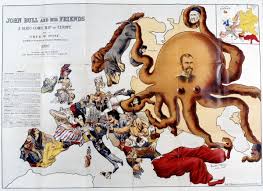
Eurocentrism in Art, History and Science.
This post deals with the mainstream collective perspective that shapes to our worldview and gives directions to our thinking and acting.

Magicians, Artists and Scientists.
Magic and the supernatural have been declared nonexistent, artists are called illusionists and scientists are deemed to be incomprehensible monomaniacs who know a lot about little but little about a lot. Where does this leave us? Maybe it’s time to take a break and resume it. This small essay is a personal cosmology. I brought … Continue reading Magicians, Artists and Scientists.
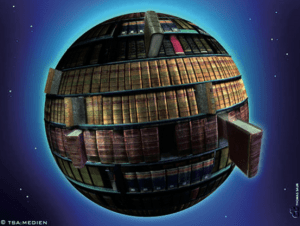
About The Canon of the World Literature.
Three years ago, I took it upon me to read the top 100 of the Canon of the world literature and have recently accomplished this challenge. The least I can say about this task is that I’ve learned something of this experience. Nevertheless there were a couple of unexpected hurdles along the road that I … Continue reading About The Canon of the World Literature.
 The Maharajagar