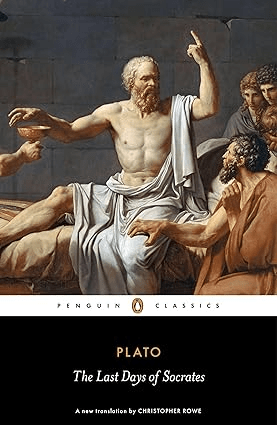
Socrates appears as a stable particle within a decaying moral field, a disruptive force whose questions unsettle the Athenian vacuum. His method—elenchus—is a controlled collision: ideas smashed together until hidden structures emerge. The trial reveals a society terrified of intellectual ionization—fearful that too much inquiry will shatter its fragile civic bonds. Socrates refuses to adjust … Continue reading 13. The Trial of Socrates (or Apology) — Plato

11. Zhuangzi — Zhuang Zhou (China)
Zhuangzi destabilizes fixed identity-mass by questioning categories and promoting adaptive superpositions. His parables encourage flexible couplings, suggesting that rigid potentials lead to suffering; in SLM, he prescribes dynamic renormalization—allowing states to be context-dependent rather than fixed invariants. The Zhuangzi operates as a philosophical Mythoplasma, intertwining N + Mγ + T to create drifting parables whose … Continue reading 11. Zhuangzi — Zhuang Zhou (China)

9. Analects — Confucius (China)
The Analects present a prescriptive dynamics for social stability. Rituals and hierarchical roles are selection rules: perform them correctly and social coherence emerges. The Analects thus provide precise Lagrangian terms that penalize deviance and reward conformity, producing low-entropy social arrangements.A lean Realiton (N + D±) stabilized through ethical clarity. Dissonatons (D±) emerge in the friction … Continue reading 9. Analects — Confucius (China)

8. The Odyssey — Homer
In the Standard Literary Model, The Odyssey behaves like a baryon: a bound state of wanderer, memory, and fate locked into an oscillatory pattern by the strong force of home. Odysseus is a quark of identity that refuses confinement yet can never fully escape it; every island he encounters is another local minimum in the … Continue reading 8. The Odyssey — Homer
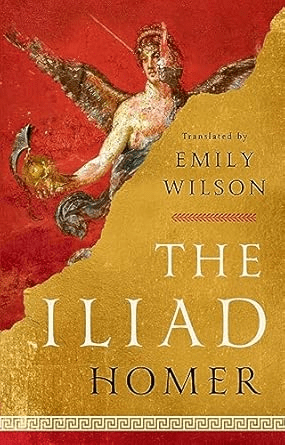
7. The Iliad — Homer
The Iliad is a collision event—two massive bodies (Achilles’ rage and Troy’s stubborn dignity) smashing together in a storm of hadronic debris. The poem behaves like a high-energy scattering experiment in which honor, mortality, and divine interference are particles exchanging momentum with catastrophic results. Achilles is effectively a top quark: heavier than the narrative can … Continue reading 7. The Iliad — Homer
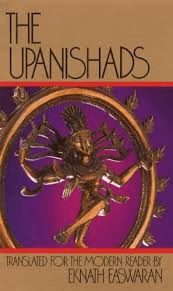
6. The Upanishads (India)
The Upanishads function as renormalization techniques for inner life. They propose methods for subtracting superficial divergences—ego, desire—to reveal a more fundamental field of Brahman. Practices they recommend (meditation, ethical discipline) are operators reducing self-interaction terms and allowing consciousness to experience unified modes. In SLM, the Upanishads describe a path to lower-energy coherence: when the individual … Continue reading 6. The Upanishads (India)

1. The Epic of Gilgamesh (Mesopotamia)
Gilgamesh is a prototypical heavy excitation resisting mortality. Enkidu’s entrance turns the two into a bound pair, like a baryonic composite stabilized by intense mutual coupling. Enkidu’s death is a perturbation that shifts Gilgamesh’s vacuum: the hero gains existential mass—grief, wisdom—forcing a search for permanence (immortality) that results in a renormalized appreciation of the communal … Continue reading 1. The Epic of Gilgamesh (Mesopotamia)

An Emporium of Order and Chaos.
The title and image of this post refer to an artistically diary in which I’m resuming and catalogizing my artistic and literary creations, larded with thoughts, philosophies, and observations that induced them.The chronological order in which the works were produced has been abandoned in favor of a systematic approach were the subjects are brought together … Continue reading An Emporium of Order and Chaos.

The Dark Sides of Religion (part 3/5): Nirvana. Acrylic on canvas 45 x 45 cm by Shaharee Vyaas.
Nirvana in Buddhism is a transcendent state in which there is neither suffering, desire, nor sense of self, and the subject is released from the effects of karma and the cycle of death and rebirth. Gurus talk about the universal mind and about the futility of power, knowledge, and material desires. Looked upon from a … Continue reading The Dark Sides of Religion (part 3/5): Nirvana. Acrylic on canvas 45 x 45 cm by Shaharee Vyaas.

The Dark Sides of Religion (part 2/5): Brahman’s Social Order. Acrylic on canvas 45 x 45 cm by Shaharee Vyaas.
The evil of India’s caste practice is almost as old as the gods, and is the most noxious and evolved example today of how humans attempt to impose superiority and suffering on others by virtue of their birth. Hindu texts speak of four tiers, or varnas, making up a broader caste pyramid in society. On … Continue reading The Dark Sides of Religion (part 2/5): Brahman’s Social Order. Acrylic on canvas 45 x 45 cm by Shaharee Vyaas.

The Dark Sides of Religion (part 1/5): Ascetism. Acrylic on canvas 45 x 45 cm by Shaharee Vyaas.
Since religious fundamentalism is on the rise in all segments of our society, I decided to dedicate some of my artistic reflections to the subject that motivates some extreme fundamentalists to believe that their religion gives them the right to tell everyone else what they are and are not allowed to do and commands them … Continue reading The Dark Sides of Religion (part 1/5): Ascetism. Acrylic on canvas 45 x 45 cm by Shaharee Vyaas.

The Connection between Writing and Painting
The featuring image of this post carries the images of Borges and Dali. While Borges was a key figure in Spanish-language and international literature, Dali was was a Spanish surrealist artist renowned for his technical skill, precise draftsmanship, and the striking and bizarre images in his work . I almost forgot it, but I started this page a couple of … Continue reading The Connection between Writing and Painting

The Da Vinci Trinity
Although Leonardo Da Vinci had no formal academic training, many historians and scholars regard him as the prime exemplar of the "Universal Genius" or "Renaissance Man", an individual of "unquenchable curiosity" and "feverishly inventive imagination." He is widely considered one of the most diversely talented individuals ever to have lived. He studied engineering, sculpting, painting, … Continue reading The Da Vinci Trinity

Trying to Understand
“trying to understand” - appeals to approach the reality from a higher level.

The Complexity of Simplicity
“Being simple is the most complicated thing nowadays.” -Ramana Pemmaraju The principle of simplicity or parsimony—broadly, is the idea that simpler explanations of observations should be preferred to more complex ones—is conventionally attributed to William of Occam, after whom it is traditionally referred to as Occam's razor. This does not mean that there will be … Continue reading The Complexity of Simplicity

Galactic Pilgrims
The title of this post is a lore that I’ve encountered first in the Star Wars series where Jedha, a small desert moon frosted by a permanent winter, was home to one of the first civilizations to explore the nature of the Force. At one time a world important to the Jedi Order, Jedha served … Continue reading Galactic Pilgrims

When Order vs. Chaos doesn’t equal Good vs. Bad.
The main purpose of this novel is to entertain the reader with a historical fantasy: a spellbinding epic tale of ambition, anarchy and absolute power, set against the canvas of North America, Europe and Asia during World War 1 and the ensuing great depression.
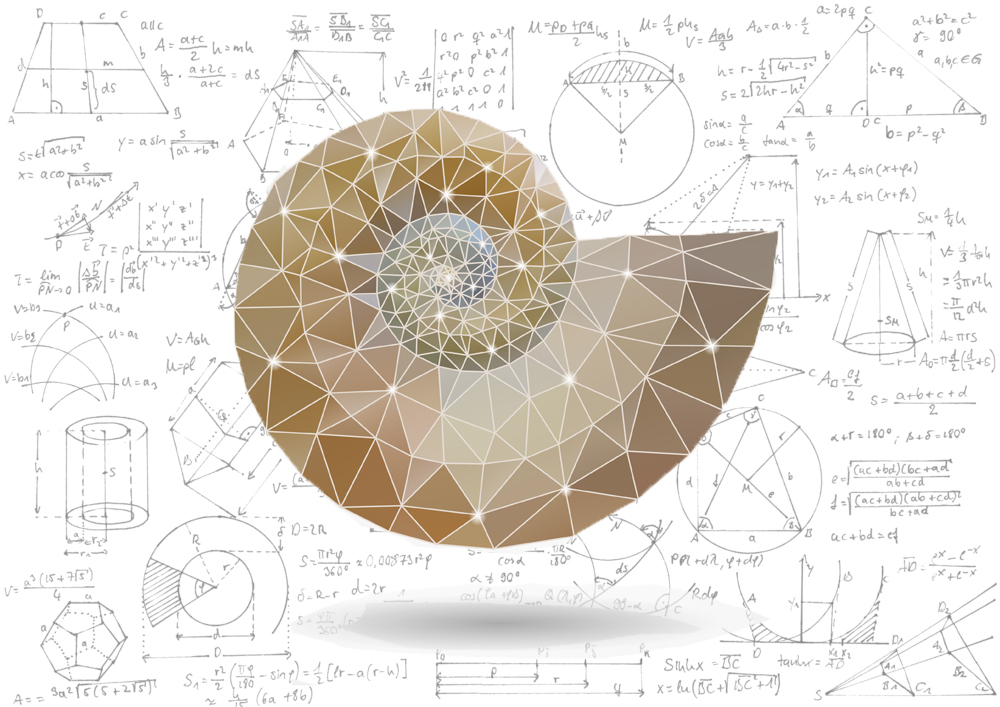
My Hero, Zero
Zero? Yeah, zero is a wonderful thing. In fact, Zero is my hero! How can zero be a hero? Well, there are all kinds of heroes, you know. A man can get to be a hero for a famous battle he fought or by studying very hard and becoming a weightless astronaut And then there … Continue reading My Hero, Zero
Life is about adding value to your existence.
Intelligent behavior is sometimes defined as the behavior that is adaptable variable during the span of lifetime of an individual and has three fundamental characteristics; The capacity to react in an unusual way towards the stimulus-situation. The ability to remember learned lessons. Having the capacity for generalization. The individual can only develop itself by laying … Continue reading Life is about adding value to your existence.

The Artist as an Einzelgänger
In this post I would like to explore some artistically personality traits as inspired by the compositions of Giorgio Morode. The album Einzelgänger was first produced in Germany in 1975 and contained some electronic experimental soundtracks that at the time of its release attracted almost zero attention. The Englishman Bellotte was in charge of the … Continue reading The Artist as an Einzelgänger
 The Maharajagar