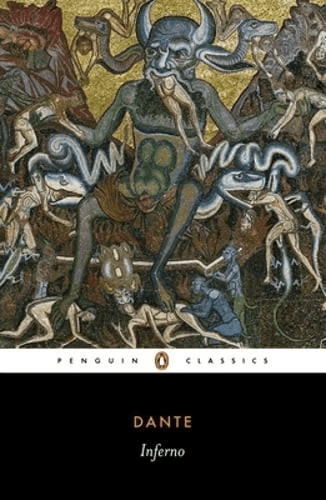
Dante’s descent through Hell resembles a meticulous mapping of a lower-energy universe where sin becomes a binding force and suffering the constant curvature of space. Each circle is a well-defined potential well, trapping souls according to the symmetry of their earthly actions. Virgil is the guiding boson, mediating between mortal ignorance and cosmic order. The … Continue reading 32. Inferno — Dante Alighieri (Book I of The Divine Comedy)

14. The Mahabharata (India)
The Mahabharata is a many-body problem on an epic scale: dynasties, dharma, and cosmic will interact as multiple fields with complex coupling. The Kurukshetra war is a massive scattering event where individual actions propagate nonlinearly through families and kingdoms, producing emergent patterns (law, regret, new orders). Characters act as particles with varying masses—Bhishma’s unbending honor, … Continue reading 14. The Mahabharata (India)
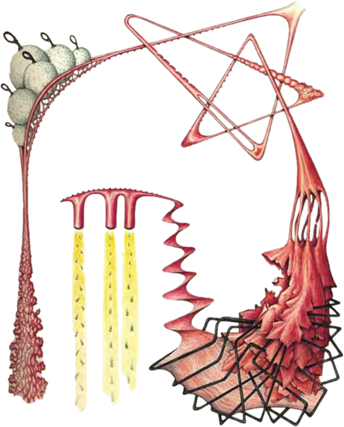
Page of Red Machines
An architecture of scarlet tendons builds itself,branching into stars, ladders, and hesitant halos. Globes pulse at the summit,each crowned with a loop like a keyhole of breath. Yellow beams descend through ribbed vaults,liquid sound made visible. Beneath, folds of red fabric move like memory rehearsing itself,stitched into a frame of black logic—a choreography of hunger … Continue reading Page of Red Machines
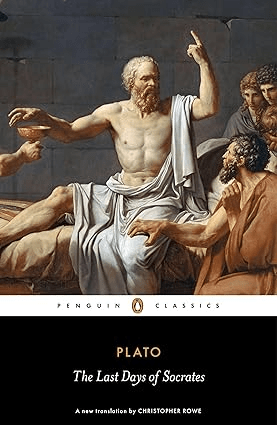
13. The Trial of Socrates (or Apology) — Plato
Socrates appears as a stable particle within a decaying moral field, a disruptive force whose questions unsettle the Athenian vacuum. His method—elenchus—is a controlled collision: ideas smashed together until hidden structures emerge. The trial reveals a society terrified of intellectual ionization—fearful that too much inquiry will shatter its fragile civic bonds. Socrates refuses to adjust … Continue reading 13. The Trial of Socrates (or Apology) — Plato
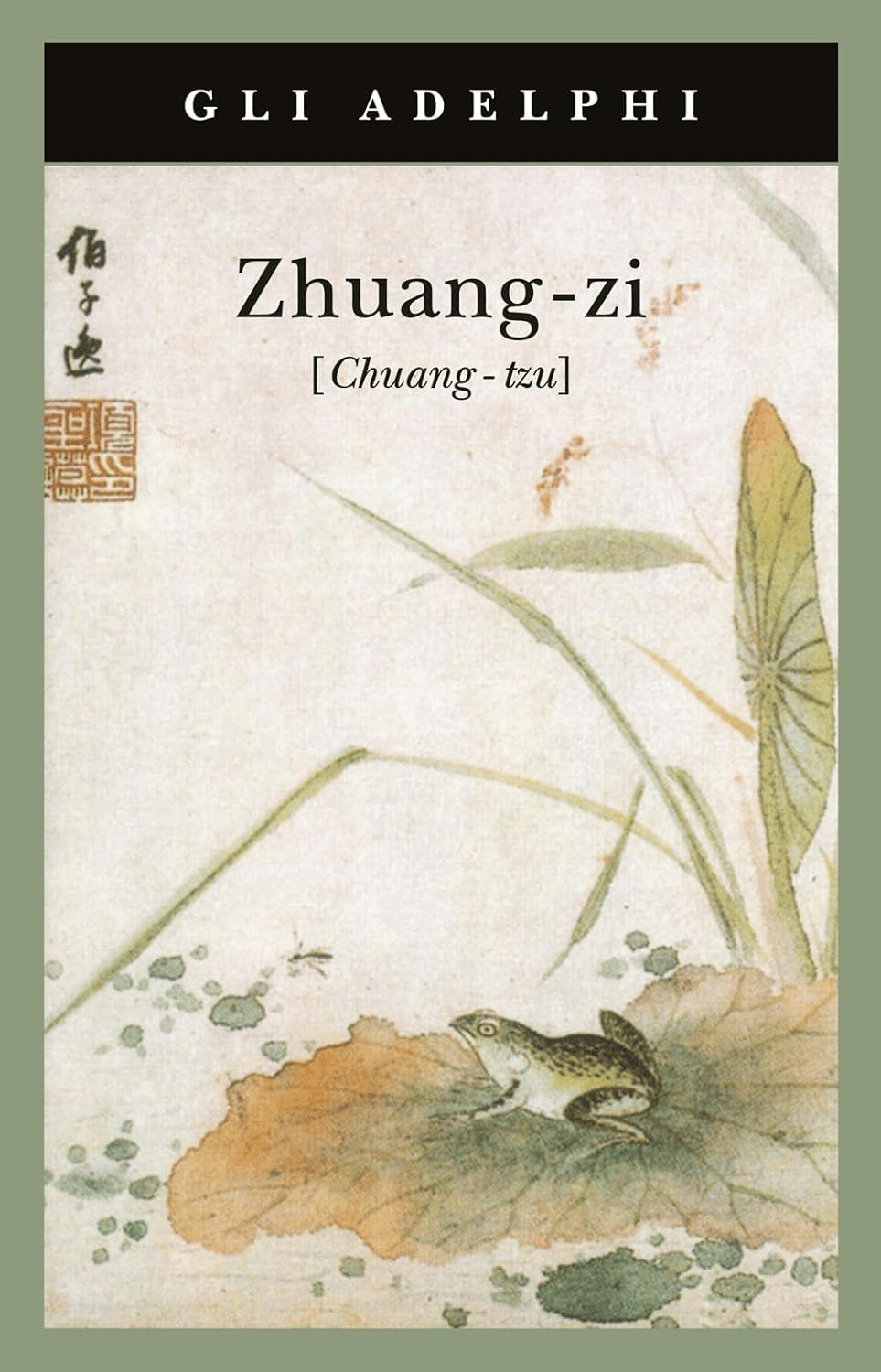
11. Zhuangzi — Zhuang Zhou (China)
Zhuangzi destabilizes fixed identity-mass by questioning categories and promoting adaptive superpositions. His parables encourage flexible couplings, suggesting that rigid potentials lead to suffering; in SLM, he prescribes dynamic renormalization—allowing states to be context-dependent rather than fixed invariants. The Zhuangzi operates as a philosophical Mythoplasma, intertwining N + Mγ + T to create drifting parables whose … Continue reading 11. Zhuangzi — Zhuang Zhou (China)
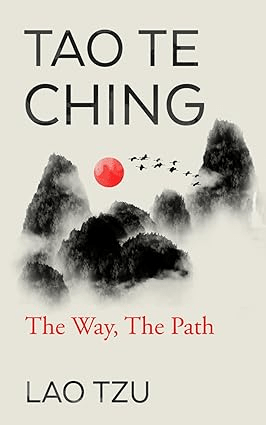
10. Tao Te Ching (Dao De Jing) — Laozi (China)
The Daoist text describes a low-action algorithm: minimize forcings, align with natural flows, and the system self-organizes. Its advice acts like a dissipative operator removing excess energy and allowing emergent order. In SLM terms, the Dao is a prescription for constructing a nonintervening Higgs field: less deliberate action produces more sustainable identity mass by aligning … Continue reading 10. Tao Te Ching (Dao De Jing) — Laozi (China)
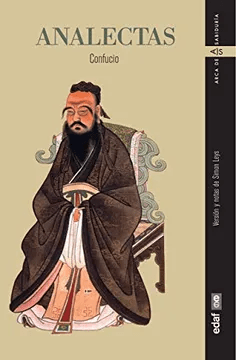
9. Analects — Confucius (China)
The Analects present a prescriptive dynamics for social stability. Rituals and hierarchical roles are selection rules: perform them correctly and social coherence emerges. The Analects thus provide precise Lagrangian terms that penalize deviance and reward conformity, producing low-entropy social arrangements.A lean Realiton (N + D±) stabilized through ethical clarity. Dissonatons (D±) emerge in the friction … Continue reading 9. Analects — Confucius (China)

8. The Odyssey — Homer
In the Standard Literary Model, The Odyssey behaves like a baryon: a bound state of wanderer, memory, and fate locked into an oscillatory pattern by the strong force of home. Odysseus is a quark of identity that refuses confinement yet can never fully escape it; every island he encounters is another local minimum in the … Continue reading 8. The Odyssey — Homer
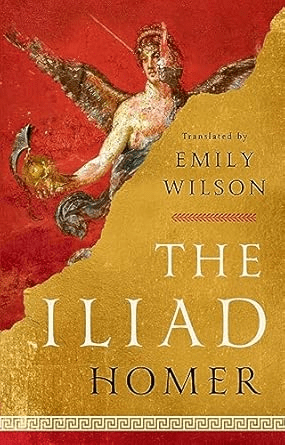
7. The Iliad — Homer
The Iliad is a collision event—two massive bodies (Achilles’ rage and Troy’s stubborn dignity) smashing together in a storm of hadronic debris. The poem behaves like a high-energy scattering experiment in which honor, mortality, and divine interference are particles exchanging momentum with catastrophic results. Achilles is effectively a top quark: heavier than the narrative can … Continue reading 7. The Iliad — Homer
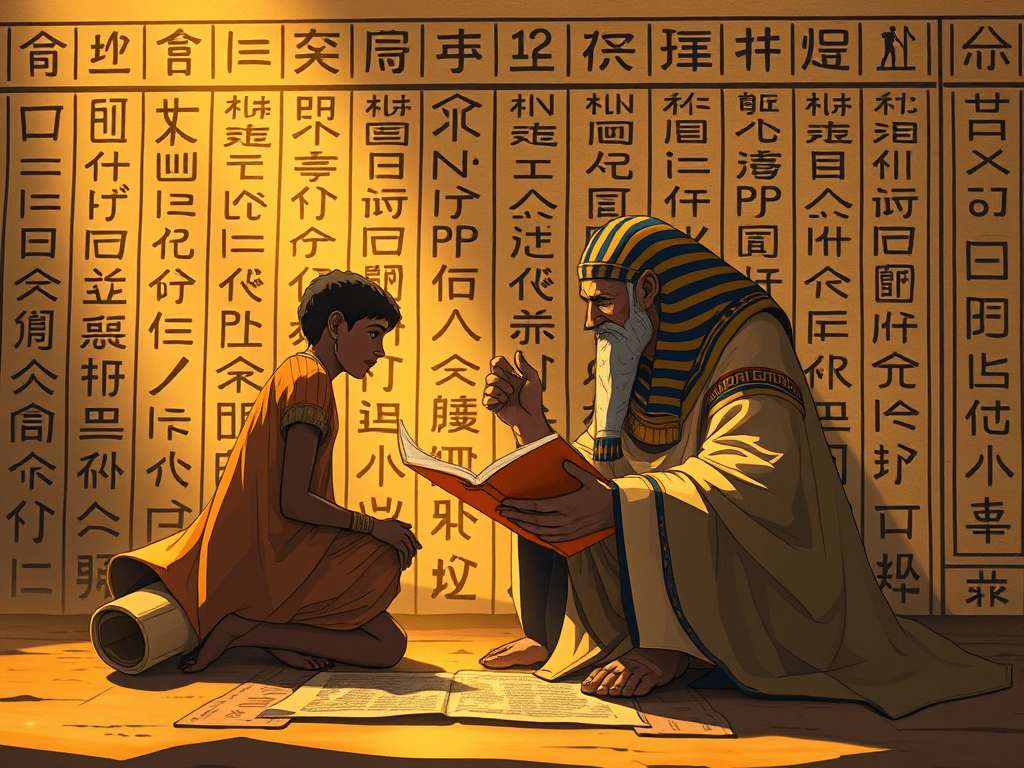
3. The Instruction of Ptahhotep (Ancient Egypt)
The Instruction of Ptahhotep is a low-energy effective theory: a compact Lagrangian of social rules that regulate interaction in an Egyptian legal-gauge. Its aphorisms act like conserved currents—protocols that minimize conflict and stabilize the civic vacuum. Each proverb functions as a mediated interaction (gauge boson) transmitting authority from elder to younger generations. The "mass" these … Continue reading 3. The Instruction of Ptahhotep (Ancient Egypt)

2. The Tale of Sinuhe (Ancient Egypt)
The Tale of Sinuhe reads as an early field-theory experiment in identity and exile. Sinuhe is a fermionic excitation displaced from the Egyptian vacuum by war and rumor; his wandering through Levantine courts resembles a particle propagating through different media with varying coupling constants—hospitality, dishonor, foreign custom. Egypt itself functions as a dominant Higgs-like background … Continue reading 2. The Tale of Sinuhe (Ancient Egypt)

1. The Epic of Gilgamesh (Mesopotamia)
Gilgamesh is a prototypical heavy excitation resisting mortality. Enkidu’s entrance turns the two into a bound pair, like a baryonic composite stabilized by intense mutual coupling. Enkidu’s death is a perturbation that shifts Gilgamesh’s vacuum: the hero gains existential mass—grief, wisdom—forcing a search for permanence (immortality) that results in a renormalized appreciation of the communal … Continue reading 1. The Epic of Gilgamesh (Mesopotamia)

Toward a Standard Literary Model
This post proposes a speculative yet disciplined framework for reimagining world literature: the Standard Literary Model (SLM). Inspired by the elegance of the Standard Model of particle physics, the SLM treats stories not as static cultural objects but as fields, forces, and interacting particles within a vast narrative cosmos.The goal is not to collapse literature … Continue reading Toward a Standard Literary Model
Long Feng: The Man Who Would Be Chaos
Once a brother, now a storm—the King in Yellow walks again.
Alec and Millie: The Dreamers Who Started It All
Before the shrines, before the war, there was simply Alec and Millie—a journalist and his wife in neutral New York, 1914. What begins as a cultural prank—swapping museum bones in protest—becomes the spark that reawakens ancient orders. Millie, touched by voodoo and prophecy, carries twins destined for divine possession. Alec, haunted by what he sees … Continue reading Alec and Millie: The Dreamers Who Started It All

The Legacy of the Maharajagar
When the last page turns, the story does not end.
The Cintamani: Gem of Chaos and Creation
It is both a blessing and a curse, a jewel that can reorder the universe — or unmake it entirely.

Alec Bannon: From Journalist to Spiral Self
The man who began by chasing stories ends by binding timelines.

How do the 3 metathemes relate to the content of the Maharajagar?
Let’s now explore how those three meta-themes (as described in the foreword) integrate with the content, structure, and symbolism of The Maharajagar across the whole saga: "The All is a projection of informational modulated energy waves by a cosmically horizon on the time-space continuum."Interpretation in the series:This is a deeply metaphysical idea—drawing from quantum field … Continue reading How do the 3 metathemes relate to the content of the Maharajagar?

What is the Maharajagar about?
The Maharajagar is an epic, genre-blending saga of myth, memory, and power, set against the shifting backdrops of early 20th-century Earth and beyond. Rooted in historical fantasy and inspired by the structure of the Mahabharata, the series traces the paths of a diverse ensemble of characters bound together by fate, ancient forces, and a mysterious … Continue reading What is the Maharajagar about?
 The Maharajagar