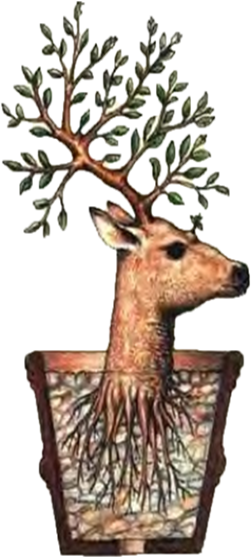
A deer that forgot to flee,and in forgetting, took root.Its antlers bud leaves that tremble like thoughts in wind,its neck descends into a pot of earth and stone,where once were lungs, now flow roots and sap. Its hooves no longer wander —its heart beats only upward.Each dawn, the old forest breathes through its wooden veins,and … Continue reading I. The Rooted Hart
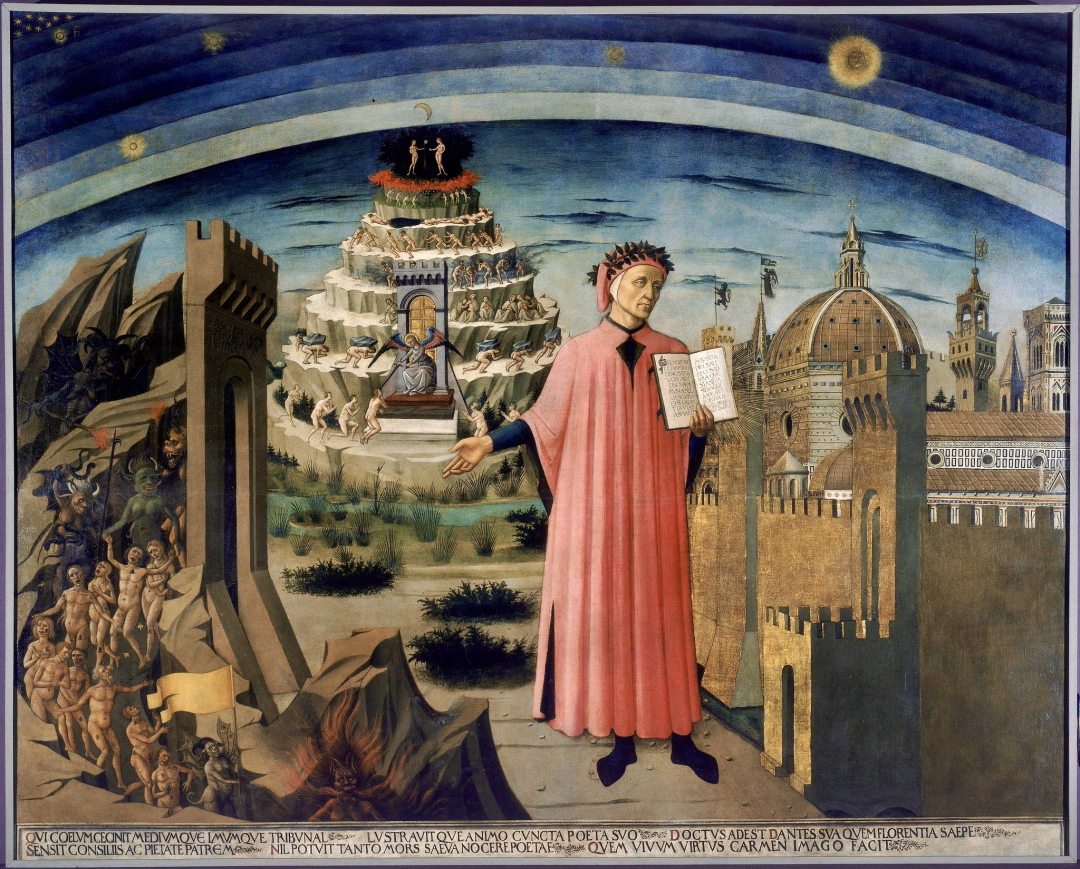
34. Paradiso — Dante Alighieri (Book III of The Divine Comedy)
Paradiso is Dante’s foray into pure theoretical physics: a universe of crystalline spheres, perfect symmetries, and luminous matter. Here, souls are not punished or purified but exist in states of increasing vibrational bliss, aligned with divine frequency. Beatrice acts as an ultra-high-energy mediator, guiding Dante through realms where distinctions blur—light becomes intellect, motion becomes joy, … Continue reading 34. Paradiso — Dante Alighieri (Book III of The Divine Comedy)

The Catalogue of Unnatural Grazers
“When the field begins to dream, its creatures learn to stand still.” Beneath the winds where feathers whispered and vanished,another realm endures — the slow kingdom of soil and patience.Here dwell the Unnatural Grazers,beasts who have forgotten the differencebetween motion and metamorphosis. They feed not upon grass but upon the quiet between breaths,their bodies bending … Continue reading The Catalogue of Unnatural Grazers
33. Purgatorio — Dante Alighieri (Book II of The Divine Comedy)
If Inferno is the universe at zero Kelvin—pure confinement—Purgatorio is the gradual warming of the soul, an ascent through increasing degrees of freedom. Each terrace acts as a harmonic oscillator tuned to a specific vice, with penitents vibrating at frequencies that slowly recalibrate toward harmony. Unlike Hell’s rigid potentials, Purgatory allows transitions: sinners climb as … Continue reading 33. Purgatorio — Dante Alighieri (Book II of The Divine Comedy)
III. The Twin-Voiced Vessel
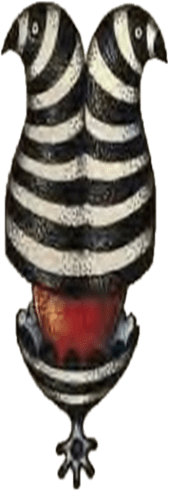
Striped in the alternating tones of night and noon,the Twin-Voiced Vessel sings from both ends at once —two heads in perpetual argument,yet one luminous heart between them. Its song is both harmony and discord,a melody that bends truth into understanding.To drink from its hollow bodyis to speak truths you never knew you bore —utterances drawn … Continue reading III. The Twin-Voiced Vessel
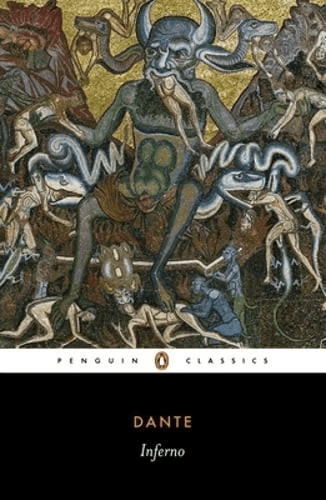
32. Inferno — Dante Alighieri (Book I of The Divine Comedy)
Dante’s descent through Hell resembles a meticulous mapping of a lower-energy universe where sin becomes a binding force and suffering the constant curvature of space. Each circle is a well-defined potential well, trapping souls according to the symmetry of their earthly actions. Virgil is the guiding boson, mediating between mortal ignorance and cosmic order. The … Continue reading 32. Inferno — Dante Alighieri (Book I of The Divine Comedy)
II. The Silver Quill of Wind-Speech
Born from the hush between clouds,the Silver Quill drifts through the high air,its hollow stem filled with a captive gale.Where it passes, the sky briefly remembers its own handwriting. It inscribes poems on vapor,maps of invisible currents traced in trembling light.Those who find one fallen to earth are told to lift it gently —for within … Continue reading II. The Silver Quill of Wind-Speech
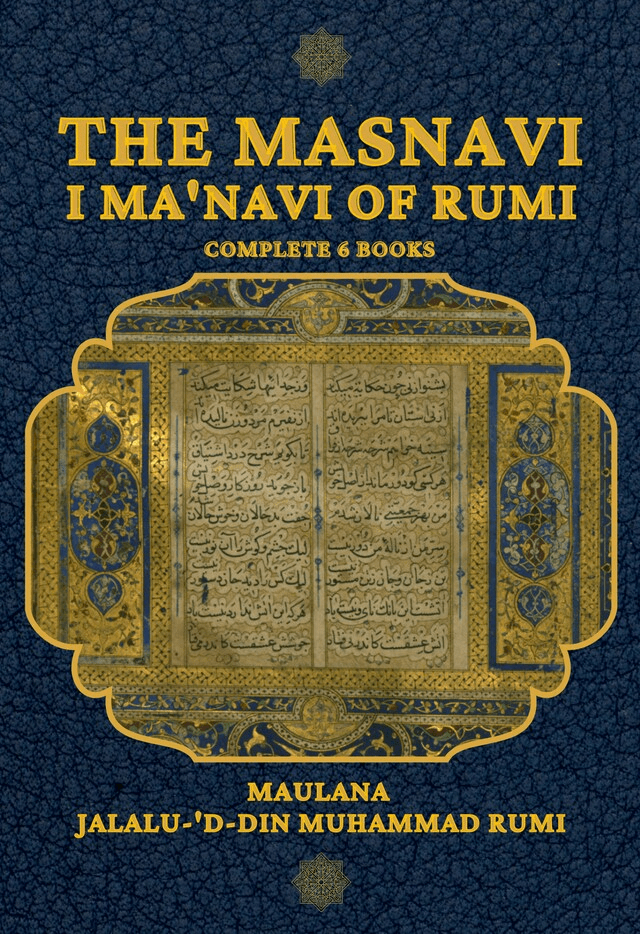
31. The Masnavi — Rumi (Persia)
Rumi’s mystical verses are a field of ecstatic resonance—spiritual bosons that alter the internal coupling of the reader to the divine. The Masnavi creates a poetic Higgs field: immersion in its metaphors increases the spiritual mass of the seeker, transforming perception and collapsing dualities. Sufi metaphors function as mediators that enable nonlocal interactions—love bridging between … Continue reading 31. The Masnavi — Rumi (Persia)
I. The Ember-Crowned Sentinel
Feathers like molten dusk,its crown glows with the last light of every storm.Perched upon roots of twilight,it watches the border between dream and waking —a guardian of the threshold where thought becomes sound. Those who meet its gaze feel their questions smolder,their certainties ash.It answers only in sparks,each one a riddle that flickers and is … Continue reading I. The Ember-Crowned Sentinel
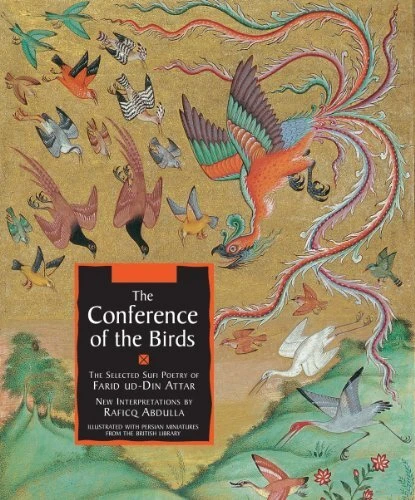
30. The Conference of the Birds — Attar (Persia)
Attar’s allegory stages a collective migration as a path integral over spiritual configurations. The birds are probe particles traversing a landscape of valleys (temptation, doubt, desire), each valley representing a local minimum of selfhood. The hoopoe functions as a guiding boson, mediating experiences and pointing toward the Simurgh—the emergent, self-revealing vacuum. The birds’ gradual shedding … Continue reading 30. The Conference of the Birds — Attar (Persia)

The Bestiary of Feathered Whispers
“Each feather is a phrase the wind once spoke.” After the serpents unbound the lines of form,there rose into the upper currents a new order —creatures woven from air and resonance,messengers between motion and meaning. These are the Feathered Whispers,born where the sky bends to thought,their wings inscribed with the scripts of unseen language.They are … Continue reading The Bestiary of Feathered Whispers
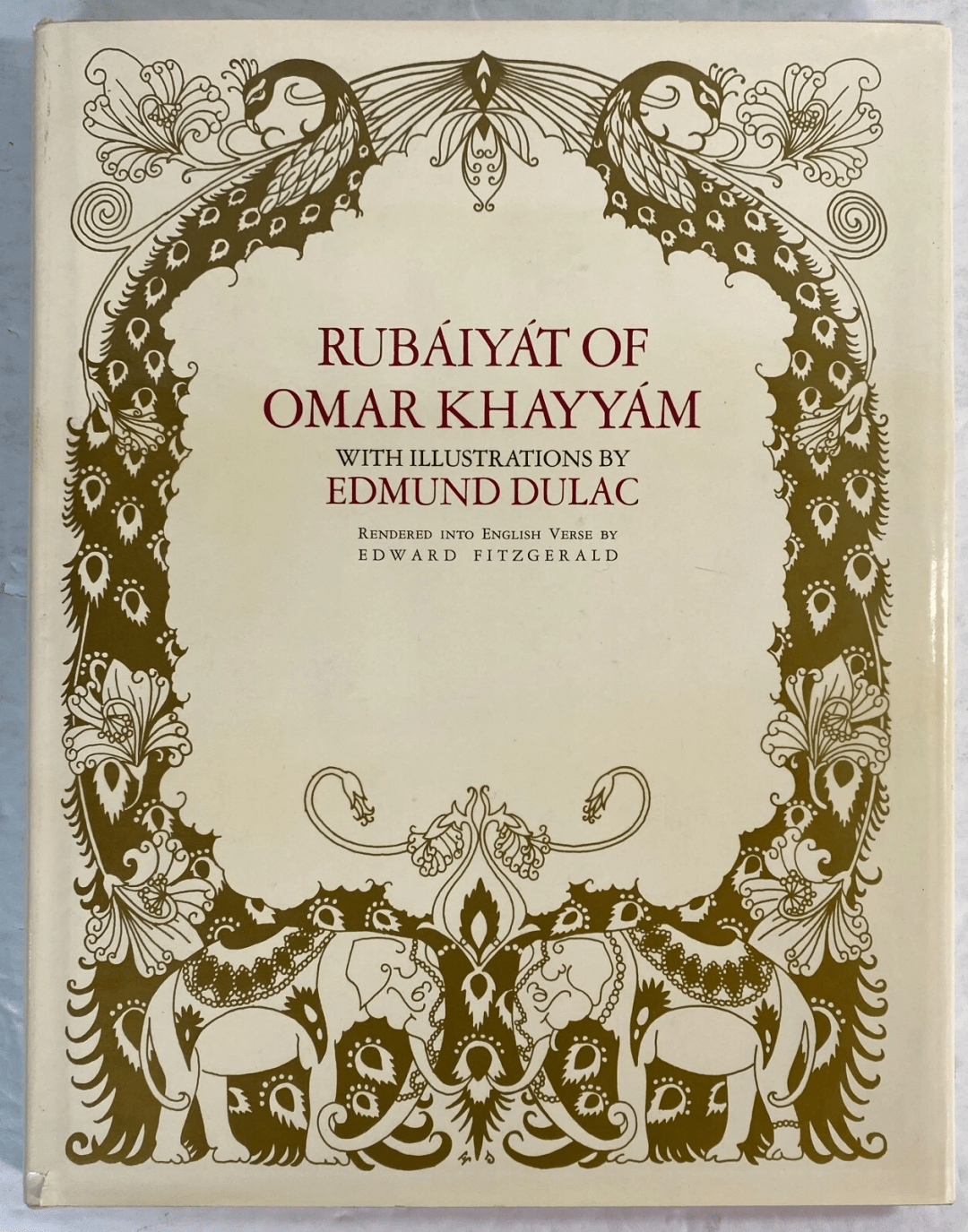
29. The Rubáiyát — Omar Khayyam
Khayyam’s quatrains behave like quantum reflections—brief, intense meditations collapsing cosmic uncertainty into lines of startling clarity. They act like short, high-amplitude oscillators—brief packets collapsing cosmic paradoxes into potent local observations. Time here is a random field; the poet’s counsel to embrace ephemeral pleasures acts like a local energy minimization strategy: if global potentials are uncertain, … Continue reading 29. The Rubáiyát — Omar Khayyam
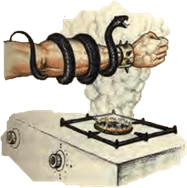
III. The Hand of Heat
From the furnaces of thought rises the black serpent —coil of obedience, servant of flame.It winds around the hand of the curious maker,its body both tether and guide. Through it, fire is given form;through it, form remembers danger.From the red eye of the stove, it ascends in reverence,binding flesh to invention —a covenant of warmth … Continue reading III. The Hand of Heat
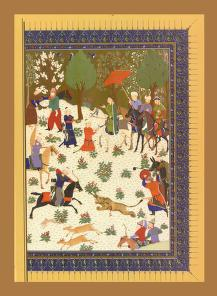
28. The Book of Kings (Tarikh-i Bayhaqi and related historiography) — Persia
Persian historiography compiles chronologies that allow field reconstruction—measuring past coupling constants and calibrating models of dynastic stability. These works operate like empirical datasets for any attempt to compute or forecast regime behavior. They track elite transitions, religious realignments, and economic flux, providing the data necessary to infer how identity-mass shifted across centuries. In SLM terms, … Continue reading 28. The Book of Kings (Tarikh-i Bayhaqi and related historiography) — Persia
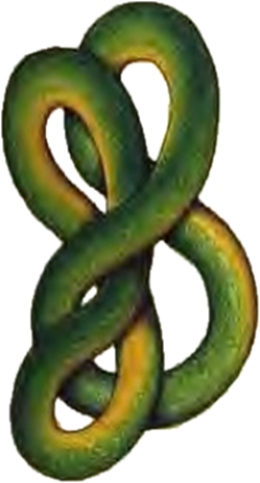
II. The Infinite Coil
In the hidden gardens of sleep,a green serpent devours its own tail —not in despair, but in meditation. Its body loops endlessly through itself,knotting time into emerald stillness.Each turn is a sigh, each bite a vow of return. It feeds upon recurrence,a hunger shaped like eternity.Those who glimpse it in dreams awaken with circles in … Continue reading II. The Infinite Coil
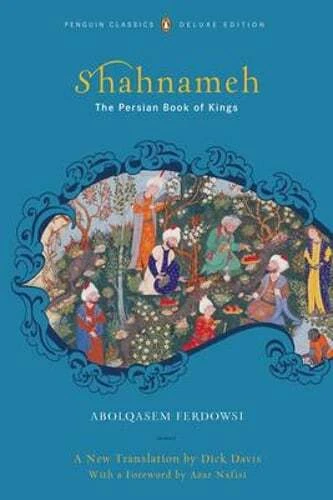
27. The Shahnameh — Ferdowsi (Persia)
Ferdowsi’s epic acts as a grand unifying narrative—an attempt to create a national potential that preserves Persian identity across dynastic and religious phase changes. Heroic cycles act like repeated excitations, preserving cultural eigenmodes, while kings and heroes function as massive particles whose actions seed durable norms. Myth and history are coupled through the textual mediators … Continue reading 27. The Shahnameh — Ferdowsi (Persia)
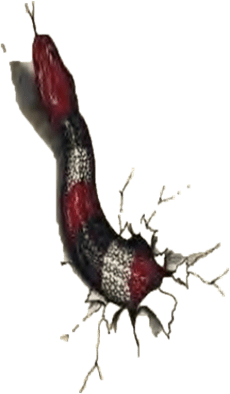
I. The Cracked Birth
From the breath of stone, a serpent tears itself free —its scales red, white, and black,its motion a fracture made holy. It writhes through the walls of order,leaving behind small grammars of awakening.Each ring upon its body is a syllable of escape,each undulation a phrase of remembering. Where it passes, structures tremble —not from ruin, … Continue reading I. The Cracked Birth

26. The Tale of Genji — Murasaki Shikibu
This monumental courtly tapestry behaves like a vast, slow-moving field in which emotional energies ripple across generations. Genji, the “Shining Prince,” is a luminous excitation whose beauty and charisma distort the social spacetime around him. His relationships act as delicate couplings—each affair sending waves through the aristocratic continuum, altering marriages, alliances, and destinies. Murasaki measures … Continue reading 26. The Tale of Genji — Murasaki Shikibu

The Serpents of the Impossible
“From fracture comes motion; from motion, the promise of form.” If the fishes of the deep reveal the language of reflection,the serpents speak the dialect of disruption.They are not born in water or air,but in the fault lines between knowing and unmaking —creatures that bend the laws they inhabit. Scholars of the Inner Continuum call … Continue reading The Serpents of the Impossible
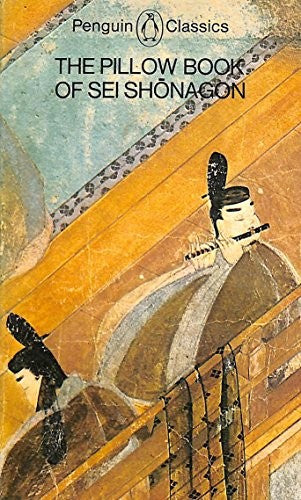
25. The Pillow Book — Sei Shōnagon (Japan)
This miscellany is a registry of micro-observables—esthetic temperature readings. Its lists and vignettes function as calibration data: what constitutes beauty, propriety, and offense. For the SLM, it is an empirical manual for courtly couplings, essential for reproducing Heian vacuum conditions. A masterpiece of Memoirion (N + S⁰ + T), the Pillow Book uses Narraton filtered … Continue reading 25. The Pillow Book — Sei Shōnagon (Japan)
 The Maharajagar