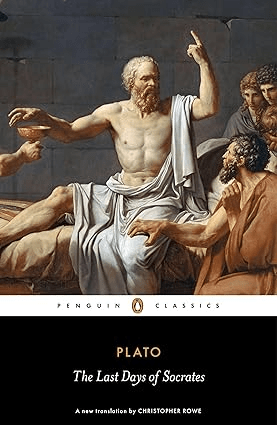
Socrates appears as a stable particle within a decaying moral field, a disruptive force whose questions unsettle the Athenian vacuum. His method—elenchus—is a controlled collision: ideas smashed together until hidden structures emerge. The trial reveals a society terrified of intellectual ionization—fearful that too much inquiry will shatter its fragile civic bonds. Socrates refuses to adjust … Continue reading 13. The Trial of Socrates (or Apology) — Plato
11. Zhuangzi — Zhuang Zhou (China)
Zhuangzi destabilizes fixed identity-mass by questioning categories and promoting adaptive superpositions. His parables encourage flexible couplings, suggesting that rigid potentials lead to suffering; in SLM, he prescribes dynamic renormalization—allowing states to be context-dependent rather than fixed invariants. The Zhuangzi operates as a philosophical Mythoplasma, intertwining N + Mγ + T to create drifting parables whose … Continue reading 11. Zhuangzi — Zhuang Zhou (China)
9. Analects — Confucius (China)
The Analects present a prescriptive dynamics for social stability. Rituals and hierarchical roles are selection rules: perform them correctly and social coherence emerges. The Analects thus provide precise Lagrangian terms that penalize deviance and reward conformity, producing low-entropy social arrangements.A lean Realiton (N + D±) stabilized through ethical clarity. Dissonatons (D±) emerge in the friction … Continue reading 9. Analects — Confucius (China)

8. The Odyssey — Homer
In the Standard Literary Model, The Odyssey behaves like a baryon: a bound state of wanderer, memory, and fate locked into an oscillatory pattern by the strong force of home. Odysseus is a quark of identity that refuses confinement yet can never fully escape it; every island he encounters is another local minimum in the … Continue reading 8. The Odyssey — Homer
7. The Iliad — Homer
The Iliad is a collision event—two massive bodies (Achilles’ rage and Troy’s stubborn dignity) smashing together in a storm of hadronic debris. The poem behaves like a high-energy scattering experiment in which honor, mortality, and divine interference are particles exchanging momentum with catastrophic results. Achilles is effectively a top quark: heavier than the narrative can … Continue reading 7. The Iliad — Homer
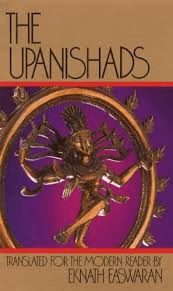
6. The Upanishads (India)
The Upanishads function as renormalization techniques for inner life. They propose methods for subtracting superficial divergences—ego, desire—to reveal a more fundamental field of Brahman. Practices they recommend (meditation, ethical discipline) are operators reducing self-interaction terms and allowing consciousness to experience unified modes. In SLM, the Upanishads describe a path to lower-energy coherence: when the individual … Continue reading 6. The Upanishads (India)

5. The Vedas (India)
The Vedas operate like foundational field equations: hymns that set cosmological symmetries, ritual operators, and priestly mediators that maintain the sacrificial vacuum. Their liturgies are bosonic actions transmitting sacred charge between human and cosmic realms. The sacrificial system establishes selection rules that regulate social stratification and perform energy transfers (offerings), preserving cosmic order (ṛta). In … Continue reading 5. The Vedas (India)
 The Maharajagar