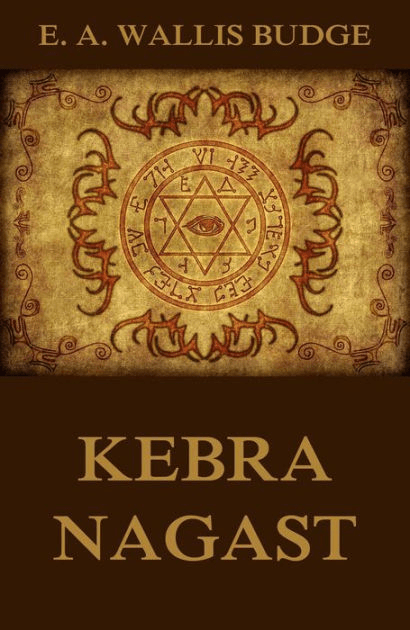
The Kebra Nagast behaves like a foundational unification theory: it stitches Judeo-Christian, Judaic Solomonic, and Ethiopic strands into a coherent field that grants imperial legitimacy its Higgs-like mass. The Ark narrative functions as a central bosonic carrier: possessing it endows a dynasty with sacred coupling and divine right. The text’s genealogical constructions are selection rules—allowed … Continue reading 35. The Kebra Nagast (Ethiopia)
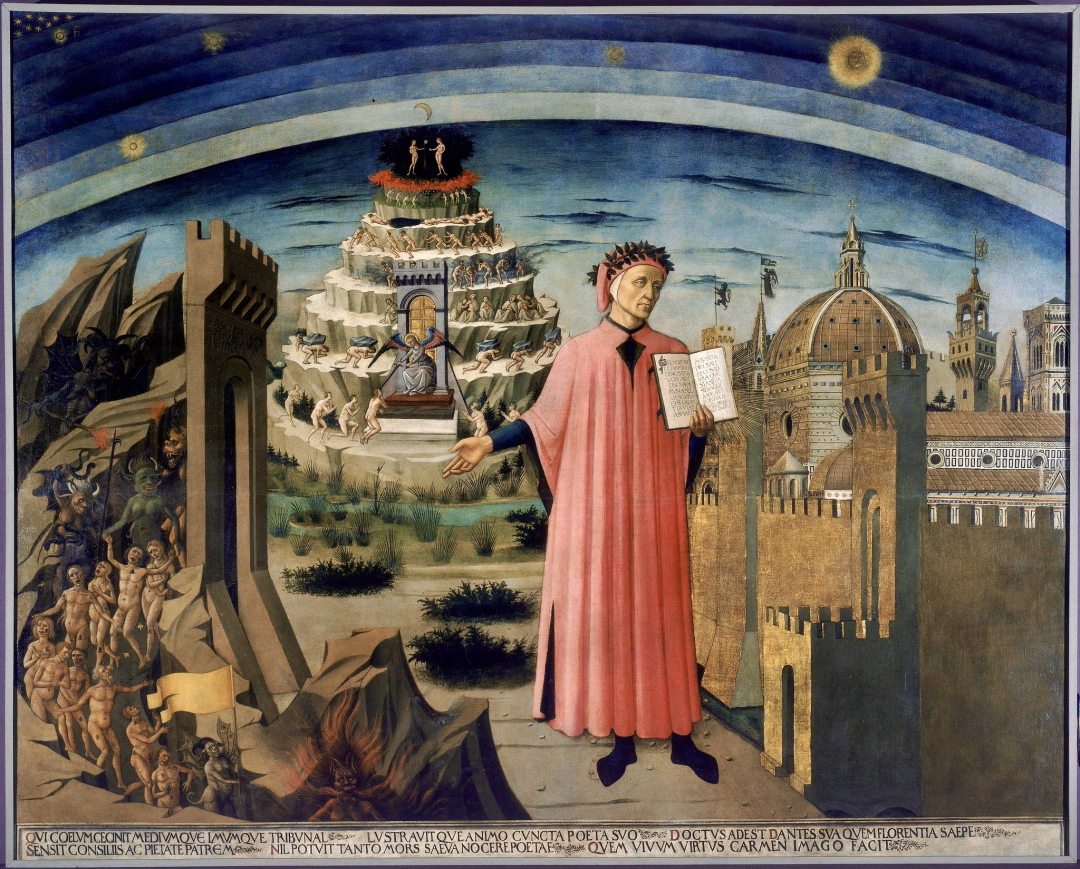
34. Paradiso — Dante Alighieri (Book III of The Divine Comedy)
Paradiso is Dante’s foray into pure theoretical physics: a universe of crystalline spheres, perfect symmetries, and luminous matter. Here, souls are not punished or purified but exist in states of increasing vibrational bliss, aligned with divine frequency. Beatrice acts as an ultra-high-energy mediator, guiding Dante through realms where distinctions blur—light becomes intellect, motion becomes joy, … Continue reading 34. Paradiso — Dante Alighieri (Book III of The Divine Comedy)
33. Purgatorio — Dante Alighieri (Book II of The Divine Comedy)
If Inferno is the universe at zero Kelvin—pure confinement—Purgatorio is the gradual warming of the soul, an ascent through increasing degrees of freedom. Each terrace acts as a harmonic oscillator tuned to a specific vice, with penitents vibrating at frequencies that slowly recalibrate toward harmony. Unlike Hell’s rigid potentials, Purgatory allows transitions: sinners climb as … Continue reading 33. Purgatorio — Dante Alighieri (Book II of The Divine Comedy)
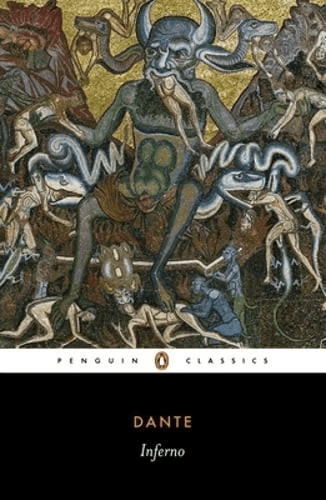
32. Inferno — Dante Alighieri (Book I of The Divine Comedy)
Dante’s descent through Hell resembles a meticulous mapping of a lower-energy universe where sin becomes a binding force and suffering the constant curvature of space. Each circle is a well-defined potential well, trapping souls according to the symmetry of their earthly actions. Virgil is the guiding boson, mediating between mortal ignorance and cosmic order. The … Continue reading 32. Inferno — Dante Alighieri (Book I of The Divine Comedy)
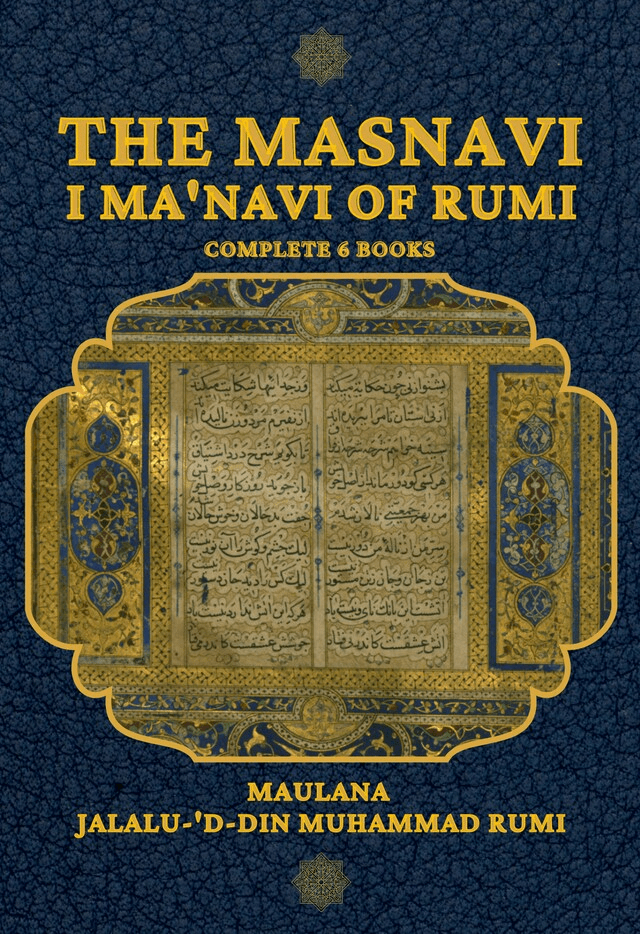
31. The Masnavi — Rumi (Persia)
Rumi’s mystical verses are a field of ecstatic resonance—spiritual bosons that alter the internal coupling of the reader to the divine. The Masnavi creates a poetic Higgs field: immersion in its metaphors increases the spiritual mass of the seeker, transforming perception and collapsing dualities. Sufi metaphors function as mediators that enable nonlocal interactions—love bridging between … Continue reading 31. The Masnavi — Rumi (Persia)
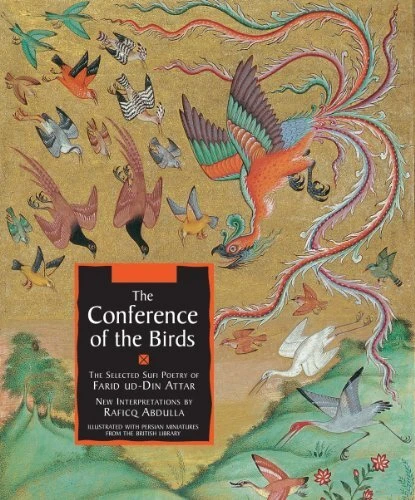
30. The Conference of the Birds — Attar (Persia)
Attar’s allegory stages a collective migration as a path integral over spiritual configurations. The birds are probe particles traversing a landscape of valleys (temptation, doubt, desire), each valley representing a local minimum of selfhood. The hoopoe functions as a guiding boson, mediating experiences and pointing toward the Simurgh—the emergent, self-revealing vacuum. The birds’ gradual shedding … Continue reading 30. The Conference of the Birds — Attar (Persia)
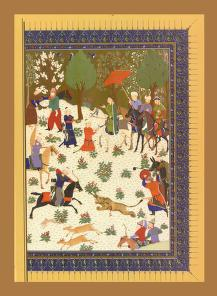
28. The Book of Kings (Tarikh-i Bayhaqi and related historiography) — Persia
Persian historiography compiles chronologies that allow field reconstruction—measuring past coupling constants and calibrating models of dynastic stability. These works operate like empirical datasets for any attempt to compute or forecast regime behavior. They track elite transitions, religious realignments, and economic flux, providing the data necessary to infer how identity-mass shifted across centuries. In SLM terms, … Continue reading 28. The Book of Kings (Tarikh-i Bayhaqi and related historiography) — Persia
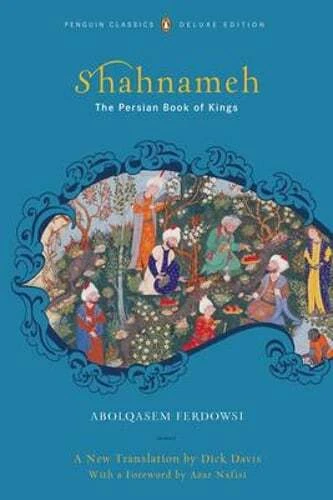
27. The Shahnameh — Ferdowsi (Persia)
Ferdowsi’s epic acts as a grand unifying narrative—an attempt to create a national potential that preserves Persian identity across dynastic and religious phase changes. Heroic cycles act like repeated excitations, preserving cultural eigenmodes, while kings and heroes function as massive particles whose actions seed durable norms. Myth and history are coupled through the textual mediators … Continue reading 27. The Shahnameh — Ferdowsi (Persia)
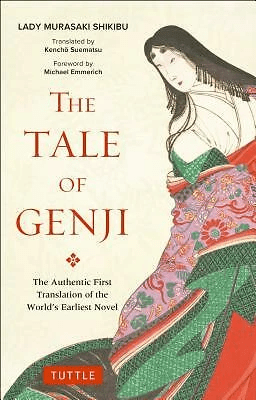
26. The Tale of Genji — Murasaki Shikibu
This monumental courtly tapestry behaves like a vast, slow-moving field in which emotional energies ripple across generations. Genji, the “Shining Prince,” is a luminous excitation whose beauty and charisma distort the social spacetime around him. His relationships act as delicate couplings—each affair sending waves through the aristocratic continuum, altering marriages, alliances, and destinies. Murasaki measures … Continue reading 26. The Tale of Genji — Murasaki Shikibu
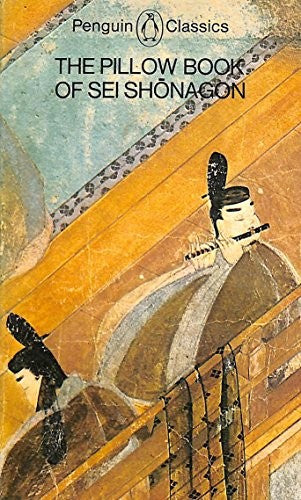
25. The Pillow Book — Sei Shōnagon (Japan)
This miscellany is a registry of micro-observables—esthetic temperature readings. Its lists and vignettes function as calibration data: what constitutes beauty, propriety, and offense. For the SLM, it is an empirical manual for courtly couplings, essential for reproducing Heian vacuum conditions. A masterpiece of Memoirion (N + S⁰ + T), the Pillow Book uses Narraton filtered … Continue reading 25. The Pillow Book — Sei Shōnagon (Japan)
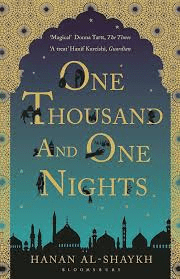
24. One Thousand and One Nights (Arabic/Persian/Egyptian)
The Nights is a narrative lattice of nested propagators—stories within stories act as successive Green’s functions that regulate social anxieties, entertain, and transmit norms. Scheherazade’s storytelling is a temporally extended operation: by continually altering the phases of narrative expectation, she prevents execution (annihilation) and shifts the royal vacuum to one where mercy emerges. Each tale … Continue reading 24. One Thousand and One Nights (Arabic/Persian/Egyptian)
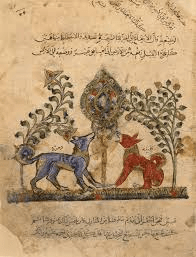
23. Kalila wa Dimna — Ibn al-Muqaffaʿ (Persia → Arabic)
This fable collection behaves like a set of pedagogical operators: allegories that act as low-energy effective interactions teaching statecraft, prudence, and moral heuristics. Animals here are fermionic proxies for human agents, enabling safe experimentation in moral parameter space. Each tale performs a controlled scattering experiment in which principles of governance and virtue are tested against … Continue reading 23. Kalila wa Dimna — Ibn al-Muqaffaʿ (Persia → Arabic)
22. The Qur’an (Arabic sacred text)
Treated metaphorically as a foundational field, the Qur’an acts as the primary Higgs-like background in Islamic cultures—its textual presence endows communities with a shared identity-mass, governs permitted transformations, and supplies immutable selection rules. Its verses are operators altering behavior, ritual, and law; recitation is a bosonic process transmitting divine coupling directly into hearts. The Qur’an’s … Continue reading 22. The Qur’an (Arabic sacred text)
21. The Mu’allaqat (Pre-Islamic Arabian odes)
The Mu’allaqat function as canonical eigenmodes of early Arabic poetic culture—high-amplitude resonant forms that define aesthetic couplings. These odes are energetic excitations where tribal honor, martial valor, and pastoral connections resonate as conserved charges. Performed at major gatherings, they act as social mediators, aligning group identity and transmitting ancestral couplings. Their endurance suggests that certain … Continue reading 21. The Mu’allaqat (Pre-Islamic Arabian odes)
20. Shakuntala — Kālidāsa (Sanskrit)
Kālidāsa’s courtly romance is a delicate interaction between destiny and recognition, where memory functions as a field whose temporary removal creates a false vacuum and leads to narrative tension. Shakuntala and Dushyanta’s love bonds are coupling constants subject to the perturbation of a curse (memory loss). The eventual restoration is a spontaneous re-stabilization: the proper … Continue reading 20. Shakuntala — Kālidāsa (Sanskrit)
19. The Song of Roland — Anonymous
This chanson de geste is a high-energy collision of feudal honor and inevitable tragedy. Roland is a charged particle whose pride acts like an unstable field, magnifying danger until catastrophe becomes unavoidable. Oliver, more tempered, tries to mediate, but Roland’s refusal to sound the oliphant is a symmetry-breaking choice that unleashes disaster. The battle at … Continue reading 19. The Song of Roland — Anonymous
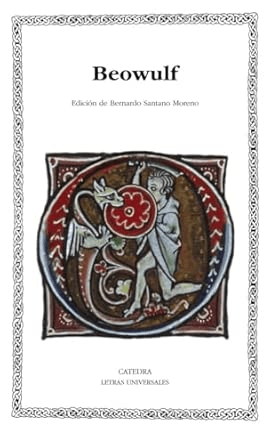
18. Beowulf — Anonymous
Beowulf is a massive baryon—heroic, dense with strength—colliding with monstrous excitations at the edges of the human field. Grendel is a rogue particle born from an exiled lineage; Grendel’s mother a deeper, older force from an unseen sector. The dragon in the final act is entropy itself, the ultimate reminder that no excitation endures forever. … Continue reading 18. Beowulf — Anonymous
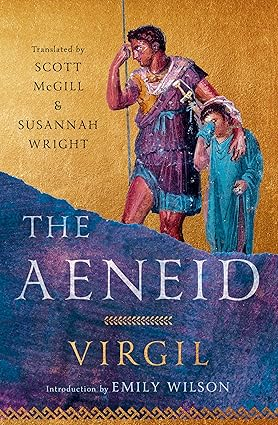
17. The Aeneid — Virgil
Aeneas is a particle carrying the full momentum of destiny, propelled across collapsing Trojanscape into the unformed vacuum of Italy. His journey resembles a forced trajectory through an unstable potential landscape: propelled by fate, slowed by grief, accelerated by divine interference. Love with Dido forms a temporary bound state—briefly stable, catastrophically broken when the higher … Continue reading 17. The Aeneid — Virgil
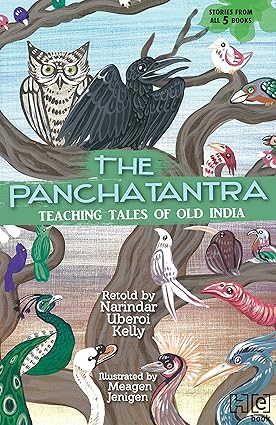
16. The Panchatantra (India)
As in Kalila wa Dimna, the Panchatantra’s animal fables are pedagogical operators used to test governance and prudence. across many parameter spaces. Each tale is a controlled interaction that demonstrates consequences of certain couplings—greed, cunning, laziness—allowing listeners to update their behavioral priors experimentally. Its high transferability across cultures indicates robust eigenvalues in the cultural mixing … Continue reading 16. The Panchatantra (India)
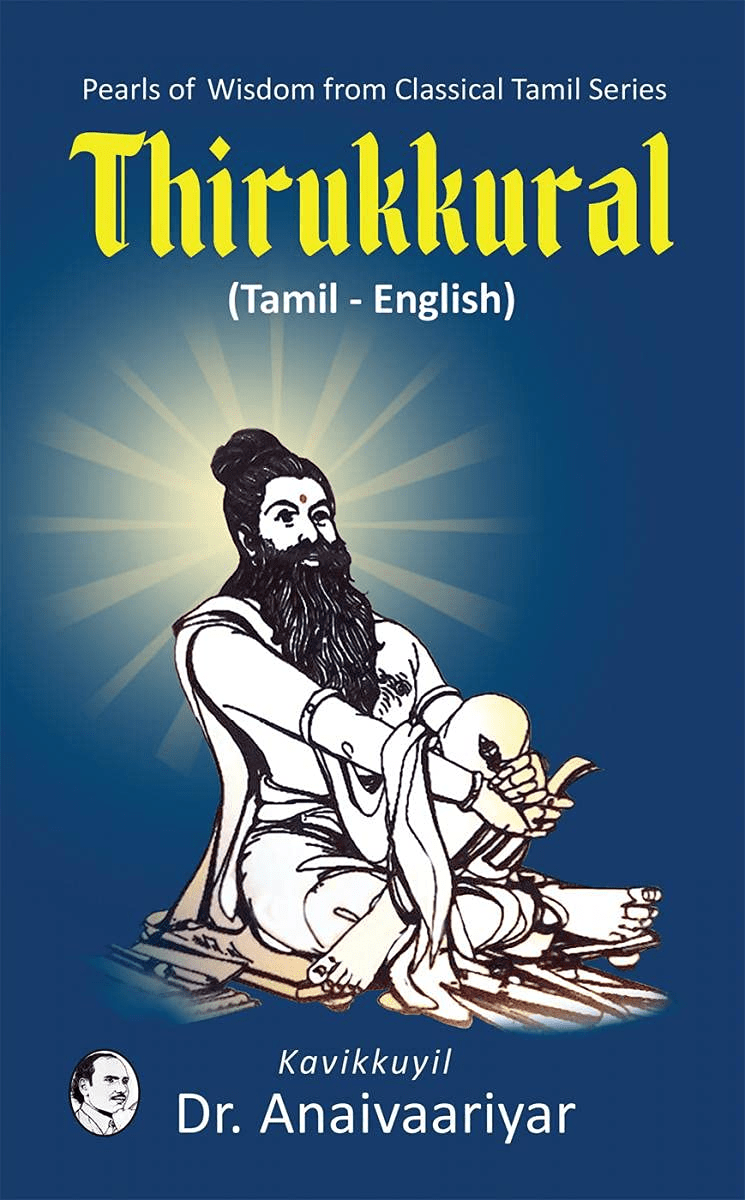
15. The Tirukkural (Tamil Nadu)
The Tirukkural is an efficient moral Lagrangian: compact aphorisms that operationalize virtue, polity, and love into actionable rules. Its ethical maxims act as local potential terms minimizing conflict and maximizing social stability. The text’s brevity and modularity make it a low-friction mediator—easy to transmit and integrate into diverse social vacua. As an SLM, the Tirukkural … Continue reading 15. The Tirukkural (Tamil Nadu)
 The Maharajagar