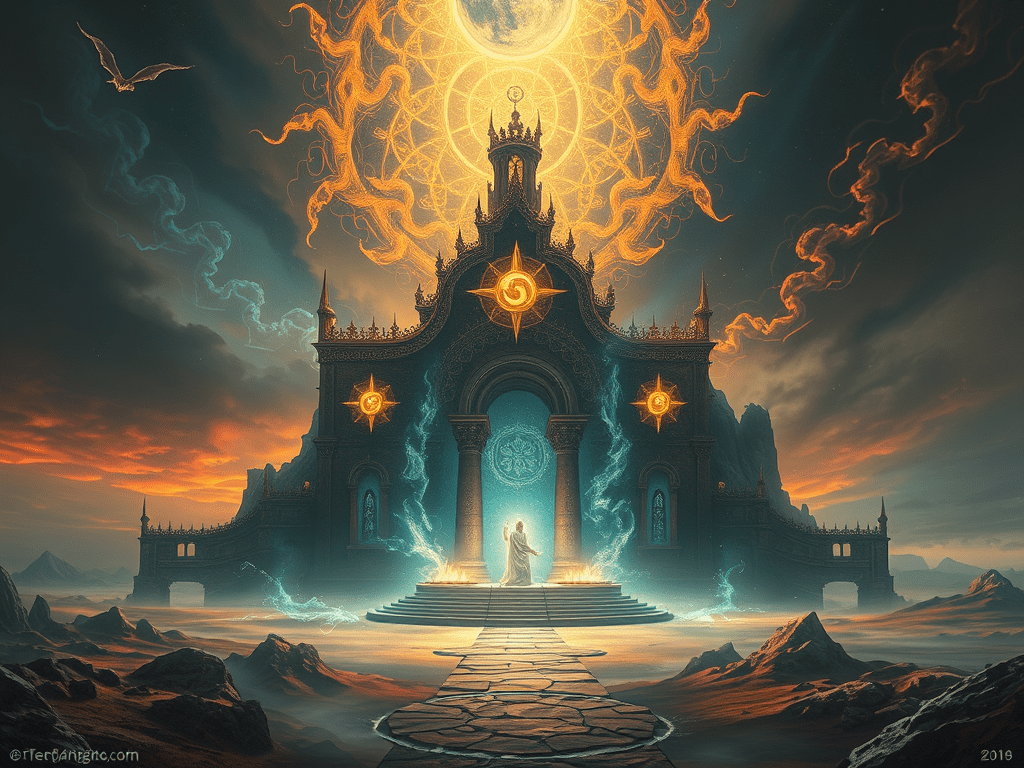
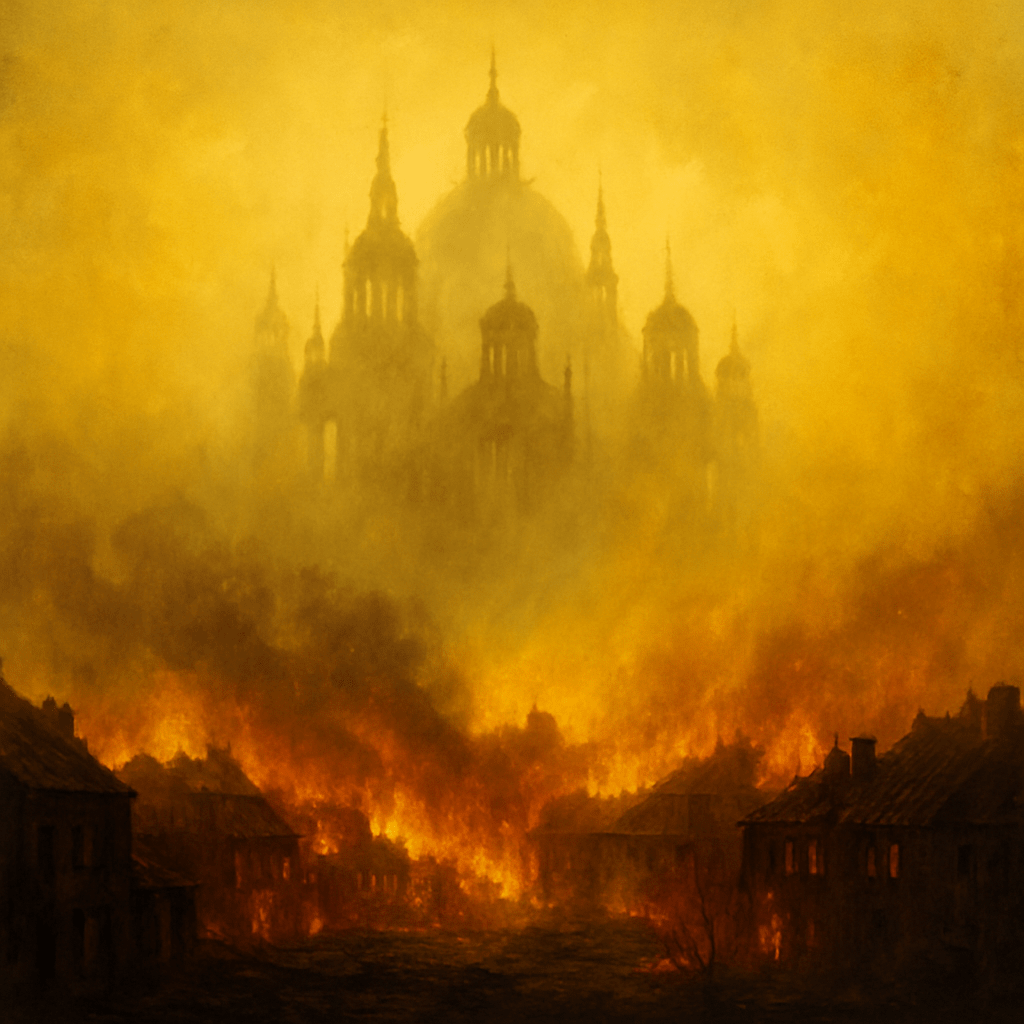
Every great saga needs its villain. In The Maharajagar, Long Feng is more than that—he is the storm that drives history off course.
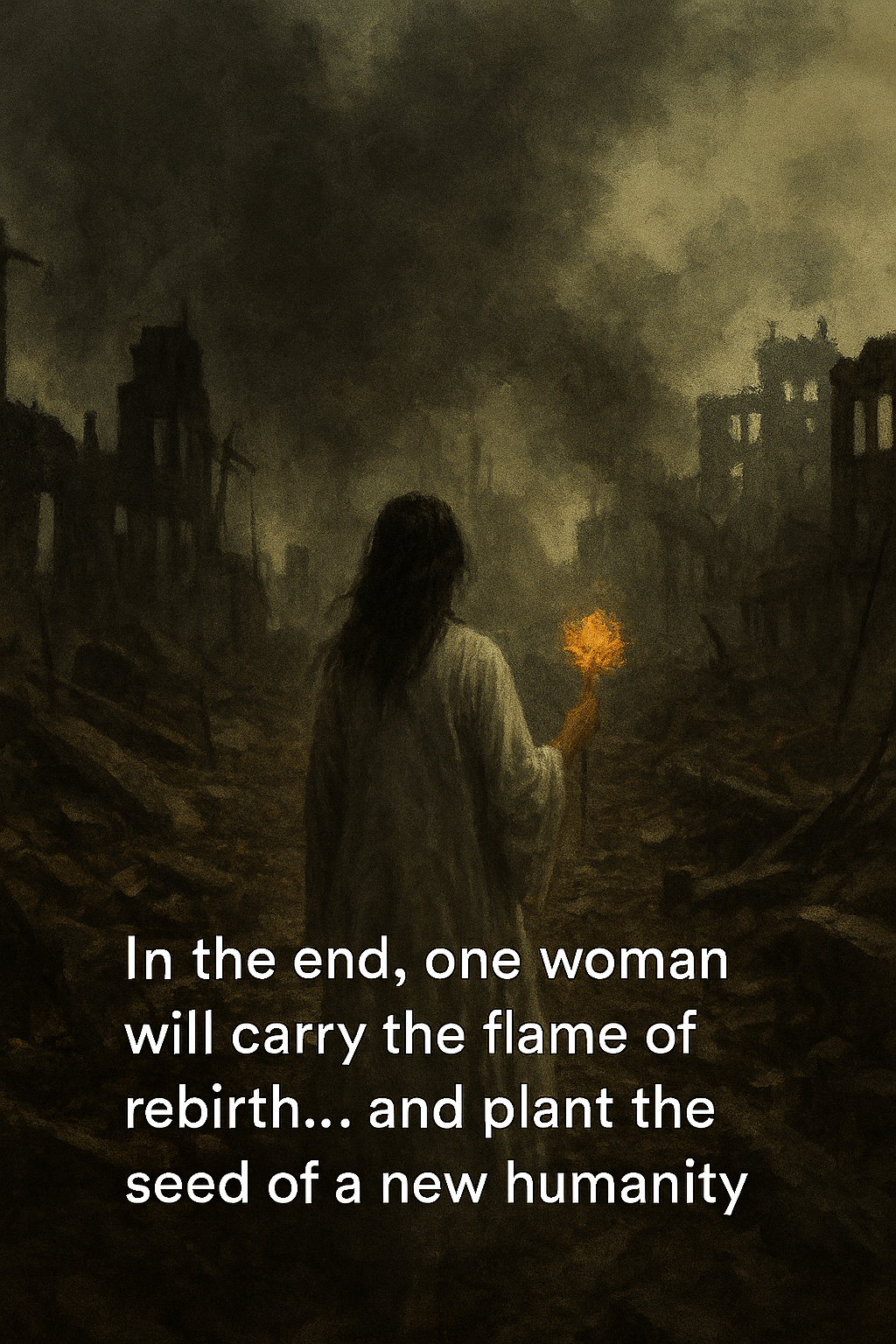
The Flame of Rebirth: Esther’s Journey in The Maharajagar
In the heart of war and chaos, one woman bears the power to weave the multiverse back together. Body:
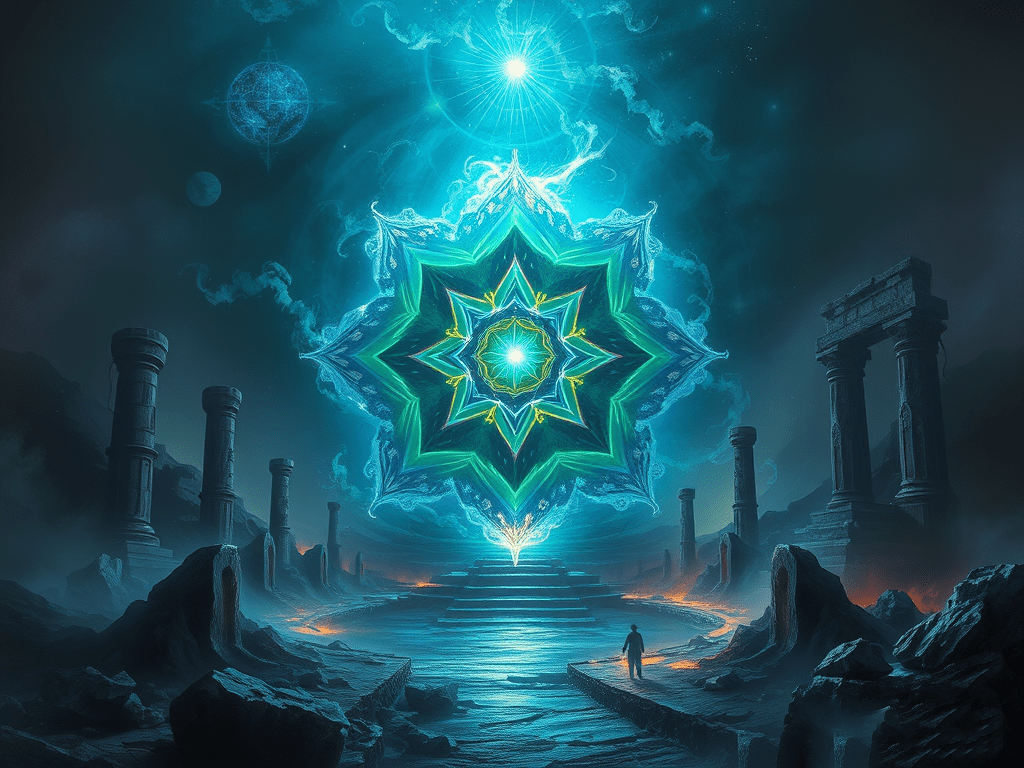
Carcosa Rises: The Forgotten City in The Maharajagar
It is a city without doors, without past or future—yet it is always there, waiting to be found.
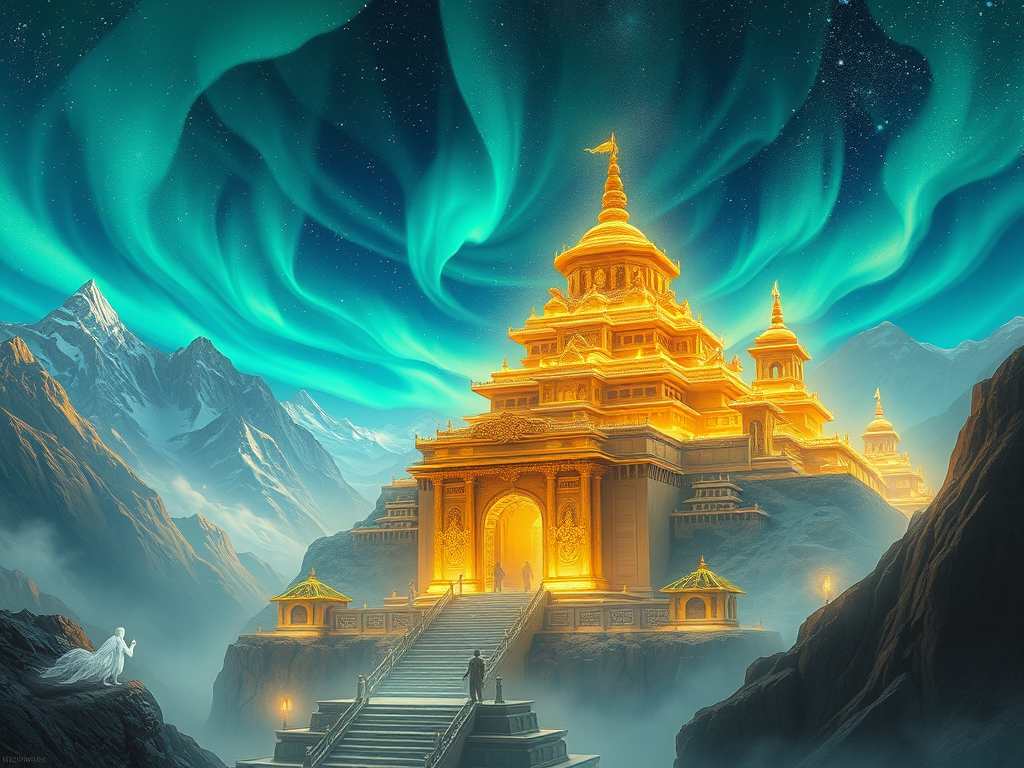
Shrines of Power: Mapping the Threads of Fate in The Maharajagar
Not all battlefields are made of stone and steel—some are built from time, memory, and the elements themselves.
The Return of the King in Yellow: The Maharajagar’s Darkest Shadow
Beyond the war of nations lies the war of worlds. The King in Yellow waits, his influence seeping into the cracks of history.
Forged in Fire: The Birth of the Qi’tet in The Maharajagar
In the labyrinth of fate, five individuals are bound by chimerism—each mastering an elemental force. They are the Qi’tet, forged in the crucible of destiny.
The Hidden War Beneath History: Enter the World of The Maharajagar
Before the trenches of World War I were dug, a deeper conflict raged — one of magic, memory, and the fate of humanity
How do the 3 metathemes relate to the content of the Maharajagar?
Let’s now explore how those three meta-themes (as described in the foreword) integrate with the content, structure, and symbolism of The Maharajagar across the whole saga: "The All is a projection of informational modulated energy waves by a cosmically horizon on the time-space continuum."Interpretation in the series:This is a deeply metaphysical idea—drawing from quantum field … Continue reading How do the 3 metathemes relate to the content of the Maharajagar?
What drives the Maharajagar?
This novel uses metaphors, symbols, ambiguities, and overtones which gradually link themselves together to form a network of connections binding the whole work. This system of connections gives the novel a wide, more universal significance as the tale becomes a modern microcosm presented from a fictive metaphysical perspective. This system can be described as the … Continue reading What drives the Maharajagar?
The Maharajagar: The Title as a Mythic Graft
At its core, The Maharajagar is a literary graft onto the Mahabharata, one of the world’s greatest epics. The word “Maharajagar” itself is a constructed or mythopoeic name—evocative of Sanskrit roots:• “Maha” = great• “Raja” = king or ruler• “Gar” / “Agar” = abode, gathering, or enclosureThus, "The Maharajagar" can be interpreted as “The Great … Continue reading The Maharajagar: The Title as a Mythic Graft
What is the Maharajagar about?
The Maharajagar is an epic, genre-blending saga of myth, memory, and power, set against the shifting backdrops of early 20th-century Earth and beyond. Rooted in historical fantasy and inspired by the structure of the Mahabharata, the series traces the paths of a diverse ensemble of characters bound together by fate, ancient forces, and a mysterious … Continue reading What is the Maharajagar about?
An impending book launch: The Maharajagar
I know that I'm a poor internaut. When inspiration strikes me, I just disappear in my studio and the blogosphere will have to keep running without me. It probably saddled me up with a a couple of D's in its subroutine. To blog is to be on the internet. Now what happened that I risked … Continue reading An impending book launch: The Maharajagar
The contemporary critical art theory
A common critique of the art world is the emphasis on financial gain over critical engagement with art theory. Many artists feel that the focus on monetization, particularly through NFTs and other speculative markets, overshadows the potential for deeper artistic and social commentary. This can lead to a situation where artistic merit is secondary to … Continue reading The contemporary critical art theory
Carefully chosen adventures, within a framework of personal security, can lead to greater fulfillment.
Daily writing promptAre you seeking security or adventure?View all responses
Reading the canon of world literature
Chapter 21; Ulysses by James Joyce.July 15th, 2015Description Quotes in Ulysses;- The mirror is the instrument of the narcist and solipsist, the broken looking glass is the instrument of the artist.- History is my reversal omnibucal cord to humankind. It’s nothing that I suffer from, but something I keep contributing to.- Is a ghost any … Continue reading Reading the canon of world literature
Geographies
Last week I submited some contribution to an open call launched by LoosenArt who is inviting photographers, video makers and digital visual designers to take part in the collective exhibition "Geographies: an exploration between places, environments and cultures", an exhibition project that seeks to question and narrate the many forms of contemporary geography: physical and … Continue reading Geographies
Reading the canon of World Literature
Chapter 20; Father Goriot by Honore de Balzac.July 2nd, 2015Summary Most of the action is centered around a boarding house called Maison Vauquer, ran by a widow, Mme. Vauquer. The story relates mostly to the interactions between Jean-Joachim Goriot, a retired vermicelli maker who bankrupted himself to give his daughters a better future; a secretive … Continue reading Reading the canon of World Literature
Is the Pen really mightier than the Sword?
The phrase "the pen is mightier than the sword" was first written by English novelist and playwright Edward Bulwer-Lytton in his 1839 play Richelieu; Or the Conspiracy. It may be true that history is full of people who have never personally held any type of weapon and have nevertheless sent millions to an early grave. … Continue reading Is the Pen really mightier than the Sword?
North American Literature and the Universe.
Since American literature, as represented by the collection of the US Library of Congress, has the whole universe as a subject, one could assume that this system is also governed by the same mechanisms that it describes. UNIVERSE Alan Guth believes that the universe bubbled up out of a pre-universal singularity. During a short moment, … Continue reading North American Literature and the Universe.
Reading the Canon of World Literature
Chapter 19; The Adventures of Huckleberry Finn by Mark TwainJune 25th, 2015This book counts 366 pages and was first published in 1884 in the UK and a year later in the US. It played mainly along the Mississippi River into a pre-civil war society that already 20 years ceased to exist by the time the … Continue reading Reading the Canon of World Literature