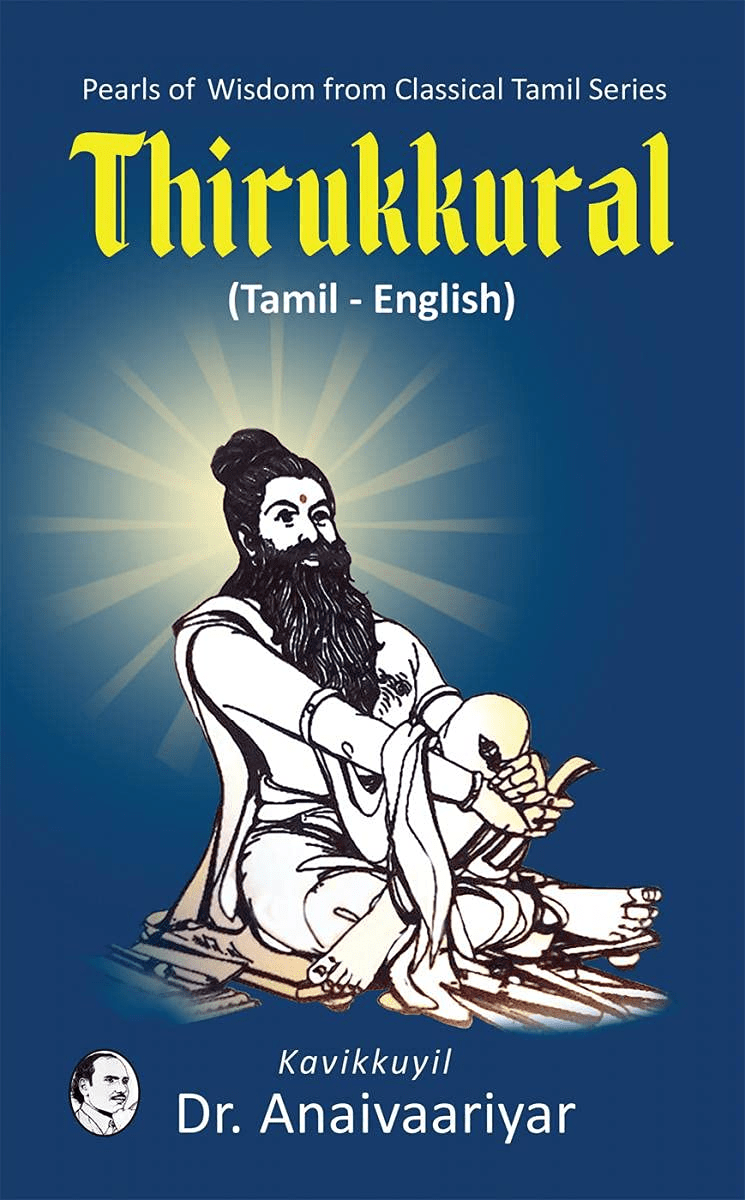
The Tirukkural is an efficient moral Lagrangian: compact aphorisms that operationalize virtue, polity, and love into actionable rules. Its ethical maxims act as local potential terms minimizing conflict and maximizing social stability. The text’s brevity and modularity make it a low-friction mediator—easy to transmit and integrate into diverse social vacua. As an SLM, the Tirukkural … Continue reading 15. The Tirukkural (Tamil Nadu)

The Orchard of Rotating Instruments
The Devices of Turned Wind and Colored Bloom This page catalogs a set of mechanical instruments designed to measure, stir, or expose the invisible qualities of air and motion. The Weighted Plume Crank:A long arm ending in a dense tuft, lowered and raised by a wheel to test vertical currents. The Centripetal Bloom Engine:Its arms … Continue reading The Orchard of Rotating Instruments

14. The Mahabharata (India)
The Mahabharata is a many-body problem on an epic scale: dynasties, dharma, and cosmic will interact as multiple fields with complex coupling. The Kurukshetra war is a massive scattering event where individual actions propagate nonlinearly through families and kingdoms, producing emergent patterns (law, regret, new orders). Characters act as particles with varying masses—Bhishma’s unbending honor, … Continue reading 14. The Mahabharata (India)
I’m not going to keep soldiering through life.
Personal reflection on leaving militaristic and mission-driven thinking behind in pursuit of self-directed life
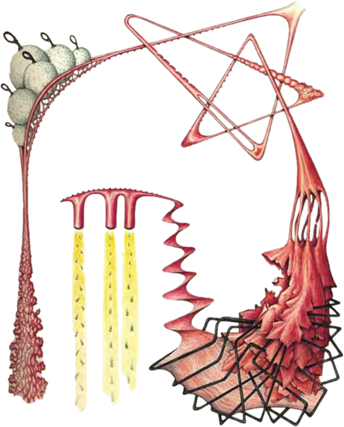
Page of Red Machines
An architecture of scarlet tendons builds itself,branching into stars, ladders, and hesitant halos. Globes pulse at the summit,each crowned with a loop like a keyhole of breath. Yellow beams descend through ribbed vaults,liquid sound made visible. Beneath, folds of red fabric move like memory rehearsing itself,stitched into a frame of black logic—a choreography of hunger … Continue reading Page of Red Machines

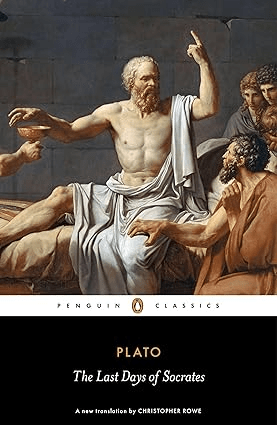
13. The Trial of Socrates (or Apology) — Plato
Socrates appears as a stable particle within a decaying moral field, a disruptive force whose questions unsettle the Athenian vacuum. His method—elenchus—is a controlled collision: ideas smashed together until hidden structures emerge. The trial reveals a society terrified of intellectual ionization—fearful that too much inquiry will shatter its fragile civic bonds. Socrates refuses to adjust … Continue reading 13. The Trial of Socrates (or Apology) — Plato
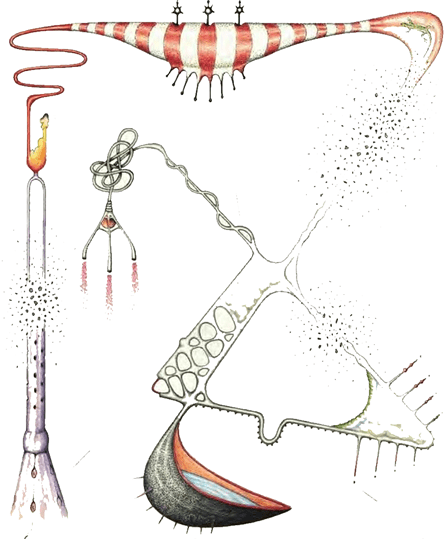
Page of the Combustion Beast
Poetic exploration of fire imagery as symbolic and elemental understanding of creative energy
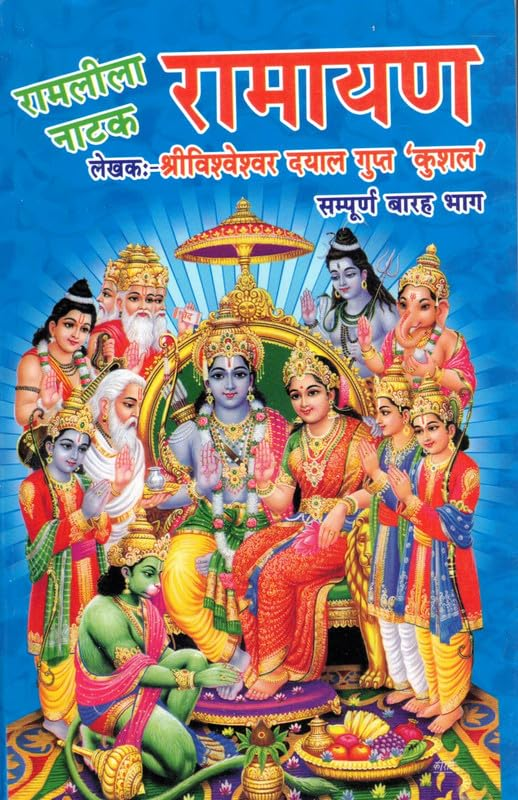
12. The Ramayana (India)
The Ramayana frames idealized role-model particles (Rama, Sita) whose conduct establishes normative selection rules for kingly, familial, and cosmic behavior. Rama’s exile and return are state transitions that test the stability of social vacua—upholding dharma under pressure resets expectations for governance and virtue. Sita’s trials probe the strength of social detectors (public scorn, legal boundaries) … Continue reading 12. The Ramayana (India)

Page of Celestial Blossoms
Three flowers of fire unfold in the upper dark:yellow, violet, red—each a syllable of the sky’s forgotten prayer. Beneath every burst, a mineral seed sleepsin a translucent sheath of stone. A wand stands ready, its tip bright with awakening—the spark that persuades rock to remember light. Here combustion is revelation:stone flowering into heaven.
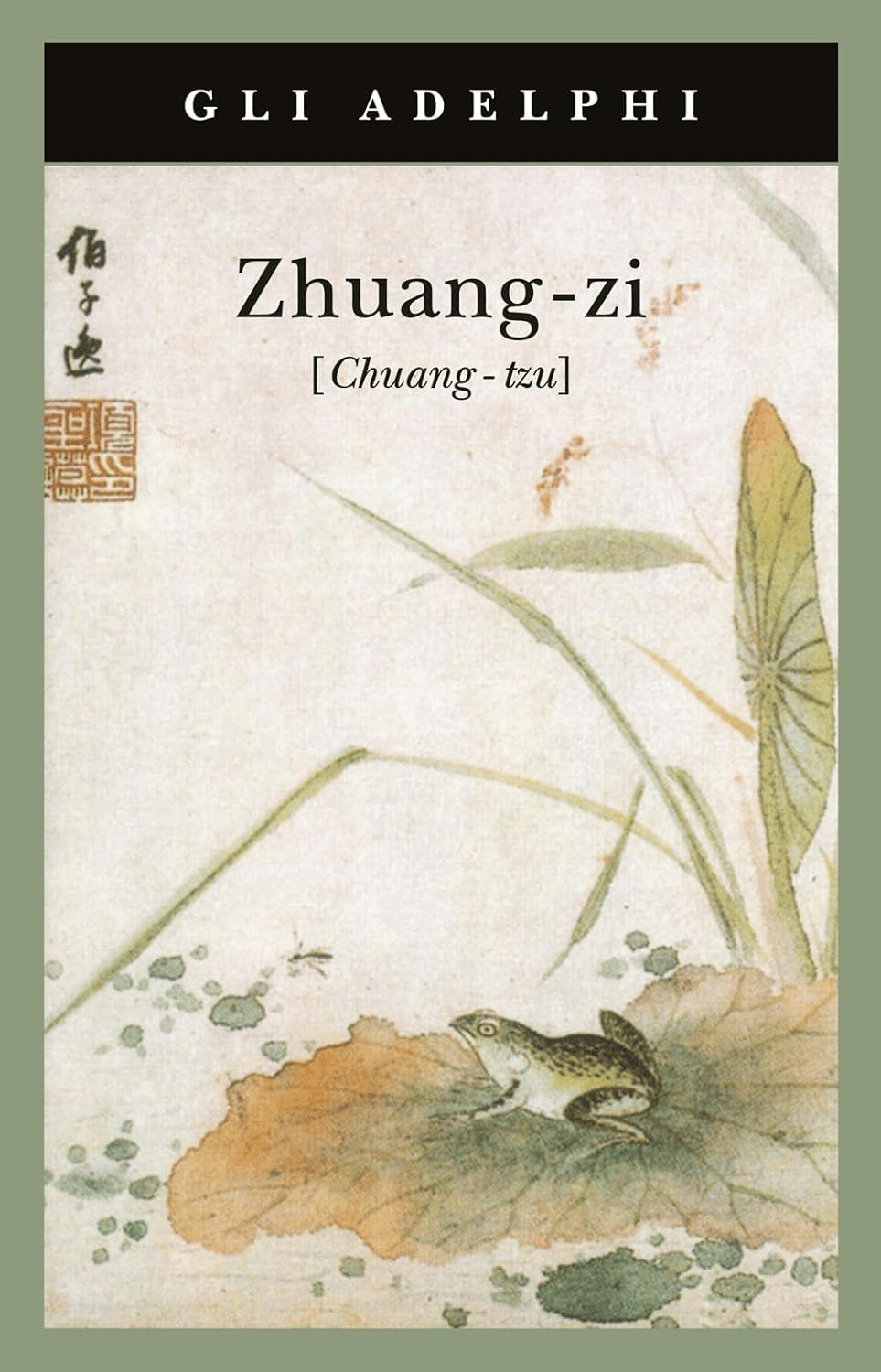
11. Zhuangzi — Zhuang Zhou (China)
Zhuangzi destabilizes fixed identity-mass by questioning categories and promoting adaptive superpositions. His parables encourage flexible couplings, suggesting that rigid potentials lead to suffering; in SLM, he prescribes dynamic renormalization—allowing states to be context-dependent rather than fixed invariants. The Zhuangzi operates as a philosophical Mythoplasma, intertwining N + Mγ + T to create drifting parables whose … Continue reading 11. Zhuangzi — Zhuang Zhou (China)
Page of the Spiral Vessel
A single vein—red and blue—winds through the parchmentlike a thought refusing to end.It empties into a shell of glass and mineral,a small mountain dreaming of storm. At its peak, a transparent heart turns slowly,its currents mapping constellations that do not yet exist. At the base, rows of vials stand in ceremony:clear, clouded, blue, green—each one … Continue reading Page of the Spiral Vessel
The Batmobile
What is your all time favorite automobile?

10. Tao Te Ching (Dao De Jing) — Laozi (China)
The Daoist text describes a low-action algorithm: minimize forcings, align with natural flows, and the system self-organizes. Its advice acts like a dissipative operator removing excess energy and allowing emergent order. In SLM terms, the Dao is a prescription for constructing a nonintervening Higgs field: less deliberate action produces more sustainable identity mass by aligning … Continue reading 10. Tao Te Ching (Dao De Jing) — Laozi (China)
Page of Boxes That Teach Themselves
A windmill of paper and bone leans over a table—half grammar, half engine. A book unfolds into a tent,its roof lifted toward invisible sunlight. Beneath, a garden of boxes blooms:petaled lids unfurling to revealblocks of color and compressed knowing. One box remains sealed—a patient future.The others display the geometry of recollection,how thought arranges itself when … Continue reading Page of Boxes That Teach Themselves

I may be a little too trusting, but managed to avoid the big sharks.
I know people who trust nobody and that is usually related to their line of work: policemen, lawyers, tax inspectors, etc… It reflects in their social interactions and are usually not very cheerful characters. I came to realize that with such attitude, I would never get anything done. Have no clue how they manage. I … Continue reading I may be a little too trusting, but managed to avoid the big sharks.
9. Analects — Confucius (China)
The Analects present a prescriptive dynamics for social stability. Rituals and hierarchical roles are selection rules: perform them correctly and social coherence emerges. The Analects thus provide precise Lagrangian terms that penalize deviance and reward conformity, producing low-entropy social arrangements.A lean Realiton (N + D±) stabilized through ethical clarity. Dissonatons (D±) emerge in the friction … Continue reading 9. Analects — Confucius (China)
Lena Snow: The Visionary Behind Goddessarts Magazine
At the very core of Goddessarts Magazine’s identity is Lena Snow—a creator whose vision has been the magazine’s guiding force from its inception. As the founder and artistic spirit behind the publication, Lena Snow’s passion for championing meaningful, transformative art is woven into every page and initiative.Lena’s journey began with a desire to carve out … Continue reading Lena Snow: The Visionary Behind Goddessarts Magazine
Page of Turning Wheels & Whispering Wind
In a glass chamber of patient experiment,forests of copper rods stand upright—a congregation of listeners awaiting the voice of the unseen. A pinwheel spins, not by air,but by the pressure of memory itself.Two black bellows rise and fall like sleeping lungs,breathing rhythm into gears that no hand commands. Within a wooden cradle, a white … Continue reading Page of Turning Wheels & Whispering Wind

8. The Odyssey — Homer
In the Standard Literary Model, The Odyssey behaves like a baryon: a bound state of wanderer, memory, and fate locked into an oscillatory pattern by the strong force of home. Odysseus is a quark of identity that refuses confinement yet can never fully escape it; every island he encounters is another local minimum in the … Continue reading 8. The Odyssey — Homer
 The Maharajagar