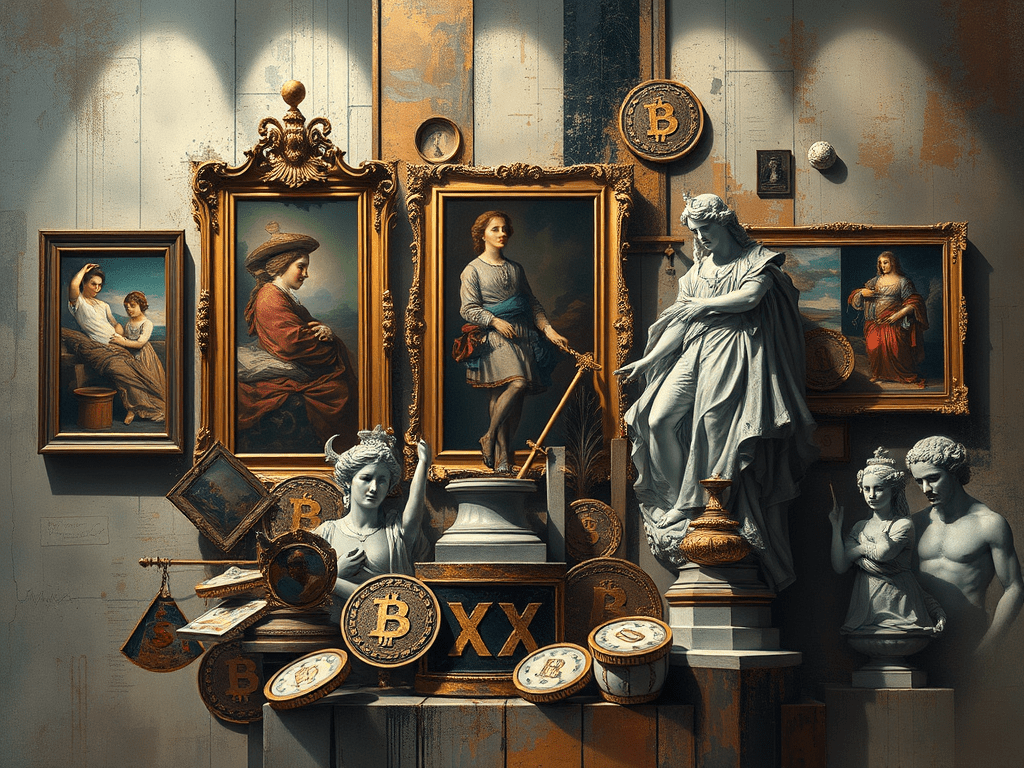
A common critique of the art world is the emphasis on financial gain over critical engagement with art theory. Many artists feel that the focus on monetization, particularly through NFTs and other speculative markets, overshadows the potential for deeper artistic and social commentary. This can lead to a situation where artistic merit is secondary to market value, and critical perspectives are sidelined in favor of profit-driven narratives. On the other hand, it can be hard to remain a principled artist when the rent is due.
The contemporary critical art theory examines the relationship between art, power, and culture, using theoretical frameworks like feminism, postcolonialism, and critical theory to analyze artworks and their contexts. It focuses on how art reflects and shapes societal structures, often challenging traditional narratives and power dynamics.
The critical art theory often challenges traditional narratives: it questions established art historical narratives and explores how these narratives might perpetuate biases or exclude certain voices.
Through analyzing power structures it examines the power dynamics within the art world itself, including institutions, markets, and critical discourse. It emphasizes the importance of understanding the cultural and historical context in which art is created and received. Drawing on various theoretical perspectives like feminism, postcolonialism, queer theory, and critical theory to analyze art. It can inspire new forms of art that actively engage with social and political issues, challenging traditional notions of art and its role in society by considering the artist’s writing and reflections on their own practice, as well as how their work engages with issues of identity, representation, and social critique.
Contemporary critical art theory provides tools for understanding how art functions within broader social, political, and cultural contexts, encouraging a more nuanced and critical engagement with artistic practice and its impact on the world.

 The Maharajagar
As always, I found your post really interesting and can only agree with you that art, unfortunately, is sometimes driven by profit.
On the other hand, few artists are so wealthy or so idealistic that they can forgo earning enough to live decently.
LikeLiked by 1 person
There is and always will be a big gap between those who can afford to be an artist and those who need to make an income from their art.
LikeLiked by 1 person
I know….
LikeLiked by 1 person
Tremendous! Great insights! May I share? Janis Kirstein Rigor
LikeLiked by 1 person
Thank you for your interest. Always welcome to spread the art gospel to the heathens.
LikeLike
ok, I’m not a heathen yet but give our county a few more crisies and I just might become one! Haha.
LikeLiked by 1 person