In the early days of independence, American novels served a useful purpose. They used realistic details to describe the reality of American life. But when some of the good American literature started to arise above the time and place where they were written; these works became universal.

The oldest examples are the sketches and observations of Michel Guillaume Jean de Crèvecoeur (1735 – 1813), bundled in “Lettres d’un cultivateur Américain”, and published in Paris, 1787. He did not describe America as a Utopia, nor did he expect it to become one, but he saw more hope and health in a society where: “individuals of all nations are melted in a new race of man” than in the older, closed societies of Europe. In the remarkable life of J. Hector St. John de Crèvecoeur, the highs and lows of Franco-American cosmopolitanism are evident. As Durand Echeverria described in his work Mirage in the West, the dream of America and the mutual admiration of Frenchmen and Americans peaked in the 1770s and 1780s, before dissipating under the intense pressures of state-building in America and the Revolution in France. As a writer and intellectual, and in his experiences in Paris, it was easy for Crèvecoeur to celebrate the cosmopolitan exchange across the Atlantic Ocean that was more than just a myth. But as a diplomat between 1783 and 1790, the practices of national self-interest and political and economic behavior that he had to deal with on a daily basis ultimately disillusioned him about that exchange.
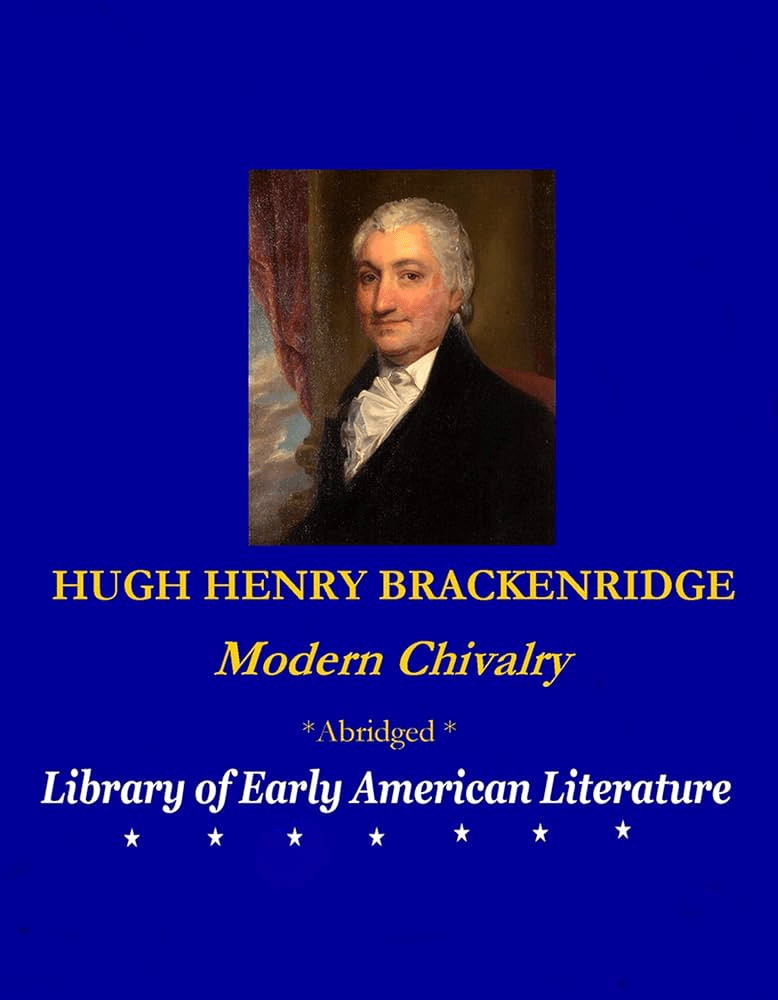
Modern Chivalry by Hugh Henry Brackenridge was the first important American novel. He wanted to achieve a reform in morals and manners of the people. The book is a series of adventures in which the author laughs at America’s backwards culture. Brackenridge hoped that satire, which exaggerated and parodied the flawed and irrational thinking he saw in the political sphere, would help readers to visualize American problems more clearly and would motivate readers to think and behave differently from the poor models of character exhibited in the novel.
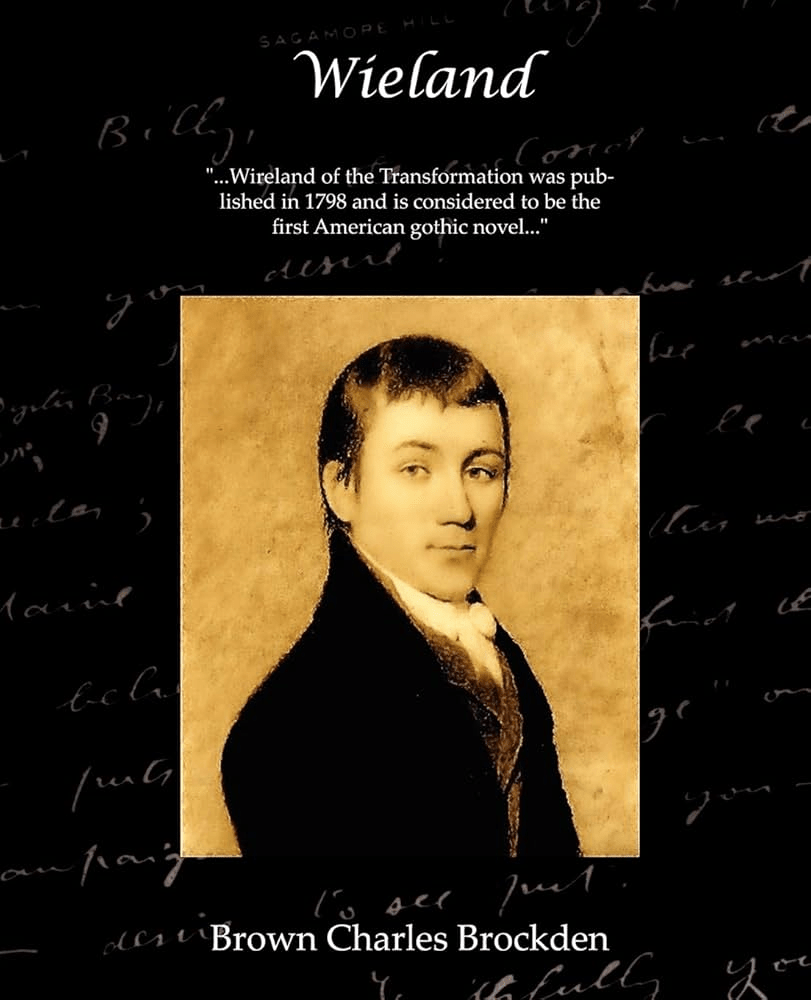
Charles Brockden Brown’s interest in the psychology of horror greatly influenced such writers as Hawthorne and Poe many years later. In his mayor novel “Wieland”, things may not be as they appear, and genuine truth must be actively searched for. With this philosophy, it is not surprising that he spent his last years with political pamphlets against the optimistic philosophy of Jefferson.

 The Maharajagar
I found this post interesting. Thank you for mentioning these authors, whom I had not yet heard of!
LikeLike
Glad to have contributed. Many of my latest posts are the result from old research material that I decided to throw online.
LikeLiked by 1 person
It was a great idea: interesting and informative at the same time.
LikeLike