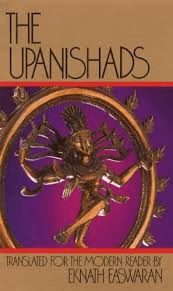
The Upanishads function as renormalization techniques for inner life. They propose methods for subtracting superficial divergences—ego, desire—to reveal a more fundamental field of Brahman. Practices they recommend (meditation, ethical discipline) are operators reducing self-interaction terms and allowing consciousness to experience unified modes. In SLM, the Upanishads describe a path to lower-energy coherence: when the individual collapses certain modes, identity mass does not vanish but transmutes into a more integrated, cosmically coupled state. Their metaphysics acts as a theoretical framework for spiritual reparametrization of identity.
The Upanishads pivot toward Memoirion fused with Mythoplasma. Dialogue-based Narraton (N) meets abstract Metaphoron (Mγ)—Brahman, Atman, self, and cosmic unity. Silention (S⁰) is central: truth is often presented by negation (“not this, not that”). Temporalon (T) distorts time into meditative stillness. Dissonatons (D±) arise in inner conflict as students struggle toward realization. Polyphonon (P³) shows up through guru–disciple lineage. These texts function like metaphysical particle diagrams mapping consciousness as the fundamental field.
Leisure Reading
After months of finishing and promoting my latest novel (The Maharajagar) and putting last hand on the SLM, I finally had some time for leisure reading and picked up some fantasy novel that came to me by one of my favourite book bloggers: the orang-utan librarian. She recommended this title as (cit.) , “… what had seemed straightforward was actually some of the most sophisticated storytelling I’ve seen in a long time.”
Against all my principles not to start a series before the last instalment has been published, I picked it up and was not disappointed (the much feared cliffhanger is rather modest although it’s definitively not a standalone). Here follows my review in my newly developed SLM style:
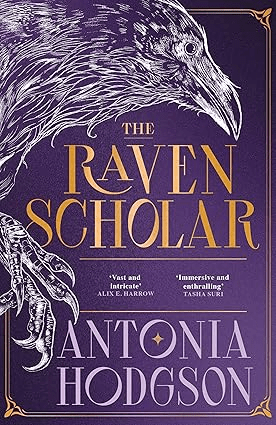
The Raven Scholar — Antonia Hodgson
SLM synopsis (without spoilers)
The Raven Scholar works as a hybrid narrative where court intrigue, metaphoric lore, and a murder mystery fuse into a dynamic multi-particle field. At its core lies Narraton (N): Neema Kraa’s investigation threads the story through imperial ritual, political pressure, and intellectual inquiry. The plot is structured around a Dissonaton (D±) pulse — the assassination of the Raven monastery’s champion — which generates cascading fractures in Orrun’s political order. This rupture drives both the narrative tension and Neema’s reluctant emergence from scholarly isolation.
The world’s religious–mythic system, built on the Eight guardian animals, activates Metaphoron (Mγ). Each monastery’s animal-emblem becomes a symbolic carrier of identity, ambition, and moral orientation, giving the story a mythic pressure that coexists with its forensic realism. The empire’s cyclical, 24-year rule — and the selection trials that choose the next emperor — introduce Temporalon (T) as a structural operator: time is ritualized, repeated, and politically weaponized.
Voices from multiple monasteries, factions, and courtly networks shape a soft Polyphonon (P³) layer. Neema herself is an unwilling conduit of these overlapping voices — scholar, suspect, advisor, outsider — embodying the book’s multi-perspectival dynamism. Meanwhile, the emotional interior of the protagonist contains pockets of Silention (S⁰): social awkwardness, withheld trauma, institutional secrecy, and political truths that cannot be spoken aloud.
The result is a Polyphonic Realiton sharpened by mythoplasmic imagery. The Raven Scholar binds political conflict, symbolic cosmology, and character interiority into a tightly coiled narrative field, making the empire’s crisis feel simultaneously intimate and cosmic.
N + Mγ + D± + P³ + S⁰ + T → Polyphonic Realiton / Mythoplasma-inflected Court-Intrigue
Fundamental Particles
| Particle | Symbol | Function |
| Narraton | N | The basic storytelling particle. |
| Metaphoron | Mγ | The carrier of imagery; analogous to a photon. |
| Dissonaton | D± | Conflict, rupture, contradiction. |
| Silention | S⁰ | The unsaid, the erased. Appears only via absence. |
| Polyphonon | P³ | Multi-voiced narration; binds communities. |
| Temporalon | T | Manipulates chronology. |
Symmetry Breaking as Pivotal Plot Turn or Transformation
Symmetry breaking is the process by which uniformity fractures, giving rise to variety and unpredictability. Within literature, these are the crucial turning points—epiphanies, reversals, or crises—that propel the narrative into new, unforeseen territory. In “Dubliners,” the story “Araby” pivots on a moment of disillusionment, shattering the protagonist’s innocence and transforming the emotional landscape. Similarly, in “Crime and Punishment,” Raskolnikov’s confession marks a critical symmetry break, leading to a profound moral and narrative transformation. Such moments drive creative evolution in both physical and literary systems.
By drawing out these correspondences in structured prose, we articulate a fresh interpretive framework—one attuned to the elegant symmetries, intricate interactions, and transformative shocks that animate both the cosmos and the written word. Each pairing will be explored in detail through forthcoming case studies, revealing both the practical power and the subtle limits of this metaphorical apparatus in literary analysis.
Composite Particles
(Produced when fundamental particles bind.)
| Composite | Composition | Literary Equivalent |
| Mythoplasma | N + Mγ + T | Myth, epic cycles, cosmologies. |
| Realiton | N + D± | Realist narrative, social conflict. |
| Memoirion | N + S⁰ + T | Memory narrative, trauma narrative. |
| Fictionon | N + Mγ | The creative continuum. |
| Critical Gluon | P³ + D± | The force binding literary traditions. |
For Further Reading see:
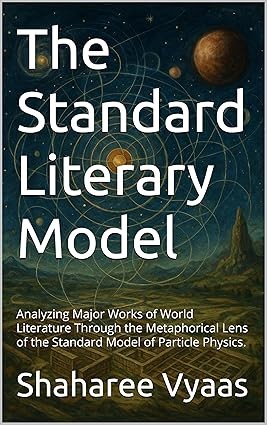
| Kindle eBook publishing Submitted on November 19, 2025 | $3.00 USDView on Amazon ASIN: B0G2YTJK5Y |
| PaperbackLive Updates in review Submitted on November 20, 2025 | $9.99 USDView on Amazon ASIN: B0G31YM7GR |

 The Maharajagar
Love your take on the Raven Scholar- particularly with regards to the symbolism. Great review! Thanks for the mention!
LikeLiked by 1 person
Glad you’re liking this SLM-styled review. I’m still trying my hand at it and have to pay attention not to include any spoilers.
LikeLike
Thank you for appreciating my review and providing a link to it.
LikeLike