
The Ramayana by Valmiki.
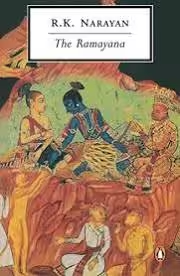
The title can be translated as the Journey of Rama (who was an avatar of Vishnu) and consisted of 24,000 verses in seven books (kāṇḍas) and 500 cantos (sargas) all good for more than 50.000 lines of scripture. It is the second pillar of Indian literature and luckily, just like with the Mahabharata there were summarized versions available that only retain the most essential verses.
Although its story tells the story of an incarnation of Vishnu, Rama whose wife Sita (avatar of the goddess Lakshmi, Vishnu’s wife) was abducted by Ravana, a demon who ruled over Lanka (contemporary known as Sri Lanka), but the intrinsic goal of the book is to describe essential human values and the principles of Dharma, Samsara, Karma and Moksha.
It describes also the rituals and stages of passage, yoga and personal behaviors, non-violence, Law and Justice and the stages of life (student, householder, retiree and finally renunciation of the world through Moksha).
Hindus believe that there is only one supreme Absolute Deity called “Brahman”. It also does not promote the worship of any one particular deity. There are thousands of gods and goddesses of Hinduism and all represent the many aspects of Brahman. Although this faith is characterized by the multiplicity of deities the most revered deity is the Trinity of Brahma, Vishnu and Shiva – creator, preserver and destroyer.
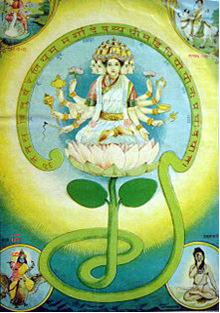
Another noteworthy detail of this epic is that the first letters of every thousand verses (24) compose the Gayati mantra who’s not just a prayer to a deity but the deity itself.
14 April 2015
Volume one; The Book of Childhood
Around the seventh century BC, at a place that now is known as Utar Pradesh, was there the small kingdom of Kosala having as capital the city Ajodhya ruled by King Dasharatha.
Al went well into the Kingdom and the country was prosperous and its citizens where happy and the King ruled wisely. There was only one thing that bothered the King; although he had three wives, he didn’t have children.
His high priest advised him to perform a ritual sacrifice and out of the flames raised a figure handing him over a bowl with rice pudding that he had to give to his wives to eat. After that his first wife Kausalya gave birth to Rama, his second wife Kaikeyi gave birth to Bharata and his third wife Sumitra gave birth to a twin Laksmana and Shatrugna.
They were all sons who were up to a certain degree were avatars of Vishnu, because Vishnu decided to incarnate as a mortal in order to defeat a demon called Ravana who was terrorizing the Gods.
No god or demon could defeat Ravana because Brahma granted him a boon that he could not die through the hand of a supernatural being; only a mortal could defeat him.
The boys were raised as royal princes but when Rama turned sixteen a wise man called Viswamitra came to see the King and requested that Rama would be sent with him to kill the Rakshasas that were disturbing the Brahmans fire sacrifices.
The King objected by mentioning Rama’s young age and proposed to go by himself, but Viswamitra declined and assured the King that Rama would be safe under his guidance.
Lakshmana decided to accompany his brother and both of them would receive instructions about supernatural weapons from Viswamitra and managed to destroy the demons. But the destruction of the demons was not the real reason why Viswamitra whisked Rama away of his father’s royal court; Rama was to win the hand of Sita, a princess of superb beauty and elegance, in a Swayamvara organized by her father, King Janaka of Mithila.
The God Shiva had given the King an immense bow and only the one who could wield it was to get the princess hand. Only Rama could wield the bow and when he wanted to string it, it snapped in two. Sita was very pleased because she had already a crush on him before he entered the competition and the King proclaimed that not only she would marry Rama, but that he would also provide wives for all his brothers. When their father assented to the proposed marriages, a big wedding party took place at Mithilia whereupon the Princes and their brides returned to Ajodhya.
Volume two; Book of Ajodhya.
After the princes were married for twelve years, their father wanted to abdicate in favor of his oldest son Rama. The evening before the coronation, a manipulative servant convinced Kaikey that if Rama would become king, she would be exiled and her son murdered and suggested that the second queen should collect the two boons that the old King awarded her once for saving his life on the battlefield. The first boon would be that her own son Bharat (who was visiting his maternal grandfather at that time) should be crowned King and the second boon that Rama was to be sent into exile for 14 years. The King tried to reason with his second wife but she was beyond reasoning so he granted her the awarded boons and Rama goes in exile, followed by his wife Sita and his brother Lakshmana. Shortly afterwards the old, heartbroken king died and they sent a message to Bharata to come home but without explaining why. When he comes back and heard the whole story, he became furious and renounced his mother. After he organized his father’s funeral, he went looking for Rama to break him the news about their father’s dead and to plead him to come back and take the throne, but Rama refuses and stuck to his father’s edict. In a response, Bharata asked for Rama’s sandals and placed them upon the throne as a sign that he only ruled the county as a regent in his brother’s name till Rama would come back from his exile.
15 April 2015.
Volume three; The Book of the Forrest.
During their dwellings in exile, they reached the riverside of the Godavari and deceided to build a couple of huts there and to live of what the land provided them. A female rakshas, Surpanakha, tried to seduce the two brothers and when they refused her advances, she angrily tried to kill Sita. Lakshmi thwarted her attempt and in the battle that followed, het cut of her nose and ears. She fled to her brother, the demon Khara and he vowed to take revenge against the once that mutilated her. He assembled his demon army, but Rama slaughtered all of them. When his brother Ravana heard of his dead and of the beauty of Sita he decided to abduct her with the help of a demon Maricha who could take whatever shape he wished. Maricha took the shape of a golden dear and when Sita saw the beautiful dear she pleaded with Rama to catch it for her. Even when Rama suspected that it was a demonical ploy, Sita kept imploring him to catch the deer so he set out to catch it, leaving Lakshmana with her to protect her. When Rama tried to catch the demonical dear it fled to the surrounding forest, a fight followed and he wounded the demon deadly. The demon then imitated Rama’s voice and cried out for help. Lakshmana and Sita heard that cry for help and Sita convinced him to leave her to help Rama. Before he left he drew a magic protective circle around the house and summoned her not to step out of the circle. Shortly after he left, Ravana showed up into the disguise of a wise man and tricked her out of the circle and abducted her into his flying charriot. The King of the eagles, Jatayu tried to prevent this but got deadly wounded by Ravana and with his dying breath could tell the brothers what happened. During their expedition to rescue her, they met a rakasha and a wise woman who indicated him to seek the help of Sugriva, the banished younger brother of the monkey king and the monkey hero Hanuman, his loyal follower.
Volume four; The Book of the Monkey Kingdom.
When Rama and Lakshmana found Sugriva and Hanuman, Sugriva indicated that he would not be able to help unless they helped him to conquer the throne of Kishkindha, the monkey kingdom. So the two brothers set out to help to defeat and kill his brother. Soon afterwards Sugriva sent out search parties into all wind directions and those sent to the south, who included Hanuman, stumbled upon an eagle called Sampati, the brother of Jatayu who was slaughtered by Ravana. Sampati told Hanuman that Sita was abducted by Ravana to the island of Lanka.

 The Maharajagar