
Buddenbrooks by Thomas Mann
April 1, 2015.
Part six.
Tony decided to marry Alois Permeneder. Upon the moment he received his wife’s dowry, he retired with the intention to splash the money. She left him when he tried to rape a servant after an evening of drinking. Christian embarrassed Thomas by saying that businessmen are swindlers but inconsequently went after that by himself into business in Hamburg.
Part seven to eleven
As suspected, Christian’s business in Hamburg folded and he returned to Lubeck to parasite further on his family’s fortune. He started a relation with an actrice /call girl named Aline Puvogel. Thomas disapproves heartily of his brother’s behavior and is the only one who keeps the family floating.
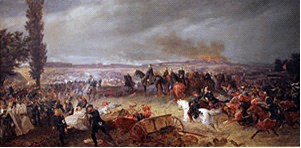
He becomes a senator and expands his business even further so that he can even afford himself a bigger house. His sister Clara died and their mother gave her daughters heritance to Sievert Tiburtius, what caused a big row with Thomas. In 1866 there was the Austro-Prussian war that lasted for seven weeks and resulted in the Prussian hegemony over the other German states. Austria lost also Venice to the Italians, who annexed it.
Tony’s daughter Clara married a business relation of Thomas, but the guy went broke and Thomas who speculated on his harvest lost lots of money. Weinschenk went to prison and disappeared upon his release.
After the consul’s widow died, the two brothers had a horrible row and the firm’s business becomes under pressure because of competition of Hermann Hagenstrom. They even had to sell their family house to him and he made a big spectacle of moving in, turning the previous offices of the family business on the ground flour into profitable shops. Thomas turned into a weak refection of his former self and believed that his wife had a secret love affair with an army officer.
He started reading Schopenhauer, what didn’t exactly improve his mood and died shortly afterwards. His hypochondriac dandy of a brother married Aline Puvogel and ended shortly afterwards up into a psychiatric institution.
Thomas widow sold the big house at Fischergrubben and went to live into a small villa at the seaside where she filled her days by playing music with her son Hanni.
When Hanni died of typhus, aged fifteen years, the remnants of what once was a proud dynasty consisted out of a bunch of elderly woman. Tony was the only family member who remained to live in Lubeck.
2 april 2015.
Comments;
The novel’s style frames into the 19th century prevailing realism but contained also modernist elements such as a psychological study of decadence, leitmotifs and collage. It reflects also much of the in Germany at that time widespread cultural pessimism that was a reaction upon the fast industrialization of the country after its unification.
This can be illustrated by a section at the end of chapter 10 where Thomas contemplates upon “The World as Will and Representation”, a tractate published by Schopenhauer in 1819. For this philosopher the only true reality is the will and the notion of historical progress is an illusion.
This can be illustrated by comparing the fate of the Buddenbrooks with that of the previous owners of their family house at the Fishergruben; the Rattenkamps who’s gradual decline could be seen as a result of a failure to keep a competitive edge and decadent neglect.
The other interpretation is that of a natural cycle of biological en psychological decline of the successive generations. Whatever interpretation is favored, the results remain the same; the Buddenbrooks couldn’t adapt to the new environment brought by the rapid industrialization and were pushed aside by the Hagenstroms.
The transition of power indicated also a shift from a culture of paternalistic “burghers” to a more anonymus, speculative and ruthless financial “bourgeois” mentality.
While all other European countries were into the process of acquiring colonies to sell their products and as source for the raw materials, the Germans where putting their internal affairs in order.
By the time that the German unification was a fact in 1866, the rest of the European nations had conquered substantial colonies and Germany had to satisfy itself with the leftovers. This was a cause of big resentment by the German ruling elite. It eventually became one of the casus belli of the First World War

 The Maharajagar