
4; Scoop by Evelyn Waugh.
February 24, 2015
Today I feel already a little more confident than two days ago when I was agonizing over the fact that after one month and a half into the new year I only managed to clear two titles from my list. This time I managed to check one off the list into just two days and I feel confident that this one I can process in maximum three days (220 pages).
Still, Tolstoy is looming at the horizon and as long I’ve not digested this one, I’ll stick to my self-imposed rule of not picking something that lies beyond number 20 of my list. The Kindle is still not activated; just don’t have the time to figure out that time saving device.
This morning I woke up at seven and it’s a quiet beautiful morning on the reef. After watering my plants, brewing some coffee and having some light breakfast I could work undisturbed on my literary challenge (apart two small interruptions; the waterman delivering two 5 gallon bottles of drinking water and our friend Ralph to ask if I wanted to buy some eggs from him), till 10 am when things fell into his daily swing with my wife waking up and wanting company at breakfast.
February 25, 2015
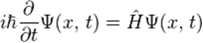
The same morning routine as yesterday; just no disturbances this time. This is definitively the best moment of the day to work on my new years’ resolution. Got a message from my two proofreaders; one of them wants me to help her tomorrow to visualize the notion of quantum mechanics over a bottle of rum. Now the base of quantum mechanics is the Schrödinger Equation and goes a follows;
For one particle that moves into one direction in space;
Instead I’m going to explain her the way a transistor works. That way I hope she’ll be able to visualize what QM does, without me having to explain her underlying subatomic process over a bottle of rum (Heavens forbid what monster version of the QM we will create; I told her already that somebody should take notes).
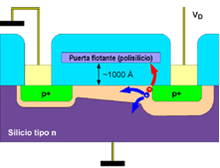
The essential usefulness of a transistor comes from its ability to use a small signal applied between one pair of its terminals (the base) to control a much larger signal at another pair of terminals (emitter and collector). This property is called gain. It can produce a stronger output signal, a voltage or current that is proportional to a weaker input signal; that is, it can act as an amplifier. Alternatively, the transistor can be used to turn current on or off in a circuit as an electrically controlled switch, where the amount of current is determined by other circuit elements.
The modern transistor has an internal structure that exploits complex physical mechanisms. Device design requires a detailed understanding of how device manufacturing processes such as ion implantation, impurity diffusion, oxide growth, annealing, and etching affect device behavior. Process models simulate the manufacturing steps and provide a microscopic description of device “geometry” to the device simulator.
My other proofreader is into the process of reviewing a book for publication, following remarks of her editor, while she eagerly pushes him to publicize her latest, just finished work. As usual with writers, she’s more enthusiastic about her latest literary “Scoop” then in revising some stuff she already left behind her.

Resume
The Scoop that is the subject of this post is a book that has been published in 1938 and figured a hapless countryside journalist who contributed nature article articles to a major British newspaper. He lived a quiet life till his identity got mixed up with that of John Courtney Boot, a remote cousin and famous novelist. Before he knew it he was sitting on an airplane, on his way to Africa to report about some crisis into some fictional country over there. Having no experience as a foreign correspondent, he ran from one situation into another, at some points, endangered his life by pure ignorance. But into the process into of doing so, he stumbled upon a real scoop. By the time he got back to London, his story was attributed to his far away cousin, but he didn’t care and returned happily to his previous existence.
Comment
This was a funny book, written with lots of puns and insights into the functioning of Fleet Street in London, where most of the newspaper reporters used to have their favorite drinking holes and where most of the newspaper editing of that time was done.

 The Maharajagar