
February 22nd
I’ve finished only two titles of my list. This book is listed number fifteen and I started to consider if, for the time being, when picking a book, I shouldn’t stay below number twenty. After all, on number three figures Ana Karina by Tolstoy, and that’s also a giant of 864 pages of difficult reading. By the end of the year, I want at least to be able to say that I’ve been reading the best 20 literary fiction books without having to celebrate Christmas as a bachelor.
We’re also into the middle of closing on two real estate transactions, some garden renovation and minor repair and maintenance works on our house. Meanwhile the daily household stuff also keeps coming back and during the summer months looms another real estate transaction. So right now, I’m in the mood to read something lighter and the description of the next book sounded right.
3; The Code of the Woofers by PG Wodehouse.
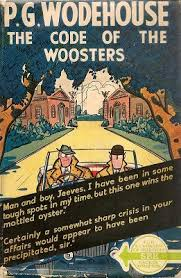
February 23th; the evening.
Resume
As I expected, the book was fun. The narrator started his story the way I do very often; recovering from a hangover. When I would be honest to my general physician back home by telling him that I’m drinking every day one bottle of wine, I would be sent straight into some rehab.
But I’m neglecting poor Bertie Wooster and his best friend, Gussie Fink-Nottle, whose engagement with Madeline Bassett was of extreme importance to Bertie because Madeline believed that he loved her and when her engagement with Gussie would have failed, she would “have made him happy” by marrying him.
On top of that, his aunt Dahlia sent him on a crusade to hunt down a silver cow creamer, snatched away under the nose of her husband by another collector, Sir Watkyn, Father of the droopy and snotty Madeline. When Gussie lost a personal diary into which he lovely described all the shortcomings of Sir Watkins and a couple of other protagonists, hell broke loose and the engagement alert went off.
At the end, the cow creamer was placed back into the hands of his rightful owner and the diary was recovered before it could cause irreparable damage to the engagement.
Comment;
Bertie was a typical prototype of the British gentleman; chivalrous and would never let a friend down. The typical British Gentlemen of that époque were proud of their bachelor status; they looked with condescending pity upon their married or engaged friends and always had to be „lured” into marriage by “scheming” woman. The only reason why a British gentleman would have considered a marriage was to avoid having to work to uphold his status. The woman in question then had to be a rich, silly heiress. This book was also the first installment of the Totleigh Towers saga, but I’m dispensed of reading the remaining volumes because they’re not included into the list. Nevertheless, this book was a pleasure to read and once I’ve accomplished my resolution, I’m committed to read “Right Ho, Jeeves”.

 The Maharajagar